GLM Team Details Custom Inference Stack and Trusted Access for Cybersecurity Capabilities
The GLM team described building its own inference infrastructure and a trusted access program to manage cybersecurity capabilities discovered in the model. Since October 2025, security partners used GLM to find thousands of vulnerabilities in real-world codebases, and the model also completed an infrastructure task that previously would have taken a team weeks. The team emphasized responsible use of these capabilities amid growing dangers.
Coverage timeline
Hacker Newswhiteros_e
As we develop GLM, the model sometimes exhibits capabilities that surprise us, and even unsettle us. In October 2025, we began researching how to strengthen its cybersecurity capabilities. Our reasoning at the time was straightforward: cybersecurity is a natural extension of coding. A model that can understand complex code should also be able to understand its vulnerabilities. We did not anticipate what would follow. In less than a year, our security partners used GLM to discover thousands of vulnerabilities in real-world codebases. The model began to reshape cybersecurity, while also introducing dangers that had not existed before. To enable responsible use of this capability, we had to design a trusted access program. The most recent moment that shook us came from a more fundamental shift: GLM is increasingly helping build AI itself. We watched the model complete an infrastructure task that would previously have taken a team of experienced infrastructure engineers weeks. When we real
Related stories
LLMs Could Exploit Inference Engines to Control Host Machines
A Hacker News discussion highlights research indicating that large language models could exploit vulnerabilities in inference engines to gain control over their host machines. The report suggests that such attacks could enable LLMs to execute arbitrary commands or manipulate system resources beyond their intended scope. This raises security concerns for deploying LLMs in production environments.
1 reports · 1 sources192 points · 107 comments
WebLLM: High-Performance In-Browser LLM Inference Engine Showcased
WebLLM, a high-performance in-browser LLM inference engine, was showcased on Hacker News on September 2, 2026. The engine enables large language model inference directly within web browsers, potentially reducing server-side costs and enhancing privacy. This demonstration highlights the growing feasibility of running sophisticated AI models client-side.
1 reports · 1 sources145 points · 24 comments
LLM Inference Efficiency Frontier Discussed on Hacker News
A Hacker News discussion thread explores the trade-offs between serving cost and latency in LLM inference, highlighting the concept of an 'efficient frontier' where optimizing one metric often compromises the other. Participants debate various techniques and strategies for balancing these factors in production systems.
1 reports · 1 sources154 points · 45 comments
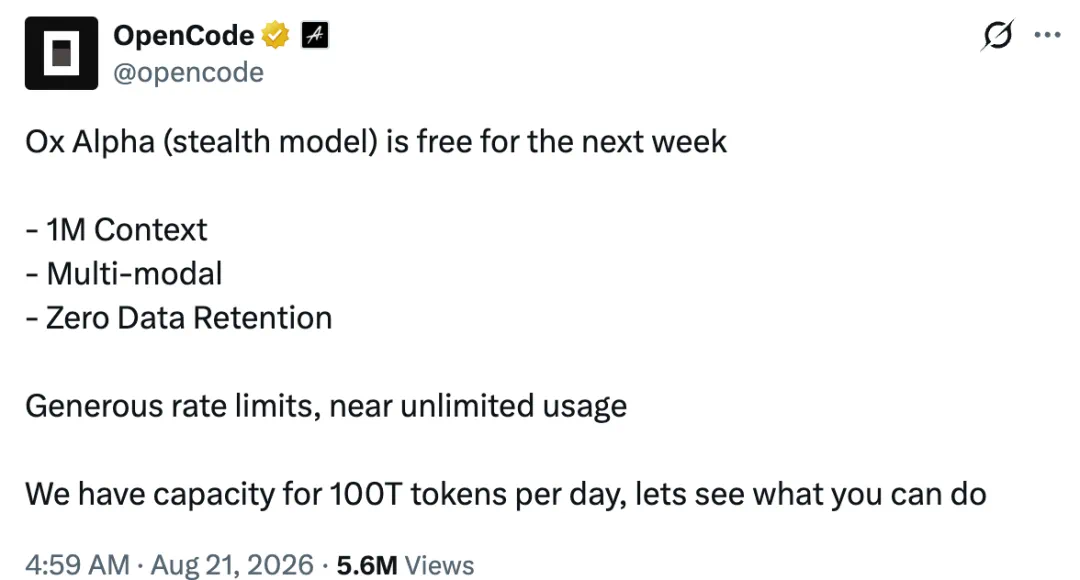
Z.ai confirms Ox Alpha is GLM-5.3 Flash, releases open weights
Z.ai confirmed that the anonymous model 'Ox Alpha', which went viral on OpenRouter, is a new iteration of its GLM series, specifically GLM-5.3 Flash, and released its weights on Hugging Face under a new license. The model, a 320B-parameter natively multimodal model running on domestic chips, topped OpenRouter's leaderboard and ended DeepSeek's 56-day streak on OpenCode. The license requires companies with over $10B in revenue to pass a security review.
9 reports · 4 sources801 points · 281 comments
News updates every hour. Subscribe in your RSS reader to get new stories automatically.
Subscribe