Import AI 474: Levin's Platonic Mindspace, TPUs in Space, Zhipu's Outer RSI Loop
The latest Import AI newsletter covers Michael Levin's philosophical paper proposing that minds may be patterns from a Platonic space, with bodies and machines as interfaces, and argues for non-physicalist models of mind that can be empirically investigated. It also reports on TPUs deployed in space and Zhipu's initiation of an outer RSI (Recursive Self-Improvement) loop.
Coverage timeline
Import AI (Jack Clark)Jack Clark
Welcome to Import AI, a newsletter about AI research. Import AI runs on arXiv, cappuccinos, and feedback from readers. If you’d like to support this, please subscribe. Subscribe now Are minds patterns from a Platonic space, with bodies and machines as their interfaces, Michael Levin asks: …A mind-bending paper asking us to reconsider basic assumptions about philosophy and biology… Could the complexity in the world around us be better explained by there being a platonic zone of patterns of arbitrary complexity which seek to embed themselves in the world? That’s the big question at the heart of an iconoclastic paper from scientist Michael Levin. The argument: “I argue that the emerging sciences of synthetic morphology and diverse intelligence suggest non-physicalist models of mind and show how they can be empirically investigated… I propose that the relationship between mind and brain is the same as the relationship between mathematical patterns and the morphogenetic outcomes they guide

Related stories
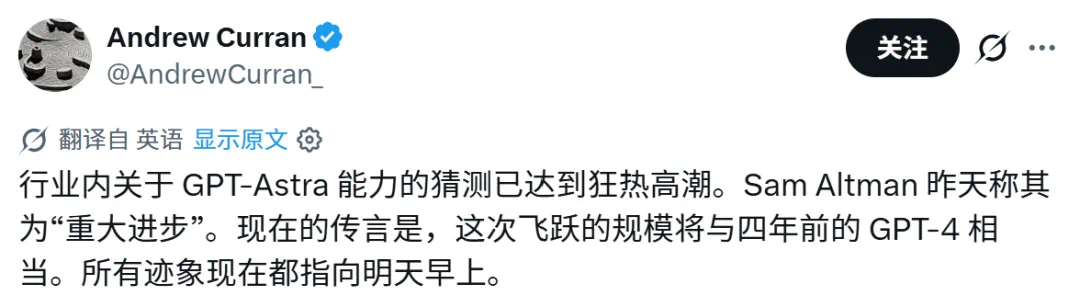
OpenAI's Astra model uses 'recurrent depth', raising safety concerns
OpenAI's upcoming Astra model reportedly uses a technique called 'recurrent depth', allowing it to perform multiple rounds of internal computation before outputting each token, diverging from sequential reasoning typical of most models. The model has achieved a 'critical' cybersecurity capability threshold, with a 100% success rate on a test set of 20 recent V8 high-severity vulnerabilities, and has discovered two zero-day exploits. AI safety experts have expressed alarm over the opacity of the model's internal reasoning, prompting OpenAI's chief scientist to respond.
3 reports · 3 sources
Anthropic CEO proposes 'pacing the frontier' plan; OpenAI, Musk, Hugging Face respond
Anthropic CEO Dario Amodei published an essay on September 12, 2026, urging the AI industry to slow the pace of frontier model development to address safety risks, proposing a three-part plan: embedded third-party evaluators, coordination among democratic countries, and global coordination including with authoritarian governments. Anthropic unilaterally committed to giving third-party evaluators permanent employee-level access. OpenAI CEO Sam Altman agreed and said OpenAI would do the same, while Elon Musk endorsed the call and Hugging Face launched an Open Alignment Initiative seeking to join the embedded evaluators program.
25 reports · 6 sources330 points · 260 comments

News updates every hour. Subscribe in your RSS reader to get new stories automatically.
Subscribe