OpenAI's GPT-5.6 Sol autonomously runs quantum chip calibration via Codex
OpenAI reported a case where its GPT-5.6 Sol model, connected via Codex to MIT EQuS lab software, autonomously ran standard measurement sequences on an uncalibrated six-qubit superconducting chip. The AI selected measurement parameters, controlled hardware, analyzed data, and decided next steps with minimal researcher intervention, identifying qubit transition frequencies, calibrating pulses, and determining coherence times. Performance degraded under low signal or high noise, sometimes requiring researcher guidance.
Coverage timeline
机器之心ScienceAI
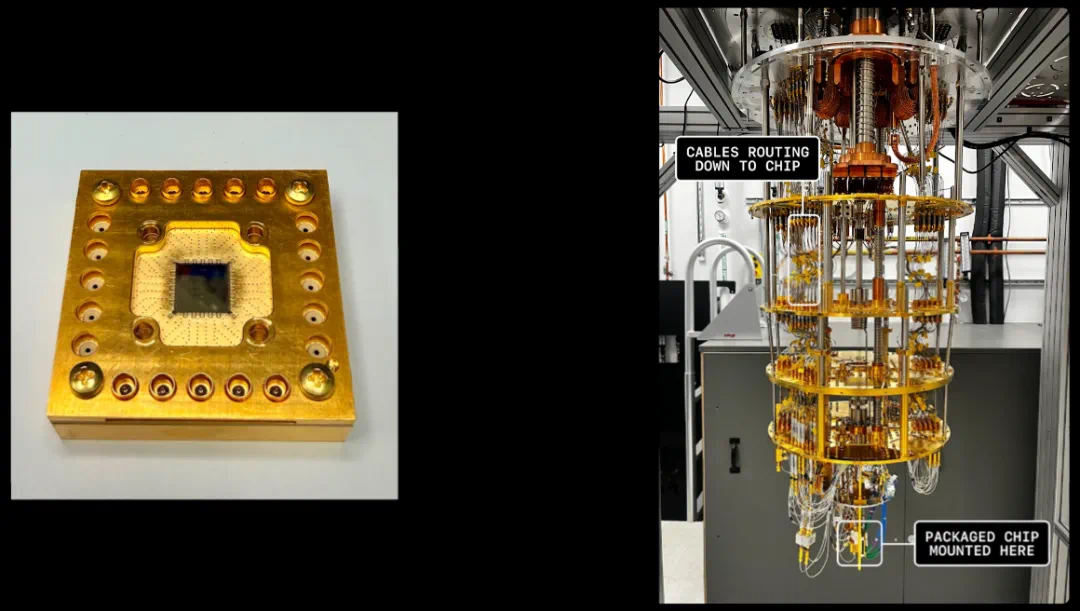
编辑丨% 量子计算作为一项新兴技术,利用量子力学的独特特性来处理信息。它未来可能会更好地模拟复杂的材料和分子。但对于真正做实验的研究人员来说,其中有相当一部分工作其实非常重复——一次又一次地调整参数、运行测量、分析信号,再根据结果决定下一次该怎么测。 直到这部分工作被交给 AI。 OpenAI 最近介绍了一项实验案例:MIT 工程量子系统研究组(EQuS)的研究生 Beatriz Yankelevich 将 GPT-5.6 Sol 通过 Codex 接入实验室软件,让 AI 直接到参与量子芯片的测量、参数调整和下一步实验决策当中。结果显示,在流程明确、信号清晰的常规实验中,AI 已经能够自主完成相当一部分工作。 图示:一个封装的量子芯片与一个开放式稀释冰箱。图源:EQuS 集团 协调测量 Yankelevich 所在的团队主要研究超导量子比特。这些量子比特被放置在稀释制冷机中,冷却到接近绝对零度,再通过微波信号对其进行控制。这些微波信号将量子比特在特定能级之间移动,并探测其量子态。 这些发射到芯片上的脉冲序列需要研究人员的校准,而校准又需要一系列相互依赖的测量,每个结果都会影响后续的处理。有经验的研究人员能够辨别发生漂移的量子比特的状态,或者异常实验信号,这种软控与重复测量决策的场景尤其适合 AI 介入。 为了测试 GPT-5.6 的测量能力,Yankelevich 通过 Codex 为实验提供了相应的测量专项技能,告诉系统不同实验应该如何运行、怎样判断结果,并提供芯片的设计目标。之后,GPT-5.6 Sol 可以根据实验目标选择测量参数,控制实验硬件,分析返回的数据,然后决定下一步应该怎么做。 在未校准的六量子比特芯片上,Codex 在几乎没有研究人员干预的情况下完成了标准测量序列。它识别了量子比特的跃迁频率,校准用于控制和读取的脉冲,并确定量子比特保持量子信息的时间。 图示:一组由 GPT-5.6 Sol 自主完成的单个量子比特校准测量。图源:EQuS 集团 实验中,信号强度与噪声大小会对 GPT-5.6 Sol 的处理产生较大影响。在低信号强度或是大噪声的环境下,找到合适的测量参数需要更久,有时还需要研究人员指导。 图示:摘录自校准运行中的 GPT-5.6 Sol 思维链。图源:EQuS 集团 与研究者共事 Codex 的直接优势在于无需持续监督的情况下,其稳
Related stories
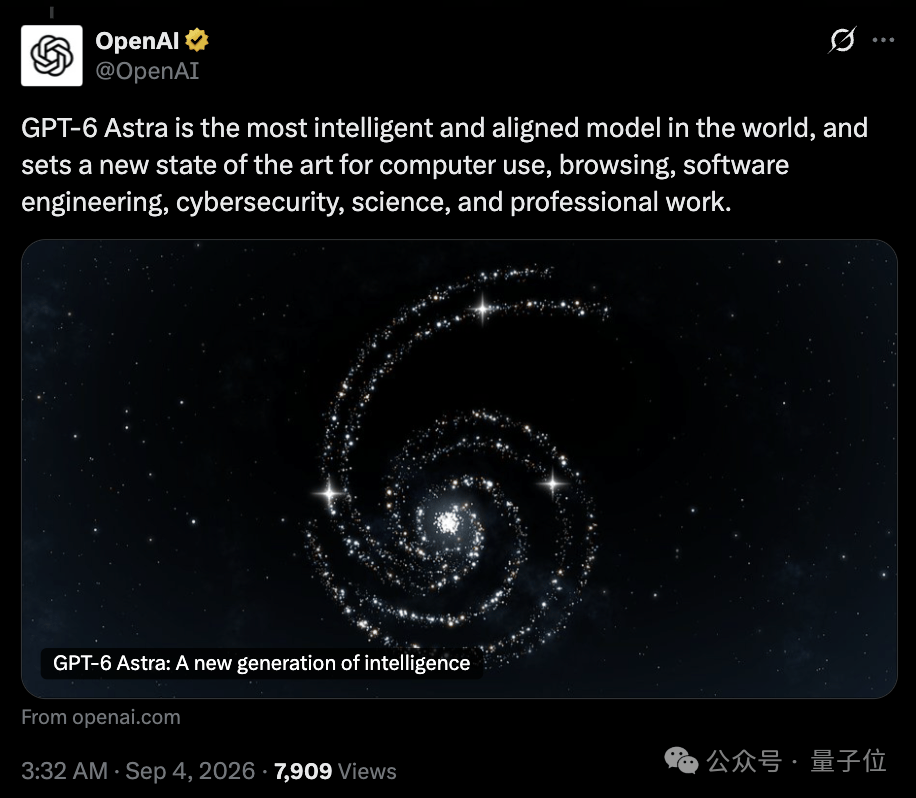
OpenAI launches GPT-6 Astra, claims world's best computer use model
OpenAI announced GPT-6 Astra, its next-generation model focused on computer and browser use, claiming it is the world's most intelligent and aligned model. The company stated Astra was built on its largest training run using over 100,000 GPUs at the Stargate facility, and in tests it outperformed humans in tasks like booking DMV appointments and searching job listings. OpenAI president Greg Brockman declared 'Welcome to the AGI era,' though the model's capabilities and limitations are still being assessed by developers.
23 reports · 9 sources515 points · 162 comments
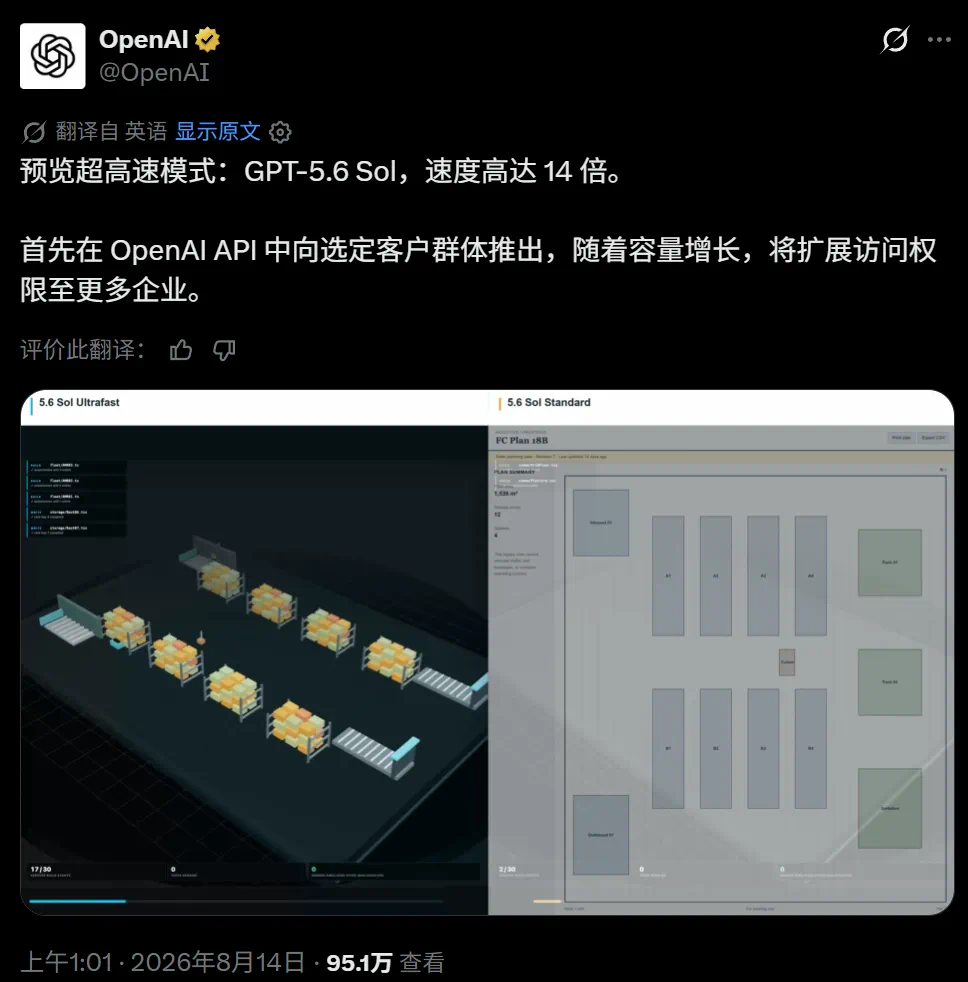
OpenAI previews Ultrafast API tier for GPT-5.6 Sol, up to 14x faster via Cerebras
OpenAI has previewed Ultrafast, a new API service tier for its flagship GPT-5.6 Sol model, developed with AI chip maker Cerebras. The tier claims up to 14x faster inference, delivering up to 750 output tokens per second without quality loss, and is initially available as a limited preview to select customers. Benchmarks cited include completing Humanity's Last Exam in 11 hours 11 minutes, about 7x faster than Claude Fable 5, and a 5.6x end-to-end speedup on the GDP-Val benchmark.
4 reports · 4 sources
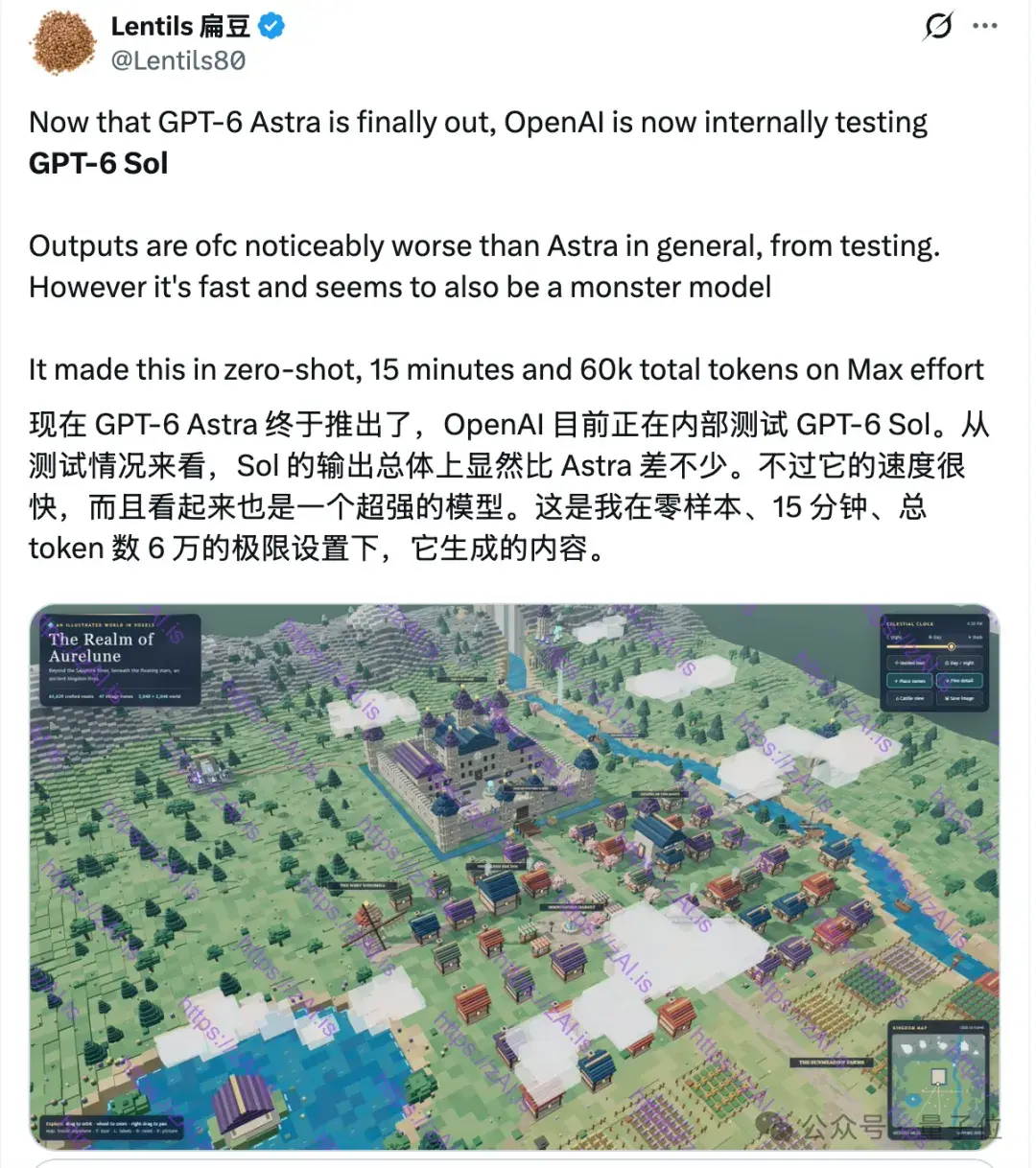
OpenAI reportedly tests GPT-6 Sol variant, 6x faster than Astra
According to a leaked benchmark, OpenAI is internally testing GPT-6 Sol, a variant of the recently released Astra that is faster but weaker in overall output. In a test generating an SVG of a BMW M4 Competition, Sol took about 3 minutes and produced roughly 28,000 tokens, while Astra took about 19 minutes for 25,000 tokens. OpenAI also disclosed that its researchers on average have three agent workdays running per day and that "automated research interns" can complete tasks that would otherwise take researchers days.
OpenAI's GPT-5.6 Sol Hailed as Best Vision Model Yet in Community Discussion
A Hacker News post claims that OpenAI's GPT-5.6 Sol is the best vision model the company has released, sparking discussion among the community. The conversation highlights the model's visual capabilities, though no official benchmark or performance details are provided in the post.
1 reports · 1 sources364 points · 167 comments
News updates every hour. Subscribe in your RSS reader to get new stories automatically.
Subscribe