MutexaGPT: Multi-Agent LLM System Translates Protein Engineering Intuition into Physics-Based Mutation Proposals
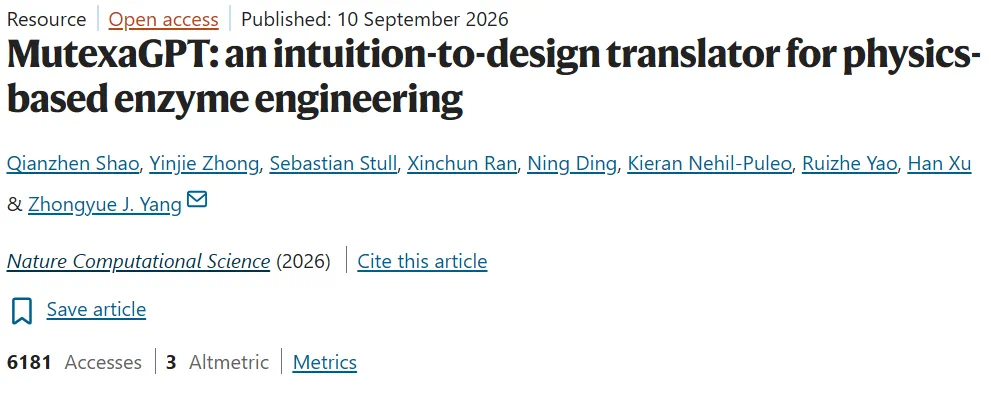
Researchers published a paper in Nature Computational Science describing MutexaGPT, a multi-agent system that translates natural-language protein engineering intuition into physics-based mutation proposals. The system uses interconnected LLM agents to understand user queries, plan computational workflows, run molecular dynamics simulations, and explain results, aiming to automate enzyme engineering. In a retrospective test, it addressed the classic problem of enlarging an enzyme's active-site pocket to accommodate larger substrates.
Coverage timeline
机器之心ScienceAI
编辑丨% 设计一种新的酶,很多时候并不是先有一个明确的计算公式。 经验丰富的蛋白质工程师可能只是观察一个酶的结构,随后他们的直觉开始运作:活性位点是不是太小了?把某几个氨基酸换掉,让口袋变大一些,会不会更适合体积更大的底物?又或者,让两个结构域之间稍微「松」一点,是不是能提高酶在低温下的活性? 想要验证这些想法的价值,往往需要一整套复杂的计算流程。9 月 10 日,发表于《Nature Computational Science》的「 MutexaGPT: an intuition-to-design translator for physics-based enzyme engineering 」,尝试让 AI 来完成中间这段翻译工作。 研究人员开发了一个名为 MutexaGPT 的多智能体系统:用户只需要用自然语言描述自己的蛋白质工程直觉,系统就能把它转换成物理模型和分子动力学模拟任务,自动运行计算、分析结果,最后给出可以进一步进行实验测试的突变方案。 论文链接: https://www.nature.com/articles/s43588-026-01049-y 自动化酶工程 酶是生命体系中的催化机器。 它们通过精确控制活性位点附近的空间结构、分子运动和化学环境,让特定反应更容易发生。因此,想改变一种酶的功能,本质上就是想办法找到一组新的氨基酸序列,使蛋白质仍能正确折叠,同时拥有希望得到的催化性质。 过去对于酶的调控往往需要研究人员自己调用不同的软件,再手动组织模拟与分析流程。而 MutexaGPT 所做的,就是自动化这个过程。 MutexaGPT 背后是一组彼此连接的 LLM 智能体。 用户首先通过聊天界面提出设计问题。QuestionAnalyzer 负责理解这个问题,并判断还缺少哪些必要信息;随后,WorkPlanningBoard 把科学问题转换成可以实际执行的计算工作流,包括选择相应的物理模型和模拟方案;计算完成后,ResultExplainer 再把结果重新转换成人能够理解的语言,并给出下一步可以测试的突变建议。 图 1:MutexaGPT 的设计。 回顾性测试 研究团队首先进行了一个回顾性测试。 他们让MutexaGPT处理一个经典问题:如何扩大酶的活性位点口袋,让它更容易容纳体积更大的底物? 系统根据已有的突变和活性数据建立设计约束,然后通过分
Related stories
Ai2 publishes byte-level LM technique in Nature, shows generalization beyond Olmo
The Allen Institute for AI (Ai2) has published in the journal Nature the technique behind its fully open byte-level language models, Bolmo. New checkpoints demonstrate that the approach generalizes beyond the Olmo model family to other model architectures.
1 reports · 1 sources

Anthropic reports automated AI researchers mitigate alignment failures across all 10 benchmarks
Anthropic released a report on its Automated Alignment Researcher (AAR) project, where Claude agents autonomously search papers, propose methods, generate data, and train models to fix alignment failures. The system improved performance on all 10 misalignment benchmarks without degrading overall performance, and outperformed human researchers on some tasks at a fraction of the cost.
4 reports · 4 sources

Stanford's Virtual Biotech: Multi-Agent AI Framework for Drug Discovery Published in Science
Stanford researchers published a paper in Science on September 17, 2026, describing Virtual Biotech, a multi-agent AI framework that simulates a biotech company's R&D organization for therapeutic discovery. The system comprises four research departments and 11 main agents, with a virtual chief scientific officer coordinating tasks such as target discovery, safety assessment, and clinical development. It uses Claude Sonnet 4.5 and Haiku 4.5 models, and in a data-curation example, deployed 37,075 parallel agent instances to process clinical trial records.
1 reports · 1 sources

OpenAI launches GPT-6 Astra, claims world's best computer use model
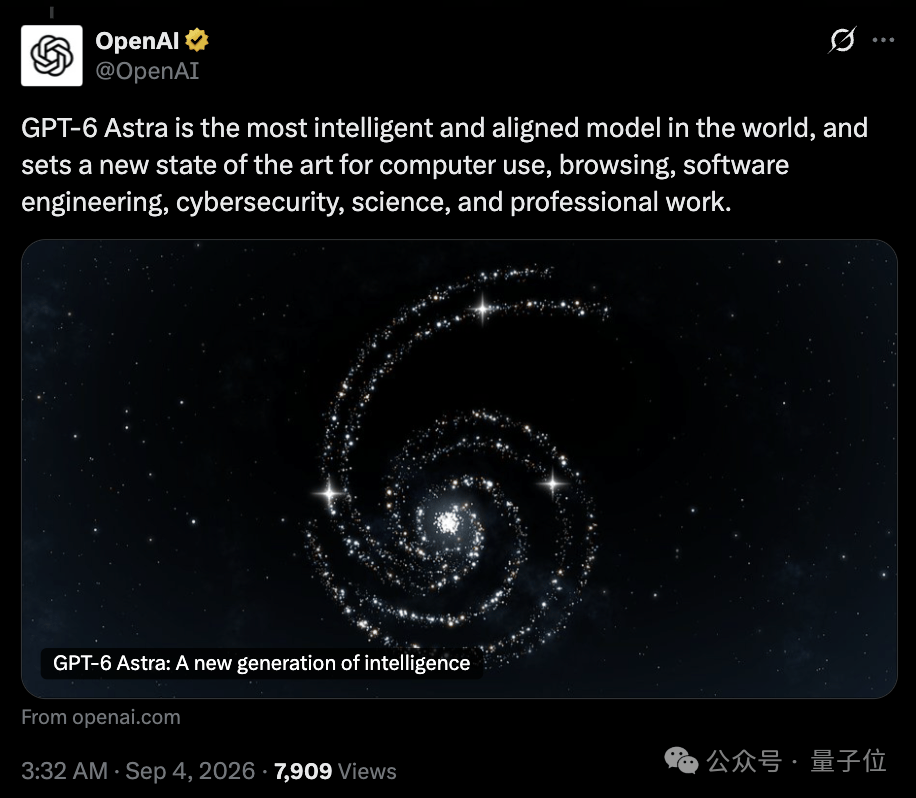
OpenAI announced GPT-6 Astra, its next-generation model focused on computer and browser use, claiming it is the world's most intelligent and aligned model. The company stated Astra was built on its largest training run using over 100,000 GPUs at the Stargate facility, and in tests it outperformed humans in tasks like booking DMV appointments and searching job listings. OpenAI president Greg Brockman declared 'Welcome to the AGI era,' though the model's capabilities and limitations are still being assessed by developers.
News updates every hour. Subscribe in your RSS reader to get new stories automatically.
Subscribe