UCLA and Adobe open-source Tev-27B long-horizon agent model, matching GPT-6 Astra and Claude Opus 5 on ALE-CM
Researchers from UCLA and Adobe Research released a paper and open-sourced Tev-27B, a long-horizon agent model trained on their new Tev-Gym benchmark with dense, verifiable, progressive rewards via progress potential reward shaping (PPRS). On the Agents' Last Exam computation and mathematics subset (ALE-CM), Tev-27B achieves Pass@5 of 0.28, matching GPT-6 Astra and Claude Opus 5; the same recipe applied to Tev-320B makes it the strongest open-source model on Terminal-Bench 4.0's computation and mathematics subset.
Coverage timeline
机器之心机器之心
从连续工作数小时到数天,长程智能体(long-horizon agents)正成为大模型竞争的新焦点,也被视为通往自动化科学发现乃至递归自我改进(RSI)的关键能力。但开源模型在长程任务上仍明显落后:既缺训练数据,也缺行之有效的训练配方。 近日,Adobe Research 与加州大学洛杉矶分校(UCLA)的研究团队提出 Tev :构建了首个带有可验证、稠密、渐进式奖励的长程智能体训练集 Tev-Gym (1,170 个环境,覆盖 7 个领域),并提出 进度势能奖励塑形(PPRS) 。由此训练的 Tev-27B 在 Agents' Last Exam 计算与数学领域(ALE-CM)上 Pass@5 达到 0.28,与 GPT-6 Astra、Claude Opus 5 持平;同一配方训练的 Tev-320B 则是 Terminal-Bench 4.0 计算与数学子集上最强的开源模型。 论文标题:Tev: Scaling Long-Horizon Agentic Environments with Dense Progress Rewards 论文链接:https://arxiv.org/abs/2610.18868 项目主页:https://tev-agent.github.io/ 图 1:左为 Tev 在 ALE-CM 上的结果及在 Terminal-Bench 上的零样本泛化,右为潜在世界优先的数据合成流程概览。 长程智能体的两道坎:没有训练数据,也没有奖励信号 现有开源智能体语料(如 SWE-Smith、TMAX、CLI-Gym 等)动辄数千上万个环境,但每个任务只是一次 PR 级别的修复或一段简短的终端会话,前沿智能体跑完一次的中位耗时不超过 2 分钟。真正的长程任务只存在于人工编写的评测基准里:每个基准仅有几十到几百道题,每道题耗费专家数周,而且只用于评测。长程任务的训练语料至今仍是空白。 第二道坎是奖励稀疏:奖励只在任务提交时才出现。GRPO 在同一任务的 G 条 rollout 之间归一化奖励,一旦整组全部失败,优势值全为零,这组样本就白跑了。若解题概率为 p,被浪费的组占比为 (1−p) G:p = 0.05、G = 8 时为 66%,p = 0.01 时高达 92%。而这类组恰恰集中在训练初期 —— 策略最弱、最需要信号的时候。 先造
Related stories
RVCBench benchmark evaluates robustness of 18 voice cloning models; accepted at NeurIPS 2026
Researchers from the University of British Columbia and the Vector Institute introduced RVCBench, a benchmark that systematically evaluates the robustness of 18 open-source voice cloning models across 18 evaluation metrics and 10 task types, covering input, generation, output, and audio perturbation stages. The benchmark is packaged as a pip-installable toolkit and has been accepted at NeurIPS 2026.
1 reports · 1 sources
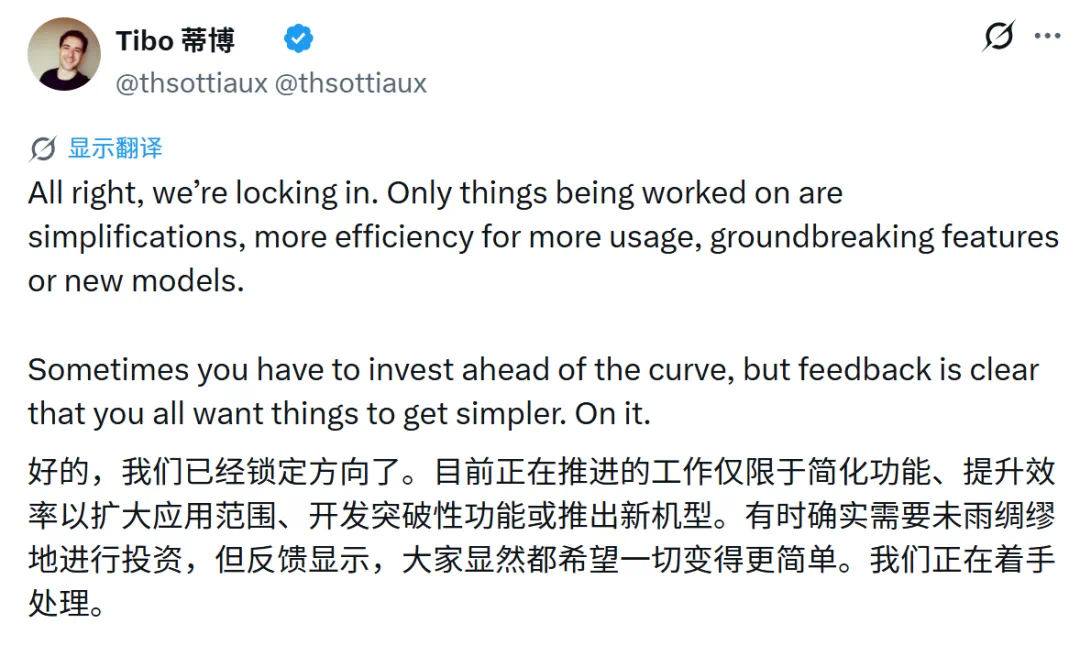
OpenAI Codex lead Tibo pledges 28-day daily improvement or quota reset; first day boosts GPT-6 inference speed ~50%
OpenAI Codex lead Tibo announced a 28-day commitment to deliver either a meaningful improvement for Codex/Work users or a full quota reset each day, following user complaints about slow models and reduced quotas after DevDay. On the first day, OpenAI boosted default inference speed for GPT-6 Astra and GPT-6.1 Sol by ~50% to 50 TPS across subscriptions and partner products, while also introducing text watermarking. The move comes amid a user trust crisis and a SemiAnalysis report claiming Anthropic subscriptions offer 5x more value than OpenAI's.
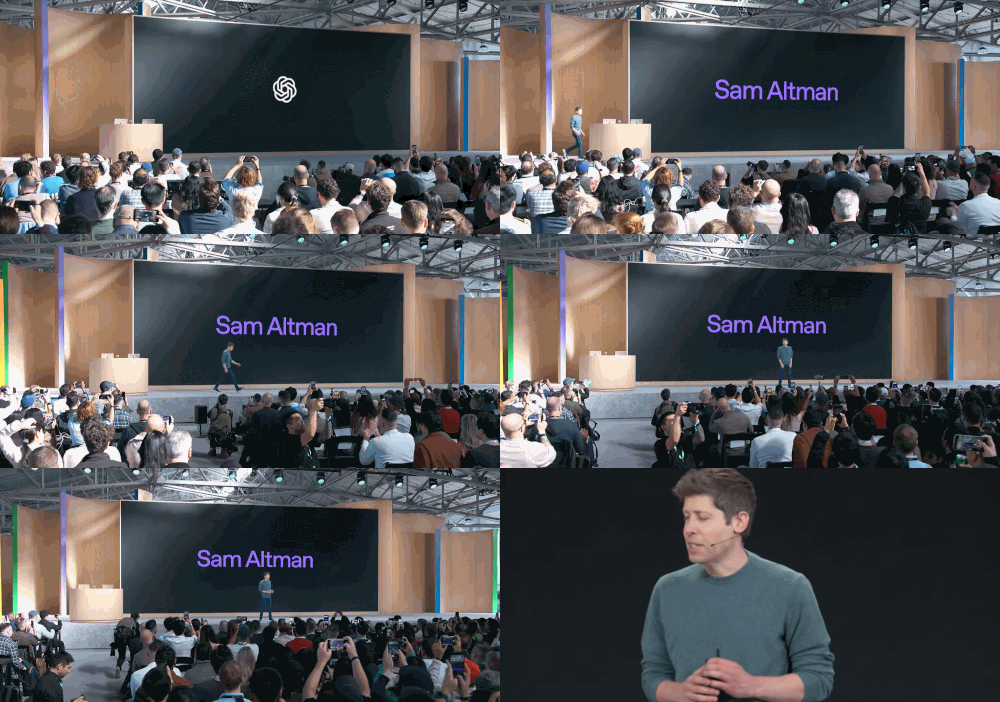
OpenAI launches GPT-6.1 Sol, nearly matching Astra at one-fifth price
OpenAI announced GPT-6.1 Sol at DevDay, an upgrade to GPT-6 Sol that nearly matches GPT-6 Astra on agentic coding, computer use, and professional work, at one-fifth of Astra's standard API prices. The model is priced at $2 per million input tokens and $10 per million output tokens, matching GPT-6 Sol and Claude Sonnet 5.5, and is available in ChatGPT Work, Codex, and the API. OpenAI also introduced a $500-per-month Pro 500 plan with Astra Ultrafast access and the always-on agent 'dots'.
Liquid AI releases LFM2.5-24B-A2B, an open-weight 24B reasoning model with 2B active parameters
Liquid AI announced LFM2.5-24B-A2B, an open-weight 24B reasoning model with 2B active parameters, designed for fast, private on-device agents. The company claims it outperforms Qwen3.6-35B-A3B on the LiveClaw benchmark.
2 reports · 2 sources287 points · 80 comments
News updates every hour. Subscribe in your RSS reader to get new stories automatically.
Subscribe