DeepMind's AlphaProof Code verifies Signal protocol in four-week proof-of-concept
Google DeepMind researchers used the agentic AI framework AlphaProof Code to formally verify the cryptographic guarantees of the Signal protocol in a four-week proof-of-concept. The agents wrote three million lines of proofs in Lean to verify Signal's core encryption, marking a breakthrough in verifying complex software at depth.
Coverage timeline
Techmeme
Lily Hay Newman / Wired : Google DeepMind researchers used agentic AI framework AlphaProof Code to verify the Signal protocol's cryptographic guarantees, in a four-week proof-of-concept — DeepMind researchers were able to formally verify that the widely used encryption protocol works as intended. Their stretch goal?

Google DeepMind Blog
AlphaProof Code agents wrote three million lines of proofs in Lean to verify Signal’s core encryption.
Related stories
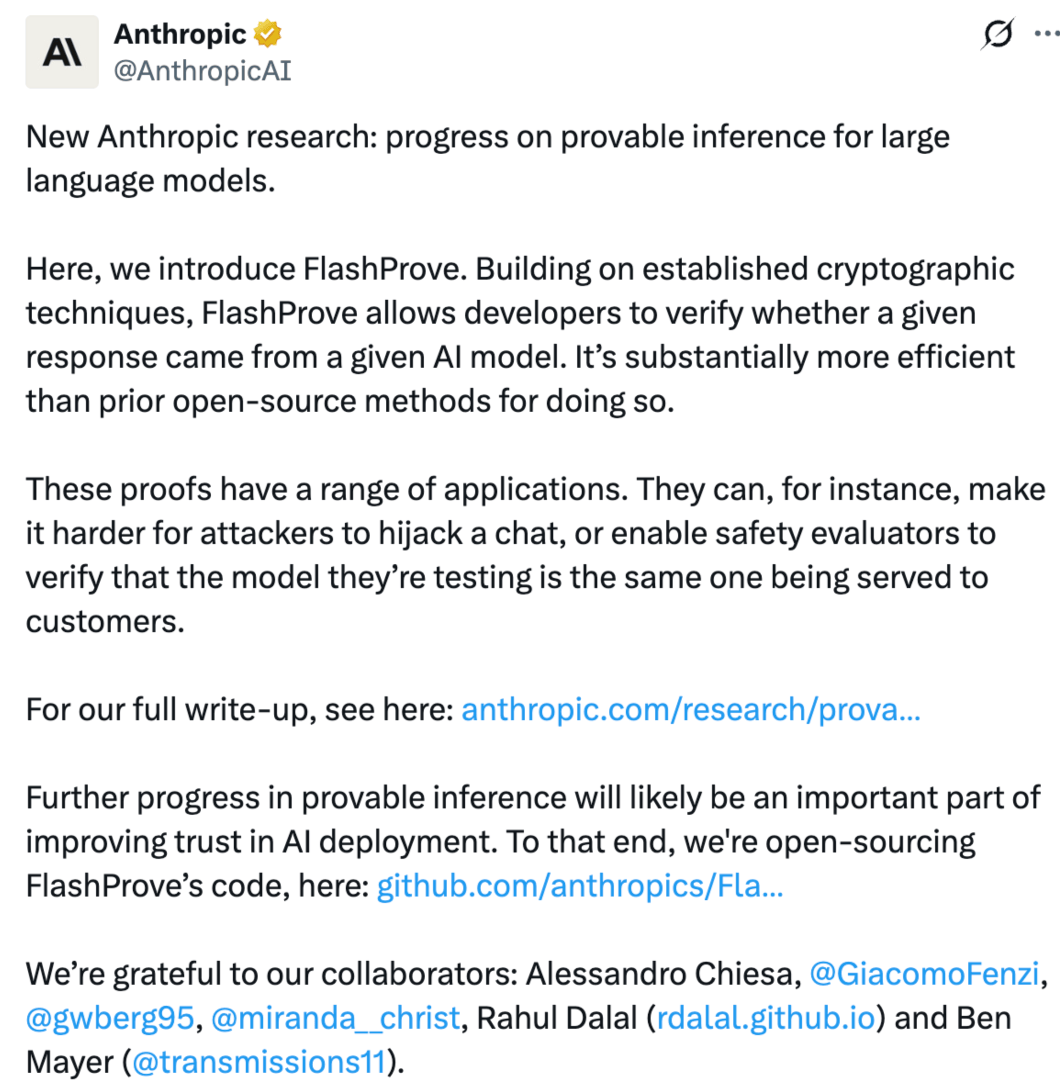
Anthropic open-sources FlashProve for cryptographic verification of AI model identity
Anthropic released FlashProve, an open-source prototype that uses zero-knowledge cryptography to verify that an AI response came from a specific model, preventing routers or providers from swapping in cheaper models. Tested on a 400B-parameter mixture-of-experts model, it generates proofs at about 110 tokens per second on a single NVIDIA H100 GPU, with proof files around 19 MB per 1024-token request. The release includes proof generators, C++ and Lean verifiers, documentation, and formal proofs.
3 reports · 3 sources
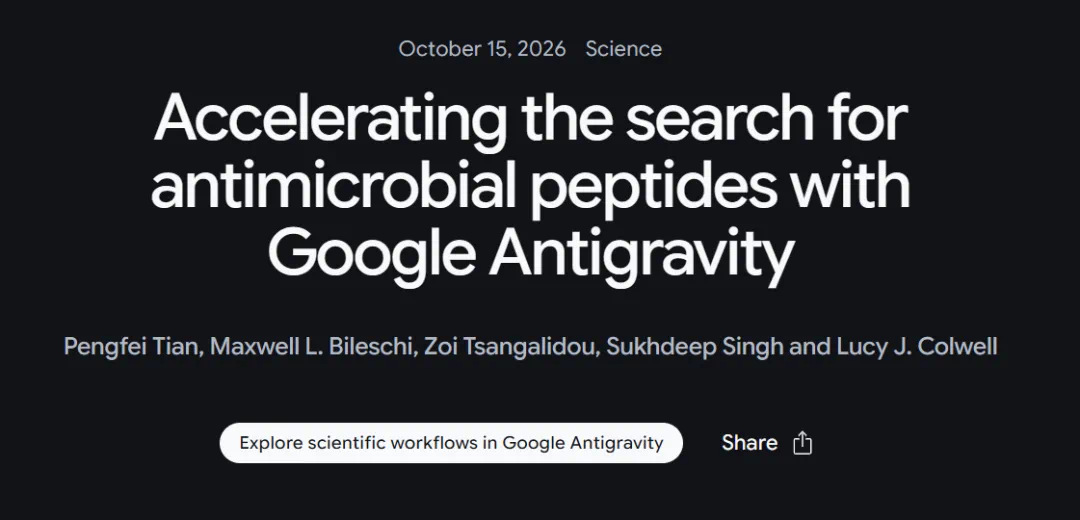
Google DeepMind Uses AI Agent Antigravity and ProtNLM to Discover Novel Antimicrobial Peptides
On October 15, Google DeepMind published a technical demo showing how its AI agent platform Antigravity and ProtNLM model can discover novel antimicrobial peptides (AMPs) from protein databases. The workflow narrowed millions of UniProt records to a candidate bacteriocin from Streptococcus pseudopneumoniae, which has entered wet-lab validation.
Google DeepMind unveils Gemini 4 Carbon, tops AI benchmark
Google DeepMind announced Gemini 4 Carbon, its next frontier model, claiming state-of-the-art performance in cybersecurity and long-horizon tasks. The model scored 59 on the Artificial Analysis Intelligence Index v5.0, ranking first ahead of Claude Opus 5.5 (58) and GPT-6 Astra (57). It is initially available only to select cybersecurity defense companies through the Fairwind program, with pricing at $2 per million input tokens and $10 per million output tokens, rising to $4 and $20 later.
8 reports · 6 sources1013 points · 801 comments

Anthropic: Claude flags 493 security issues across 25 open-source projects
Anthropic reported that Claude identified 493 security issues across 25 open-source projects, covering over 5 million lines of C, C++, Java, PHP, and Python code, including one vulnerability that went unnoticed for 21 years. The lab also announced a partnership with Theorem to use Claude for formally proving security properties at the assembly level across more than 100 real-world open-source libraries, extending formal verification to larger codebases.
4 reports · 3 sources460 points · 310 comments
News updates every hour. Subscribe in your RSS reader to get new stories automatically.
Subscribe