Claude Code team shifts code review to continuous AI-assisted checks
Members of Anthropic's Claude Code team described how they rethought code review, moving from a final human gate to continuous AI-assisted checks with Claude before human review. They argue that 'did a human read the code?' is an imprecise proxy for identifying potential issues, and that most changes are now reviewed and fixed by Claude at least once before human scrutiny, freeing attention for higher-level questions.
Coverage timeline
Simon Willison
We think "did a human read the code?" is an imprecise proxy for "what could go wrong with this change, and which check—automated or human—is the right one to catch it?" Asking that question also changed when review happens. Before, review was a gate at the end of the road: write the code, open a PR, wait for your colleague. Now, review runs continuously, more like spellcheck while you write. Most changes have been reviewed and fixed by Claude at least once before a human is asked to look. This catches most routine mistakes, and saves team attention for higher-level questions and scrutiny. — Addy Osmani, Morgan Westlee Lunt, and Qing Wang , How the Claude Code team does code review Tags: anthropic , claude , ai , claude-code , llms , addy-osmani , coding-agents , generative-ai , agentic-engineering , code-review
Related stories
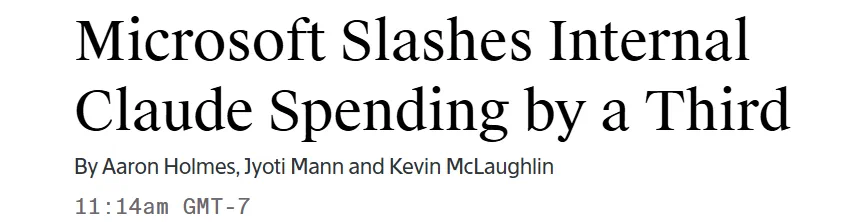
Meta, Microsoft reportedly cut employee use of Anthropic's Claude
According to The Information, Meta and Microsoft are working to reduce their employees' reliance on Anthropic's Claude, with Meta's Claude Code active users dropping to about 30,000 from 60,000 earlier this yearcars. Microsoft has cut internal Claude spending by over 33%, reducing per-employee monthly token budgets from $100,000 to $10,000 and routing requests to cheaper models via Copilot. Meta is shifting developers to its own tools like Muse Code and MetaCode.
3 reports · 3 sources375 points · 383 comments
Anthropic launches Claude Opus 5.5 with enhanced safeguards
Anthropic released Claude Opus 5.5, its first model since CEO Dario Amodei's 'pace the frontier' essay, with enhanced safeguards against risky behaviors such as attempts to escape testing environments. The model tops multiple benchmarks, with output speed over 30% faster than Opus 5, API prices cut by 20%, and cache-read prices reduced by 60%.
4 reports · 4 sources

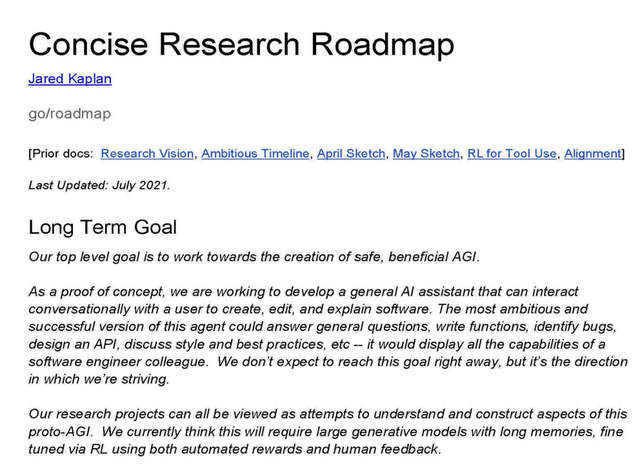
Anthropic 2021 roadmap predicted Claude Code, tool use, test-time compute
A confidential 2021 internal roadmap from Anthropic, exposed in a copyright lawsuit, outlined plans for a general AI assistant capable of creating, editing, and explaining software—now realized as Claude Code. The document also predicted tool use, self-judging, test-time compute, and trillion-parameter models with long context. Internal debates and CEO Dario's decision to prioritize tool-use feasibility shaped the path.
Anthropic says it made Claude.ai and desktop app core UX ~3x faster in August
Anthropic reported that in August it improved the core user experience of Claude.ai and the Claude desktop app by approximately 3x, using an internal model to ship enhancements within a two-week sprint. The company noted that once Claude can measure something, it can make it faster, and it kept finding more things to measure.
1 reports · 1 sources
News updates every hour. Subscribe in your RSS reader to get new stories automatically.
Subscribe