Google's DeepCrossAttention Cuts Training Time by 3x with Comparable Quality
According to a report on Hacker News, Google's DeepCrossAttention architecture reportedly achieves comparable model quality up to 3x faster than existing approaches. The result highlights a notable efficiency gain in model architecture design, potentially reducing training costs and time for large-scale AI models.
Coverage timeline
Hacker NewsComputedCamp995
Related stories
Prefrontal AI and ETH Zurich unveil Latent Sparse Attention, speeding up 10M-token prefill by up to 72x
Prefrontal AI and ETH Zurich published a paper introducing Latent Sparse Attention (LSA), a method that accelerates prefill for ultra-long contexts by up to 72.4x at 10 million tokens. The approach addresses the quadratic growth of the indexing cost in sparse attention, which dominates prefill time at such scales. LSA speeds up a single attention layer of GLM-5.3-Flash by 22.7x and Qwen3.8-27B by 72.4x while maintaining accuracy.
1 reports · 1 sources
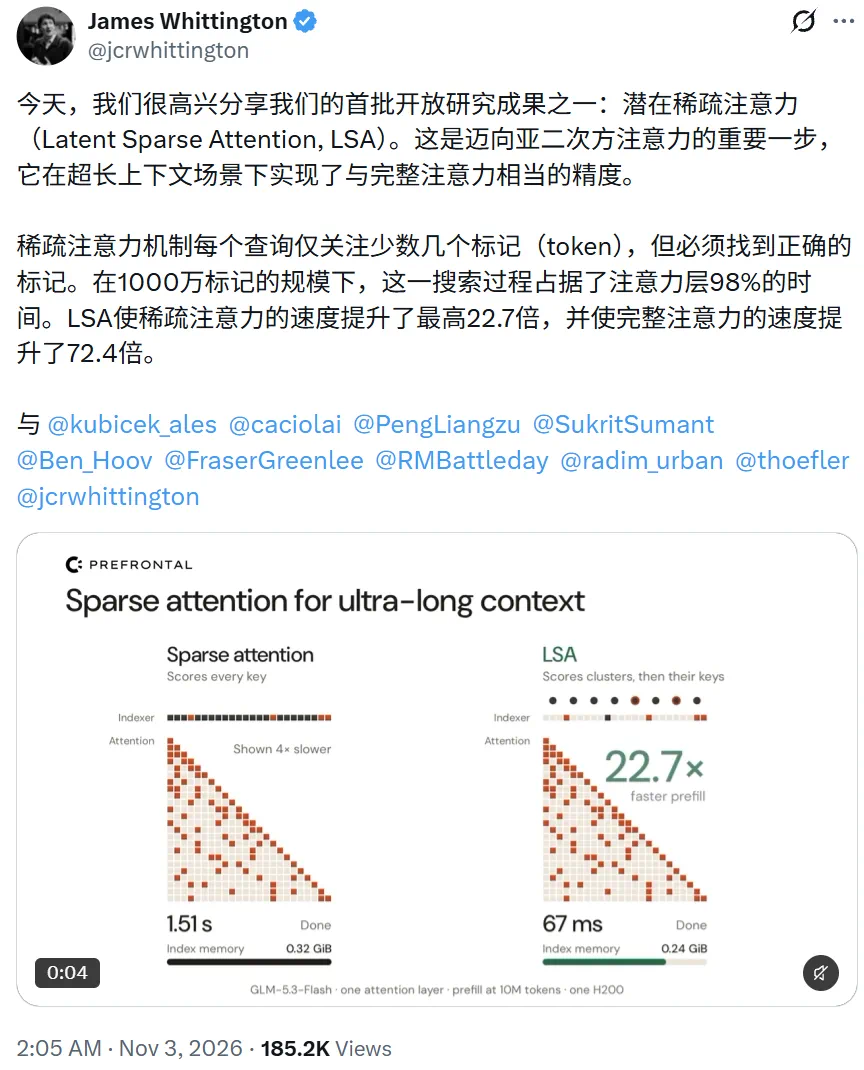
Users report gray-testing of Claude Opus 5.6 in Claude Code, citing 2-3x efficiency gains
Users report being gray-tested on Claude Opus 5.6 within Claude Code, showing 2-3x overall efficiency gains over previous Opus versions and improved 3D generation, though not officially confirmed. Demos highlight detailed visual outputs, including a pelican riding a bicycle and a simplified Jujutsu Kaisen animation, with some users noting the model may be routed via the Opus 5.5 Extra entry point.
1 reports · 1 sources
Google launches Gemini 4 Hydrogen, a low-cost agentic model, across products
Google announced Gemini 4 Hydrogen, a new Flash-level multimodal model with a 1M token window, priced at $1.50/1M input and $7.50/1M output tokens. It is available across AI Studio, the Gemini API, Search, the Gemini app, and Antigravity, and introduces an xhigh reasoning level. Benchmarks show it nearly ties Claude Sonnet 5.5 and GPT-6.1 Sol on the Artificial Analysis Intelligence Index at lower cost, and it powers an upgraded AI Mode in Search.
9 reports · 6 sources570 points · 352 comments

METR: Anthropic models improving twice as fast, AI use drives ~80% of acceleration
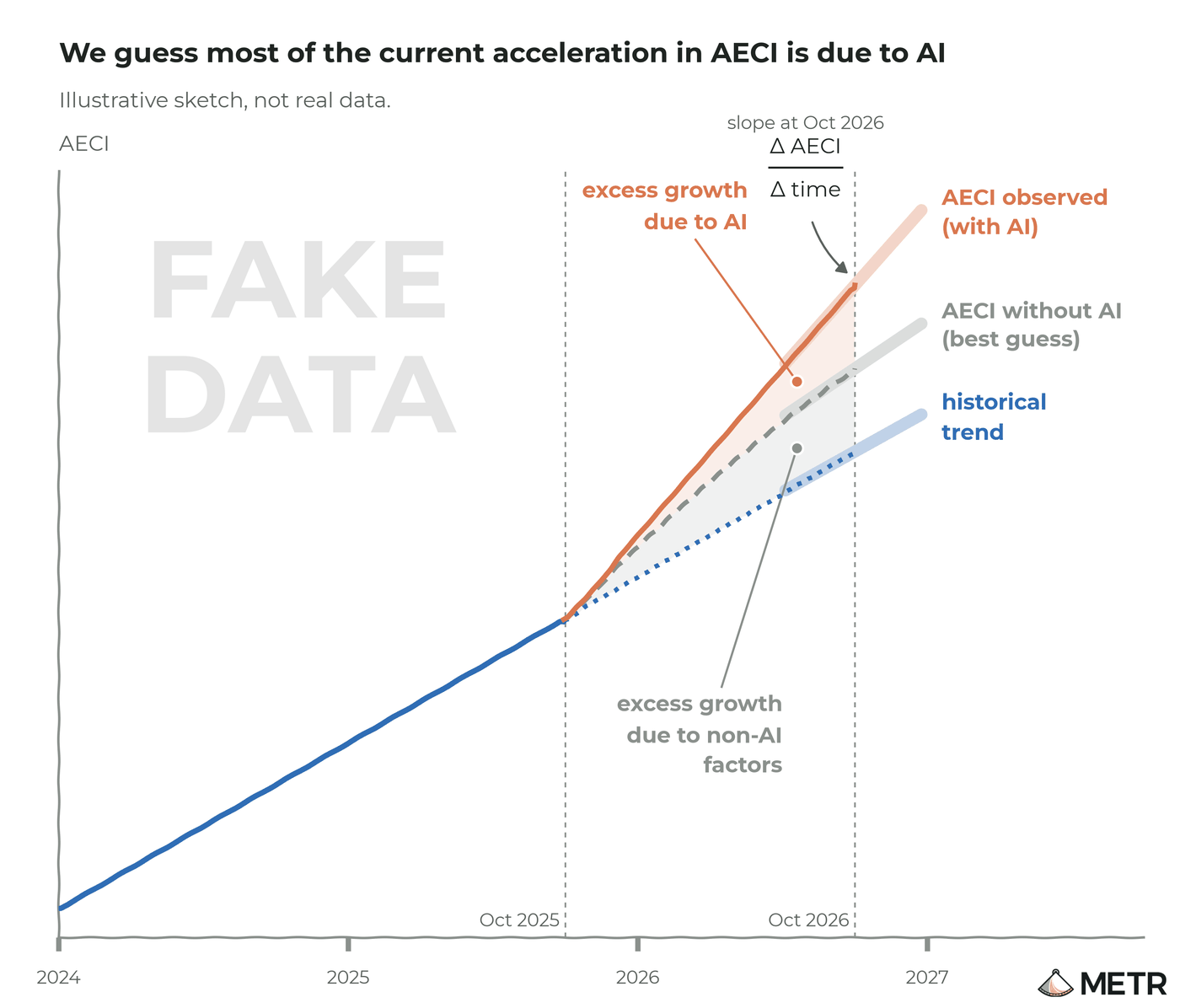
A METR report, based on an 11-week internal assessment at Anthropic, finds model capability progress roughly doubled since October 2025, with AI-assisted research driving about 80% of the acceleration. The report also reveals three unreleased internal models (Model 2, 3, 4), with the strongest exceeding Opus 5.5 by about three months of progress. Anthropic redacted much of the most informative evidence from the public version, citing confidentiality concerns.
6 reports · 5 sources47 points · 6 comments
News updates every hour. Subscribe in your RSS reader to get new stories automatically.
Subscribe