Raschka Explains Positional Embeddings in Modern LLMs, Including RoPE
Sebastian Raschka published a technical article explaining positional embedding methods in modern LLMs, covering classic approaches and RoPE with visual examples, math, and a small PyTorch implementation. The article also previews how 2026 open-weight models handle position encoding, grouping architectures by their positional embedding choices.
Coverage timeline
Ahead of AI (Raschka)Sebastian Raschka, PhD
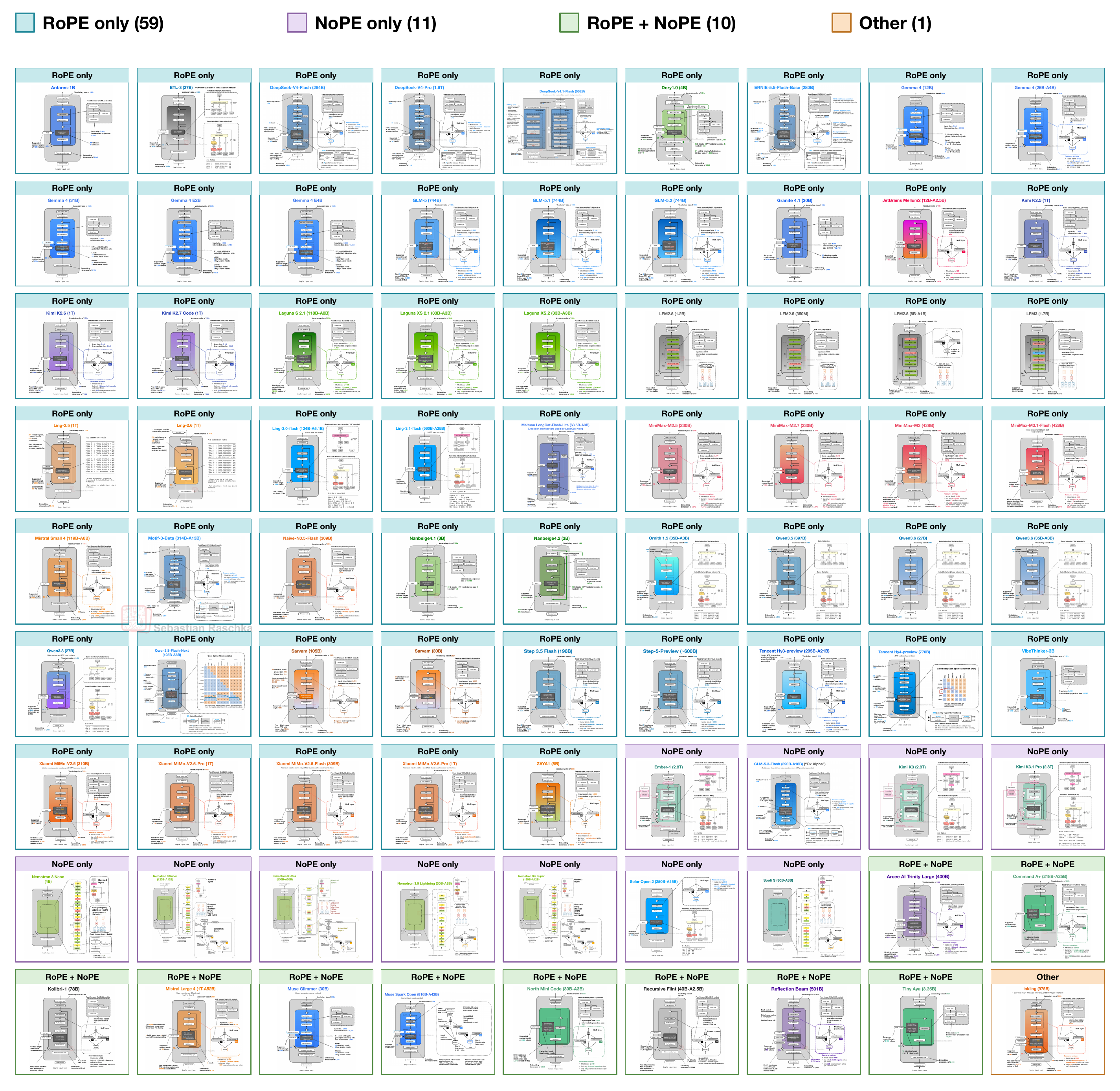
This article explains how LLMs encode and process token position information by covering classic and contemporary methods like RoPE. It’s essentially a comprehensive journey where we will work through the mechanisms with visual examples, a little math, and a small PyTorch implementation. And, of course, we will then also look at how modern architectures adapt or omit explicit positional encodings. Below, you can find a preview of which positional embedding choices are used in 2026 open-weight models. We will discuss these choices later after covering the underlying mechanisms. Figure 1: A preview of the gallery’s 2026 architectures, grouped by positional encoding. Architecture figures taken from my LLM gallery . But why spending so much time writing/reading about this rather minor building block? LLMs keep evolving, and as I was preparing a new article on the latest LLM architecture trends this year, I realized that I never covered the positional information methods used in LLMs in any
Related stories
Sleep framework proposed to help LLMs retain knowledge in continual learning
A research paper introduces the Sleep framework, a new method designed to help large language models retain knowledge during continual learning. The framework aims to address the challenge of catastrophic forgetting, where models lose previously learned information when trained on new tasks.
1 reports · 1 sources233 points · 33 comments
News updates every hour. Subscribe in your RSS reader to get new stories automatically.
Subscribe