15 Institutions Release TouchScale: 500-Hour Human Visual-Tactile Dataset Boosts Robot Task Success
Researchers from 15 institutions, including Texas A&M, Google DeepMind, CMU, Stanford, and Meta, released TouchScale, a 500-hour human visual-tactile dataset collected with a unified wearable system. Using this data for mid-training, robot success on four real-world contact tasks rose from 22.5% to 57.5%, and scaling benefits were observed as data volume increased.
Coverage timeline
机器之心机器之心
拿起一枚生鸡蛋,手指需要施加恰到好处的力:既要防止滑落,又不能捏碎。拧一条湿毛巾,指尖的力道也要随着水分挤出不断调整。对人类而言,这些操作几乎出于本能。但如果只依赖视觉,摄像头拍得下手部轨迹,却捕捉不到手指接触的位置与按压的力度。 过去几年,在学术界,第一视角人类视频已经快速扩展到数万小时,越来越多工作也开始看到数据规模增长带来的收益。视觉 — 触觉数据却远没有达到这样的规模:此前公开的人类视触觉数据集大多只有几小时到几十小时。若简单将多个小数据集合并,各家的触觉传感器、采集流程和数据格式又不相同。数据量虽然上去了,硬件和流程也跟着变化,“更多数据” 究竟贡献了多少反而难以单独判断。 近日,来自德州农工大学(Texas A&M)、Google DeepMind、卡内基梅隆大学(CMU)、斯坦福大学、加州大学伯克利分校、耶鲁大学、微软、英伟达(NVIDIA)、利物浦大学、Meta、华盛顿大学、西北大学、索尼、佐治亚理工学院(Georgia Tech)以及 Overfit Lab (数据供应商) 等 15 家机构的研究者发布了 TouchScale :一个在统一传感器、统一采集与同步流程下构建的 500 小时人类视觉 - 触觉数据集 。 团队希望借此回答一个关键问题:如果不再拼接不同来源的数据,而是在 同一套传感与采集体系下 ,把 高质量 的第一视角视觉 — 触觉数据真正扩展到数百小时,它是否也会像大规模视频一样,显现出随数据规模增长而来的 Scaling 收益 ?这些 Scaling 收益,又有多少能够进一步转化为机器人的操作能力? TouchScale 带来了什么? 1. 500 小时统一穿戴设备采集 。TouchScale 包含 500 小时人类双手视觉-触觉同步数据,全部由同一套穿戴式系统采集,同步记录头部 RGB-D、双腕 RGB 和双手全手触觉信号。 2. 人类「手感」能迁移到机器人 。无需人类动作标签,也不把人手动作映射到机器人,只用人类视触觉数据做 mid-training,机器人 4 个真机接触任务的平均成功率从 22.5% 升到 57.5%。 3. 数百小时的人类视觉-触觉数据开始显现明显的 Scaling 收益 。TouchScale 用于 mid-training 时,真机操作随着数据规模扩大整体变强;在独立的零样本触觉预测实验中,也观察到了同样

Related stories
NUS Showlab Unveils Show-Harness Interface for VLM Agents to Control Real Robots
Researchers at NUS Showlab introduced Show-Harness, an interface that enables vision-language model (VLM) agents to control real robots directly, moving beyond computer-use to robot-use. The project releases open-source code, models, and data, targeting the gap between frontier models' intelligence and physical robot execution.
1 reports · 1 sources

Anthropic Proposes Metrics for Tracking AI Development at Frontier Labs
Anthropic has outlined metrics for tracking AI development at frontier labs, including the extent of AI-driven R&D, agent oversight, and compute allocation. The company also reported that Claude leads 26% of its AI R&D work, up from 1% in March, and collaborates on over 90% of it under close human direction.
2 reports · 1 sources
Huawei, CUHK, HKUST release LegoFlow for automated code data engineering
Researchers from Huawei, CUHK, and HKUST introduced LegoFlow, an automated framework that streamlines code data engineering from repository collection to training and evaluation. They released LegoFlow-SWE with 5,000 tasks and 2,780 verified trajectories, and demonstrated recursive self-improvement: two iterations raised Qwen3.5-35B-A3B-Base's SWE-bench Verified score from 7.6% to 64.4%.

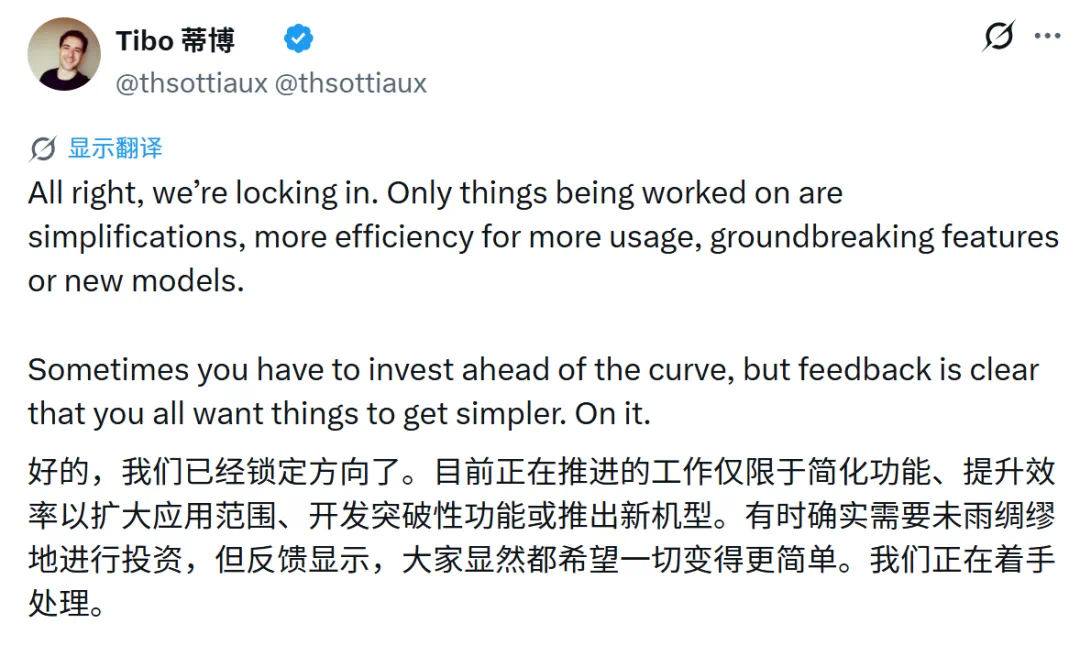
OpenAI Codex lead Tibo pledges 28-day daily improvement or quota reset; first day boosts GPT-6 inference speed ~50%
OpenAI Codex lead Tibo announced a 28-day commitment to deliver either a meaningful improvement for Codex/Work users or a full quota reset each day, following user complaints about slow models and reduced quotas after DevDay. On the first day, OpenAI boosted default inference speed for GPT-6 Astra and GPT-6.1 Sol by ~50% to 50 TPS across subscriptions and partner products, while also introducing text watermarking. The move comes amid a user trust crisis and a SemiAnalysis report claiming Anthropic subscriptions offer 5x more value than OpenAI's.
News updates every hour. Subscribe in your RSS reader to get new stories automatically.
Subscribe