AI efficiency gains limited by human 'verification tax', NYT report finds
A New York Times report synthesizing economic and corporate research indicates that AI has delivered limited efficiency gains in office work, with a human 'verification tax' emerging as a key bottleneck. Surveys by Workday, Google, MIT, and others detail how AI automation creates new human tasks, such as checking and correcting AI outputs, which offset productivity benefits.
Coverage timeline
Techmeme
Sarah Kessler / New York Times : As economic and corporate research shows limited AI efficiency gains, surveys by Workday, Google, MIT, and others detail a human “verification tax” bottleneck — As artificial intelligence automates office tasks, it is also creating a new type of human work.

Related stories
Census Bureau AI Adoption Data Affected by Executive Order 14434
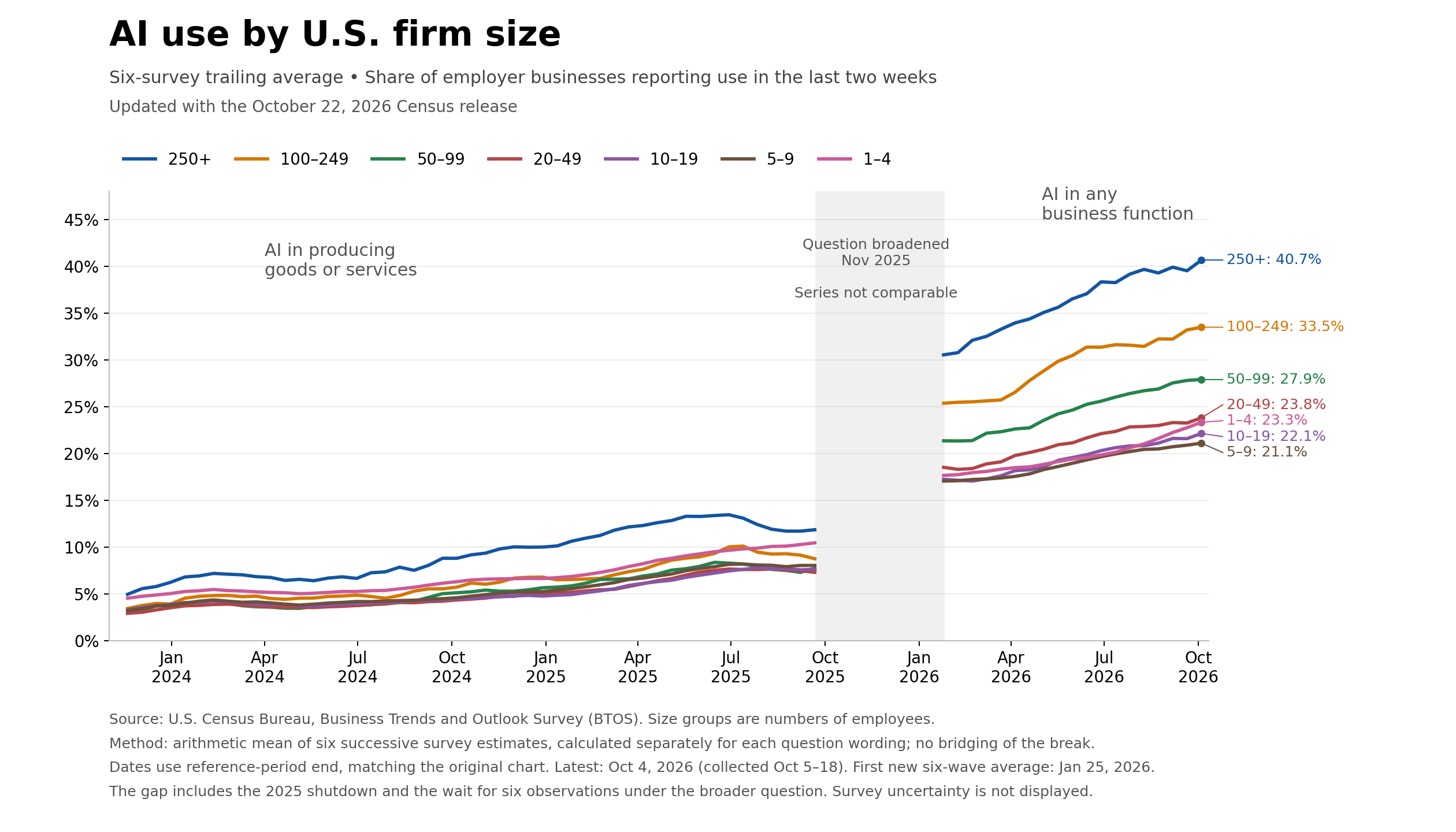
Simon Willison re-analyzed U.S. Census Bureau Business Trends and Outlook Survey (BTOS) data on AI adoption and found the Bureau's data collection has been affected by Executive Order 14434, which he called the "Super Intelligence" order. The BTOS surveys 200,000 businesses every two weeks, with data published on alternating Thursdays at 10am.
1 reports · 1 sources
Cracks emerge in Big Tech AI spending boom amid debt and investor skepticism
An analysis highlights growing concerns about the sustainability of Big Tech's massive investments in AI infrastructure. Mounting debt, negative cash flow, and increasing investor skepticism are cited as key factors challenging the continued spending boom.
1 reports · 1 sources
Study: Non-English languages use 1.5x-5x more AI tokens, creating 'tokenizer tax'
A Rest of World study reports that non-English languages can consume 1.5x-5x more AI tokens than the cheapest language, resulting in a 'tokenizer tax' that raises costs and reduces context for users. The study highlights how tokenization inefficiencies disproportionately affect non-English speakers.
1 reports · 1 sources
Unsealed NYT filings: OpenAI, Microsoft execs called AI training 'theft'
Newly unsealed court filings in The New York Times' lawsuit against OpenAI and Microsoft reveal internal communications where executives described AI training on copyrighted content as 'theft' and an 'existential threat' to publishers. Microsoft's Director of Applied Science, Brent Hecht, reportedly called scraping 'the largest theft of labor in human history' and warned of a 'doom loop' harming the web. The companies lost a bid to keep these documents sealed.
4 reports · 4 sources54 points · 15 comments

News updates every hour. Subscribe in your RSS reader to get new stories automatically.
Subscribe