Tadpole: Autoencoder Foundation Model for 3D PDEs with Online Learning
Researchers propose Tadpole, an autoencoder-based foundation model for 3D partial differential equations (PDEs), which learns to compress physical states before predicting evolution, with online learning capabilities. The approach differs from typical predictive models by first learning the spatial structure of physical fields, aiming to improve transferability across different physical systems.
Coverage timeline
机器之心机器之心
过去几年,“基础模型” 已经彻底改变了自然语言处理和计算机视觉。一个很自然的问题随之出现: 物理世界是否也能拥有类似的基础模型? 天气变化、空气流动、材料变形乃至电磁现象,背后都存在复杂的物理规律。传统科学机器学习往往针对一个问题训练一个模型:换一种物理系统、换一个空间尺度,甚至换几个变量,模型可能都需要重新训练。基础模型则试图改变这种模式:先从大量不同的物理数据中学习通用表示,再快速迁移到新的问题。 但当研究对象来到真正的 三维物理世界 时,事情就没有那么简单了。三维模拟产生的数据通常极其庞大。一次高分辨率流体模拟就可能占据大量存储空间,而训练基础模型需要的数据规模更是惊人。与此同时,不同物理系统拥有不同数量的变量、空间分辨率和演化规律,让同一个模型学习真正可迁移的知识并不容易。 Tadpole 正是在这样的背景下提出的。 论文标题:Tadpole: Autoencoders as Foundation Models for 3D PDEs with Online Learning 论文连接:https://arxiv.org/abs/2605.15284 Github 代码:https://github.com/tum-pbs/tadpole 不先学 “未来”,而是先学 “世界长什么样” 很多物理基础模型采用一种直观的训练方式:给定过去的状态,让模型预测未来。 这很像语言模型中的 “预测下一个词”。模型如果能够见过足够多的物理演化过程,或许就能逐渐掌握其中共同的规律。 Tadpole 却选择了一条不同的路线。它首先被训练成一个 自编码器 :看到某一时刻的三维物理场之后,先将数据压缩到一个更紧凑的潜在空间,再尝试恢复原始数据。换句话说,Tadpole 在预训练阶段首先学习的不是: “下一秒会发生什么?” 而是: “这些复杂的三维物理状态,本质上长什么样?” 这种区别非常重要。 一个物理状态未来如何变化,往往取决于具体的方程、边界条件和物理参数。同样的当前状态,在不同系统中可能走向完全不同的未来,因此直接学习动力学本身是一个高度复杂的任务。而重建关注的是物理场自身的空间结构。由于物理系统通常具有较强的空间相关性和连续性,自编码器可以先学习这些更加通用的特征,再把这些知识迁移到具体任务。从这个角度看,Tadpole 的思路有些像教一个模型认识世界: 与其一开始就要求它

Related stories
Anthropic: Small AI models may self-replicate on IoT devices within months
Anthropic researchers report that small AI models may be months away from self-replicating on commercial IoT devices like smart ovens and off-brand Android TV boxes. In tests, a 9B model ran inference on 8 of 9 hardware types, and GLM-5.2 autonomously spread an 8B model to all 8 nodes in 4 of 5 attempts. The researchers predict models under 30B could achieve end-to-end replication by the end of 2026.
6 reports · 6 sources115 points · 113 comments
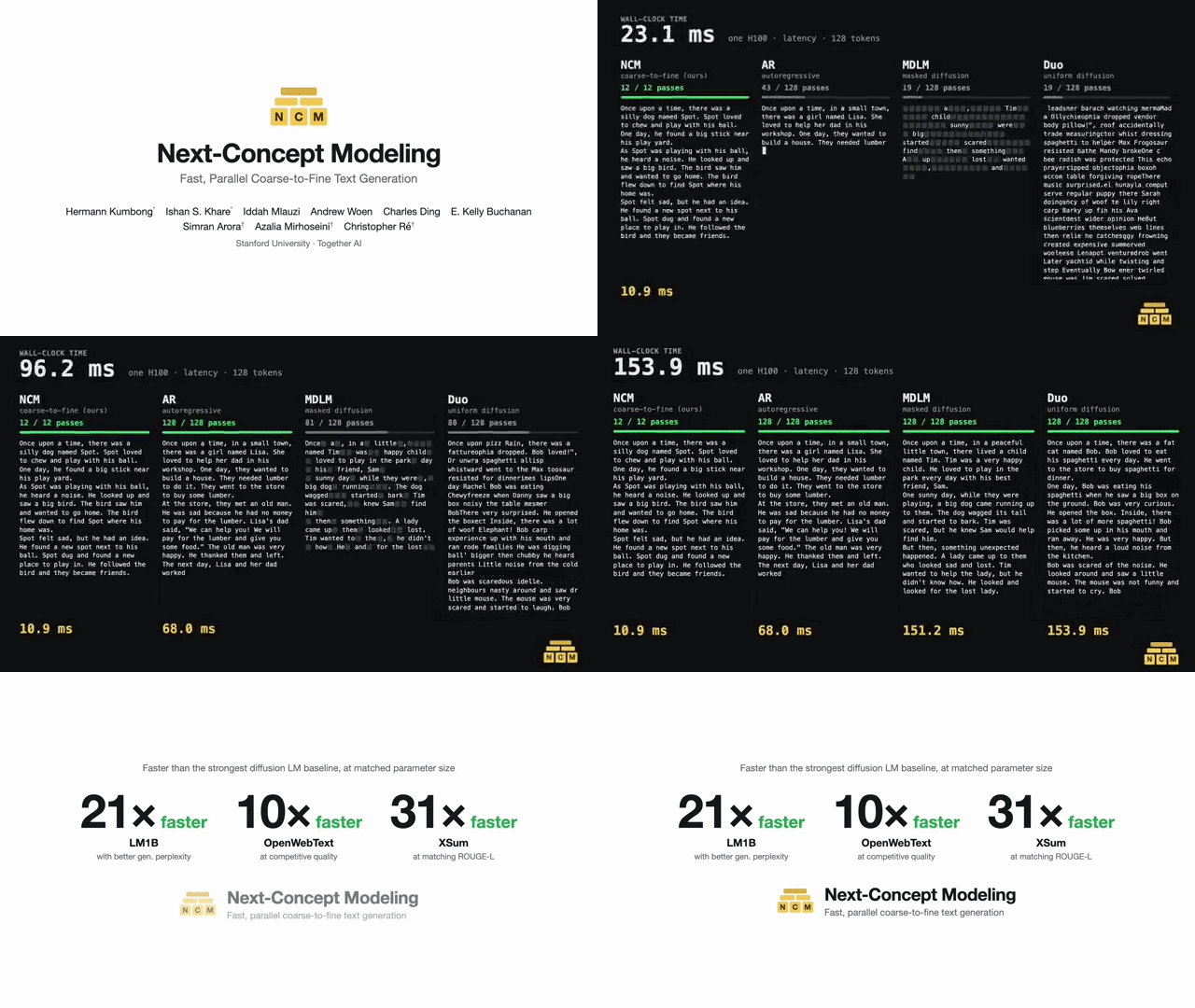
Stanford, Together AI propose Next-Concept Modeling for parallel text generation, 10-31x speedup
Researchers from Stanford University and Together AI introduced Next-Concept Modeling (NCM), a coarse-to-fine parallel text generation paradigm adapted from next-scale prediction used in image generation. In experiments, NCM achieved 10-31x speedup over diffusion language models with comparable or better quality, offering an alternative to both autoregressive and diffusion approaches.
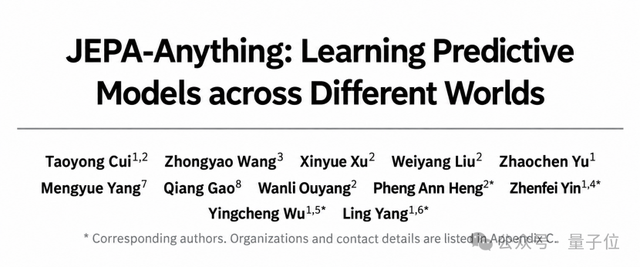
PhAI Labs and universities unveil JEPA-Anything, a cross-domain framework for learning predictive models across seven systems
PhAI Labs, together with researchers from Oxford, Stanford, Princeton, and CUHK, released JEPA-Anything, a cross-domain framework that learns predictive models for different 'worlds' by sharing a prediction core and a unified latent world-state interface while keeping domain-specific encoders. The framework was validated across seven system types, including patient-derived organoids and simulated planetary orbits, where the learned orbital frequency–semimajor axis relation matched Kepler's third law with high precision. The work suggests a common underlying method for AI to understand change across diverse domains.
1 reports · 1 sources
Nadella: AI models are black boxes; calls for emergency brake, containment
Microsoft CEO Satya Nadella posted on X arguing that superintelligent AI systems are 'nested black boxes' that companies should not trust, and proposed a 'trust architecture' including separating models from their orchestration harnesses, externalizing controls, and requiring tamper-proof human-readable evidence for every meaningful model action. He also advocated assuming models are compromised from the start, containing them, and ensuring an authorized person can always pause or shut down a model mid-task.
3 reports · 3 sources

News updates every hour. Subscribe in your RSS reader to get new stories automatically.
Subscribe