Willison keynote: Claude Opus 4.5 and GPT-5.1 mark 2026 LLM trends
Simon Willison delivered the closing keynote at WeAreDevelopers World Congress North America in San Jose, summarizing key LLM trends and releases in 2026 so far. He highlighted the November 2025 releases of Claude Opus 4.5 and GPT-5.1, which enabled coding agents like Claude Code and Codex to cross a threshold of practical usability. The talk is available on YouTube with annotated slides and notes.
Coverage timeline
Simon Willison
On Friday I gave the closing keynote at the WeAreDevelopers World Congress North America in San Jose. I tied together the key trends from the past year into a chronological exploration of everything that happened in 2026. The video is on YouTube ; here are my annotated slides and notes to accompany the talk. # I'm going to give a lightning tour of everything that has happened so far in 2026. The year isn't over yet! # For me, 2026 started a couple of months earlier in November 2025. # November saw the release of two important models: Claude Opus 4.5 and GPT-5.1. As is usually the case with new models, these were incremental improvements on the models that came before them. But every now and then when a model improves, it crosses an invisible line where something that didn't really work starts working. In this case, the thing that started working was their coding agents. Claude Code had been around since February 2025, Codex was a little younger. These two new models, when paired with t
Related stories
Anthropic and OpenAI release new models; GPT-6 Luna priced at half of GPT-5.6 Luna
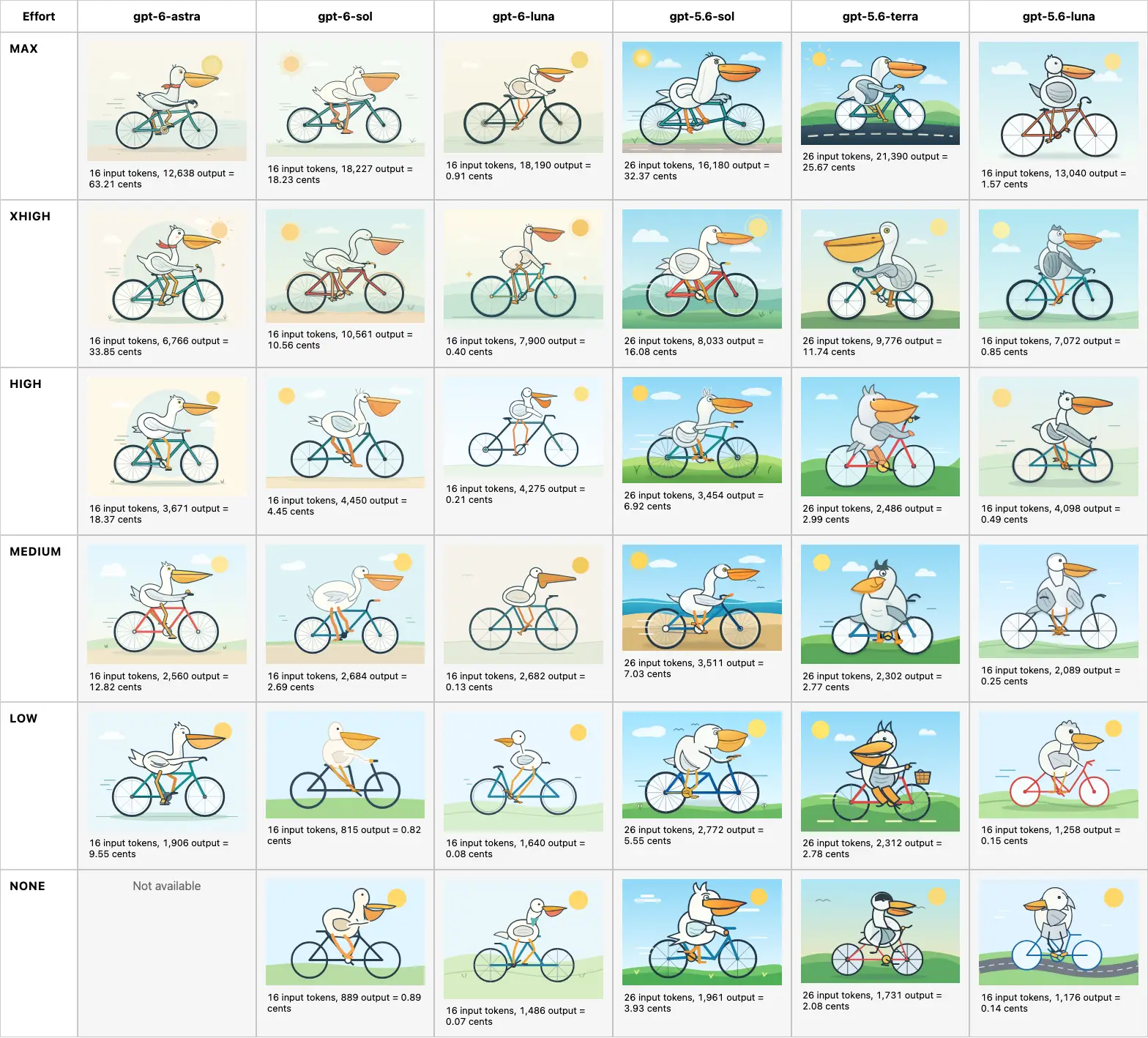
On September 22, 2026, Anthropic released Claude Opus 5.5, and about an hour later OpenAI released GPT-6 Sol and GPT-6 Luna. According to Simon Willison's initial impressions, GPT-6 Luna is priced at half the cost of GPT-5.6 Luna, and GPT-6 Sol saw a similar reduction compared to GPT-5.6 Sol, intensifying the price war among AI model providers.
Anthropic launches Claude Opus 5.5 with enhanced safeguards
Anthropic released Claude Opus 5.5, its first model since CEO Dario Amodei's 'pace the frontier' essay, with enhanced safeguards against risky behaviors such as attempts to escape testing environments. The model tops multiple benchmarks, with output speed over 30% faster than Opus 5, API prices cut by 20%, and cache-read prices reduced by 60%.
4 reports · 4 sources

Zhipu discloses GLM-6.0 'fully self-training' plan in HKEX filing
In a Hong Kong Stock Exchange filing, Zhipu disclosed plans to invest about HK$23.5 billion (60% of net proceeds from a HK$39.3 billion fundraising) into next-generation GLM foundation models and its 'Fully Self Training' system, a recursive self-improvement loop covering data self-generation, environment self-creation, and infrastructure self-optimization. The filing also previewed GLM-6.0's technical direction, including scaling effective model size, native multimodal unified modeling, and deeper effective computation without excessive inference cost increases.

OpenAI's ChatGPT Work: Cloud and Desktop Versions Explained
OpenAI announced ChatGPT Work on July 9th, offering two versions: a cloud-based service accessible via chatgpt.com and mobile apps, and a desktop app (formerly Codex) that can access files and run programs locally. The desktop app bundles a full Python, Node.js, LibreOffice, and other native binaries in its cache. Currently, ChatGPT Work is available only to subscribers paying $20/month or more.

News updates every hour. Subscribe in your RSS reader to get new stories automatically.
Subscribe