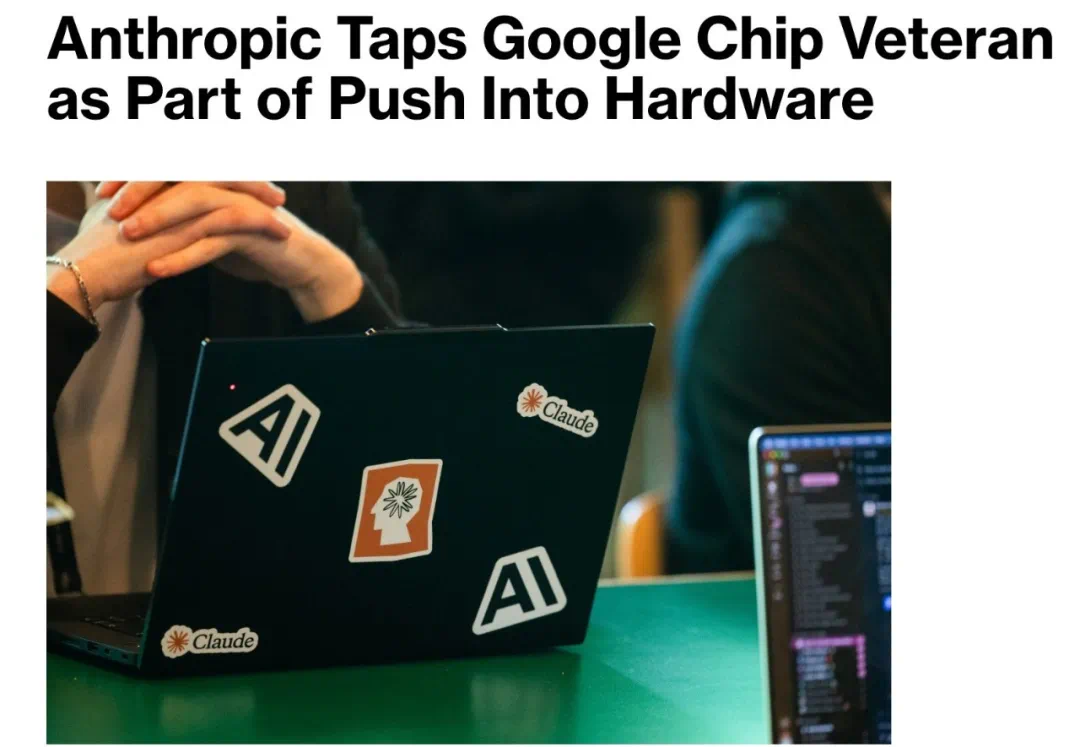
Anthropic hires ex-Google TPU lead Amir Salek for custom chip push
Anthropic has hired Amir Salek, who led Google's TPU program from 2013 to 2022 and previously worked at Nvidia, to join its compute team as part of a push to develop custom chips. Salek will report to compute platform head James Bradbury. The move reflects Anthropic's strategy to reduce reliance on external chip suppliers amid rising compute costs, with 2026 compute spending estimated at about $19 billion.
Coverage timeline
Techmeme
Dina Bass / Bloomberg : Anthropic hires Amir Salek, who ran Google's TPU business until 2022, to join its compute team as part of a push to develop its own chips — Anthropic PBC has hired Amir Salek, a founder of the custom chip program at Alphabet Inc.'s Google, as the AI lab lays the groundwork for a push into making its own semiconductors.

机器之心机器之心
AI 竞争进入算力深水区。 据彭博社报道,Anthropic 正在组建内部芯片团队,并聘请前谷歌 TPU 核心负责人 Amir Salek 加入计算部门,推动自研芯片计划。 Salek 曾在谷歌负责 TPU 项目,从 2013 年至 2022 年领导团队完成前七代 TPU 的研发和落地。在加入谷歌之前,他曾在英伟达工作八年,并参与创立和扩展英伟达片上系统业务。 离开谷歌后,Salek 进入私募股权机构 Cerberus Capital Management,担任高级董事总经理。此次加入 Anthropic 后,他将向计算平台主管 James Bradbury 汇报。 这位芯片领域老兵的加入,意味着 Anthropic 正在加速补齐硬件能力。 从依赖外部芯片,到押注计算底层 长期以来,Anthropic 主要依靠外部供应商获取 AI 算力。 目前,公司同时采购英伟达 GPU、谷歌 TPU 以及亚马逊 AWS 相关芯片资源,以满足 Claude 模型训练和推理需求。 随着 Claude 系列模型快速迭代,算力需求持续增长。据报道,Anthropic 预计 2026 年的计算投入可能达到约 190 亿美元。对于一家高速扩张的 AI 公司而言,持续依赖外部芯片供应商,会带来成本和供应链压力。 自研芯片能够让企业根据自身模型特点优化硬件架构,提高推理效率,并降低长期计算成本。这也是越来越多 AI 公司的共同选择。谷歌通过 TPU 构建自己的 AI 基础设施,苹果围绕终端芯片打造软硬件协同能力,微软也在探索自研 AI 芯片。 对于 Anthropic 而言,自研芯片的意义不仅在于降低对单一供应商的依赖,也在于掌握模型运行过程中的底层优化空间。不过,芯片研发并非短期项目。先进 AI 芯片设计通常需要数亿美元投入,从架构设计到流片量产,需要经历漫长周期。因此,Anthropic 仍将继续依赖现有合作伙伴,采用多芯片路线推进算力布局。 与 OpenAI 同向,AI 公司进入芯片竞赛 Anthropic 并非唯一开始布局硬件的 AI 实验室。OpenAI 近期也公布了自研芯片项目 Jalapeño,该项目由 OpenAI 与博通、Celestica 合作开发,目标聚焦大语言模型推理任务。 两家公司背后的逻辑高度相似:随着 AI 应用规模扩大,推理成本正在成为新的竞争焦点。