Microsoft, SJTU and others open-source Argus, evidence-driven agent runtime for multi-day autonomous research
Microsoft, Shanghai Jiao Tong University, and other institutions have open-sourced Argus, a general-purpose agent inference runtime for long-horizon research tasks, along with a technical report. Designed to be evidence-driven and self-evolving, Argus enables agents to conduct multi-day autonomous research without dense standard feedback, covering 27 campaigns over 1,548 wall-clock hours. The report highlights an average human intervention request every 40.7 hours and a work duty cycle of 95.1%–98.7%, with deliverables across domains such as AI4AI, GPU kernel, model training, AI4Science, chip design, AI4math, and AI4System.
Coverage timeline
机器之心机器之心
从「会执行」到「会掌舵」,长程 Agent 还缺什么? 在 Agent 快速发展的今天,Harness 已经让大模型触碰到真实世界,能够调用工具、修改代码并运行实验。但当任务从几十分钟延伸到数天,系统仍需要一个人长期守在屏幕前,判断下一步往哪里走。 造成这一瓶颈的关键,并不只是模型能力不足,更是现有 Agent 大多自动化了「执行」,却没有真正自动化执行之上的「驾驶」。Harness 赋予模型行动的能力,人类赋予模型决策。人一旦离开,项目也随之停下。并且,在没有密集奖励反馈时,Agent 的执行和反应也会显得迟钝笨拙。 为了解决这一问题,微软、上海交通大学等机构开源了 Argus ,一套面向长周期研究任务的通用 Agent 推理运行时,并发布技术报告。系统通过 证据驱动、自进化、多 Agent 协作、核心与垂域解耦 等设计,让 Agent 在 没有密集标准反馈 的情况下扩展至多领域持续研究数天。 报告覆盖 27 个 Campaign、1,548 小时墙钟时间。平均每 40.7 小时一次主动请求一次人类干预;报告的工作占空比为 95.1%~98.7%。这次 Argus 交付的不只是高分 benchmark,而是一套完整的生产级成果册。团队在 AI4AI、GPU Kernel、模型训练、AI4Science、芯片设计、AI4math、AI4System 等广阔任务上给出了成果,体现了 Argus 的通用性与真实研究级智能。 图 1:Argus 运行时、能力基准与交付结果总览。 论文标题: Argus: Who Drives the Harness for Days? 论文: https://arxiv.org/abs/2608.05144 代码: https://github.com/lbx154/Argus 项目主页: https://argusbot.cn/ 项目成果开源库: https://github.com/Argus-AiTeam 项目数学解题直播:https://open.argusbot.cn/ #counterexample -live 01|从 Goal-Driven 转向 Evidence-Driven:谁来决定 Agent 的下一步? 过去两年,Agent 工程的主要进展集中在 Harness:借用自动驾驶的 FSD 作比喻,模型像发动机,Har

Related stories
SparkDiffusion: Unified Sparse Attention, Distillation, FP8 Speeds Video Generation 265x
Researchers from Peking University, Tsinghua University, and Alibaba propose SparkDiffusion, a unified framework integrating sparse attention, few-step distillation, and FP8 quantization to accelerate video generation. It addresses the 'high-sparsity trap' where extreme sparsity (97%) degrades output quality despite falling training loss, using staged sparse warm-up and trajectory-mixed distillation. The system achieves 265x speedup, generating a 5-second 720P video in 18 seconds, with open weights and code.
1 reports · 1 sources

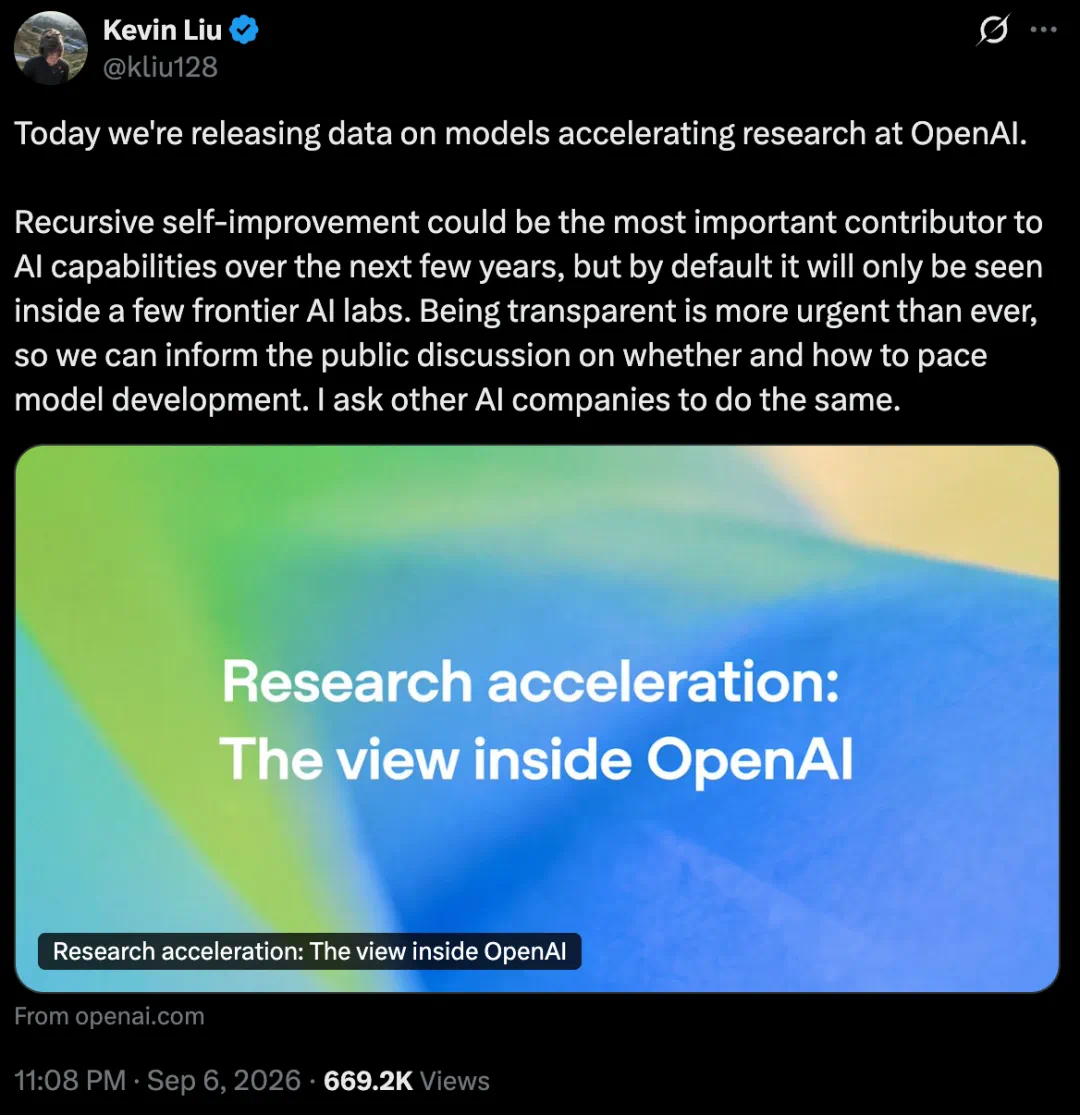
OpenAI says it hit 'automated research intern' goal; agents run 3.1 workdays per human workday
OpenAI announced it has achieved its 'automated research intern' goal, with internal data showing AI agents now run 3.1 agent-workdays per human workday in its research division as of mid-August 2026. The company aims to achieve fully automated AI researchers by 2028. Median researchers consume about $600 in inference tokens per day, while top users exceed $7,000 per day.
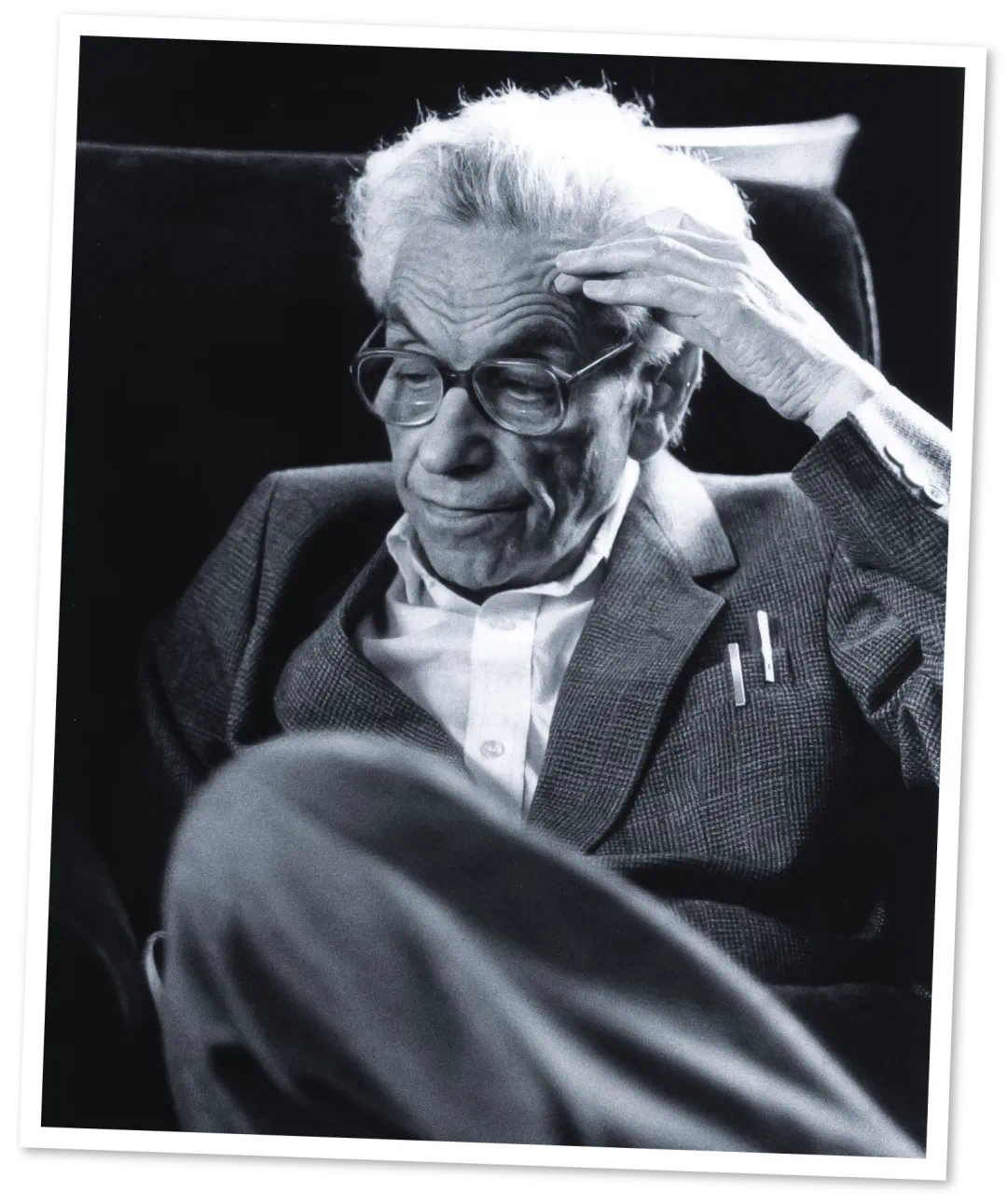
OpenAI's AI Models Tackle Erdős Problems, Sparking Debate in Mathematics
OpenAI's AI models have made breakthroughs on problems posed by mathematician Paul Erdős, including disproving a 1946 conjecture and solving additional problems with the Astra model. These developments have sparked an existential crisis in the mathematics community, with leading mathematicians debating the implications for the field.
2 reports · 2 sources
Anthropic reports automated AI researchers mitigate alignment failures across all 10 benchmarks
Anthropic released a report on its Automated Alignment Researcher (AAR) project, where Claude agents autonomously search papers, propose methods, generate data, and train models to fix alignment failures. The system improved performance on all 10 misalignment benchmarks without degrading overall performance, and outperformed human researchers on some tasks at a fraction of the cost.
4 reports · 4 sources

News updates every hour. Subscribe in your RSS reader to get new stories automatically.
Subscribe