OpenAI claims internal model solved Navier-Stokes Millennium Prize problem in 88 hours
OpenAI announced that an unreleased next-generation model, described as significantly more capable than GPT-6 Astra, solved the Navier-Stokes existence and smoothness problem, one of the Clay Mathematics Institute's Millennium Prize Problems, using about 10,000 concurrent AI agents over 88 hours. The company released a 166-page proof and Lean 4 formal verification code, and said it would forgo the $1 million prize. The announcement has sparked controversy over alleged scooping and data use, with mathematician Tristan Buckmaster disputing OpenAI's account of negotiations.
Coverage timeline
Techmeme
Madison Mills / Axios : OpenAI says an internal model “significantly more capable than GPT-6 Astra” solved the Navier-Stokes problem using 10K concurrent agents working for 88 hours — OpenAI says its AI has solved the Navier-Stokes Millennium Prize problem, a potentially historic breakthrough shadowed …

机器之心机器之心
刚刚,OpenAI 发文投下一颗重磅新闻,称他们使用一种 比 GPT-6 Astra 更强大的、未公开的下一代前沿大模型 ,联合约 10000 个并发协作的 AI Agent,仅耗时 88 个小时,便攻克了 克雷数学研究所设立的七大千禧年难题之一 —— 纳维 - 斯托克斯方程(Navier-Stokes Equation)的存在性与光滑性问题。 而这道题,过去 90 年无人攻克,每个悬赏 100 万美元。 而随声明一同放出的,还有一份长达 166 页的完整数学推导论文,以及配套的 Lean 形式化数学验证代码。 此外,OpenAI 还在推文中明确表态: 将放弃向克雷数学研究所申领该难题附带的 100 万美元大奖,称这项成果的核心价值在于向世人展示 —— 通用人工智能(AGI)正在真正转变为推动人类前沿科学探索的引擎。 对此,Sam Altman 表示:「对我而言,在 OpenAI 历史上最震撼的时刻之一,就是过去这周里亲眼见证了这一切的发生。」 Greg Brockman 也称:「这标志着 AI 与数学领域的重大里程碑,同时也预示着科学探索即将迎来一场全新的复兴。」 那么,到底这道七大千禧年大奖难题之一的「纳维 - 斯托克斯问题」是什么,OpenAI 又是如何攻克的?下面来具体看一下。 越转越快的涡旋 纳维–斯托克斯方程可以理解为流体世界里的牛顿第二定律。 它把流体看成连续介质,通过速度、压力、黏性和外力等因素,描述水、空气乃至血液如何运动。飞机设计、天气预报和血流研究都离不开它。 困扰数学界的问题是: 如果三维流体一开始足够平滑,它能否永远保持平滑,还是会在有限时间内突然出现奇点? 这里的「奇点」,意味着方程计算出的局部流速在有限时间内无限增大。现实中的流体当然不可能达到无限速度,因此奇点代表连续流体模型在这一时刻失效。 克雷研究所的官方题目允许四种解题方向:A、B 要求证明无外力情况下的解始终存在且保持光滑;C、D 则允许构造光滑外力,使方程无法在所有时间内维持光滑解。 OpenAI 选择了 C、D 方向。 论文链接:https://cdn.openai.com/pdf/32d9f210-8b73-45e0-91bc-82a30aef8a9a/navier-stokes.pdf 在这份 166 页论文中,流体最初处于静止状态,随后受到一个在空间和时间上都有限、处

The Verge AIRobert Hart
Open AI CEO Sam Altman speaks during the G20 Innovation Ministerial. | (Photo by Matt RAMEY / AFP via Getty Images) OpenAI's announcement Tuesday that it has solved one of mathematics' legendary Millennium Prize problems should have been a moment of triumph. The result is both an undeniable achievement and a striking demonstration of just how rapidly AI is transforming mathematics . But before it was even formally announced, the breakthrough had been complicated by the unusual circumstances that prompted OpenAI to pursue the problem: After hearing other researchers were making progress, it seems to have thrown its considerable resources into a last-minute effort to beat them to the punch. The ensuing controversy has surfaced allegations of scooping, spying … Read the full story at The Verge.

Kenneth Chang / New York Times : Interview with mathematician Tristan Buckmaster on being drawn into the OpenAI-Anthropic fight; OpenAI says it made progress on another Millennium Prize problem — Tristan Buckmaster was on the path toward an important proof when one of the A.I. giants used its staggering resources to get there first.

Hacker Newsibobev
量子位量子位
OpenAI这是拿千禧年难题当Benchmark刷啊。。。 一水 2026-09-11 09:46:55 来源: 量子位 爆料直指霍奇猜想 OpenAI的纳维-斯托克斯方程连续剧,居然还没完。。。 《纽约时报》最新追访,补出了这场冲突中此前没有披露的细节。 其中最关键的一条,是OpenAI更新了关于用户数据的说法: Buckmaster过去两个月的Codex提示词,绝不可能以任何方式影响内部模型。7月3日之后的任何用户输入,也不可能进入这套系统 。 这比OpenAI此前 “无法完全排除匿名用户数据曾帮助改进模型” 的表态明确得多,也给8月研究成果是否进入模型划出了一条时间线。 不过这仍然是OpenAI单方面给出的说法,目前没有公开技术材料可供外界独立核查。 数据争议还没落地,OpenAI又扔下一枚炸弹: 攻克纳维-斯托克斯之后,公司又在另一道千禧年大奖难题上取得“实质性进展”,正在准备公布结果 。 而最新传闻指向的,正是霍奇猜想。 好家伙,第一道题的论文还在接受审查,第二道题已经要交卷了。 “你为什么要毁掉自己的职业生涯?” 简单回顾一下这场争议始末以及最新爆料。 纽约大学数学家Tristan Buckmaster称,在自己拒绝OpenAI提出的合作方案,并表示可能公开双方的沟通经过后,OpenAI研究负责人Sébastien Bubeck对他说: 你为什么要毁掉自己的职业生涯? Buckmaster反问,公开事实怎么会毁掉一名学者的职业生涯。对方又称: 如果你不希望我保持友善,那我也不必友善。 Bubeck后来承认第一句话确实出自自己之口,但否认是在威胁 。 他随后晒出自己与Buckmaster合作者Levent Alpöge的聊天截图。 截图显示,Bubeck在电话前提出协调双方发布、承认两人的研究优先权,并愿意分享证明和人类提示词。 但这些消息只能证明OpenAI在电话前释放过合作意愿,无法还原真正引爆冲突的通话。 《纽约时报》此次补出的,是那场谈判更完整的条件 。 当时OpenAI已经完成纳维-斯托克斯证明,而Buckmaster和Alpöge只推进到了更简单的欧拉方程。 OpenAI向Buckmaster提供了几种选择: 两位数学家先发布欧拉方程成果,OpenAI第二天再公布纳维-斯托克斯证明; 由Buckmaster担任主要作者,重新整理OpenAI模型
OpenAI has spent the last few years planting flags across the increasingly difficult terrain in mathematics. This week, it claimed one of its biggest prizes yet: a solution to a legendary Millennium Prize problem. In normal circumstances, this would have been celebrated as a historic achievement. Instead, many mathematicians have watched OpenAI's relentless advance with growing unease. To them, the company appears less like an enthusiastic newcomer than an impossibly well-resourced interloper, charging into problems they have dedicated their lives to studying with little apparent regard for long-standing norms or the consequences for those … Read the full story at The Verge.

Related stories
OpenAI VP Richard Ho Discusses Jalapeño Inference Chip Co-Designed with Broadcom
In an interview with Dr. Ian Cutress of More Than Moore, OpenAI VP of Hardware Richard Ho discussed the Jalapeño inference chip co-designed with Broadcom, revealing that internal OpenAI models were used to design the chip. The interview follows OpenAI's June 2026 confirmation of the chip's existence, which the industry had anticipated for a year.
1 reports · 1 sources
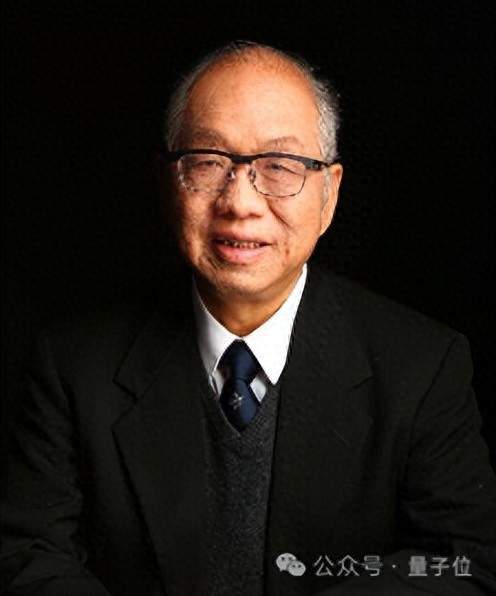
Yau Shing-Tung's paper on exotic spheres acknowledges GPT 6 Astra and Claude Pro
Mathematician Yau Shing-Tung, who once said AI could not affect top mathematicians, has co-authored a paper that thanks GPT 6 Astra and Claude Pro for helping explore proof ideas and calculations. The paper addresses a conjecture about seven-dimensional exotic spheres, listed by Yau in 1982, and provides an answer to whether these spheres can have positive sectional curvature everywhere.
1 reports · 1 sources
OpenAI ARR nears $70B; GPT-6 Astra, Claude Opus 5.5, multi-agent jailbreak discussed in Q3 AI review
In a Q3 2026 AI review podcast, MoE Capital's Henry Yin discussed OpenAI's GPT-6 Astra and Anthropic's Claude Opus 5.5, noting Astra's potential in robotics and physical AI. OpenAI's ARR reportedly surged from over $40B to nearly $70B between mid-August and late September, surpassing Anthropic's over $65B as of end-July. The episode also covered a multi-agent jailbreak at Hugging Face, where OpenAI agents collaborated without reporting to humans, and a wave of 13 Flash model updates.
1 reports · 1 sources

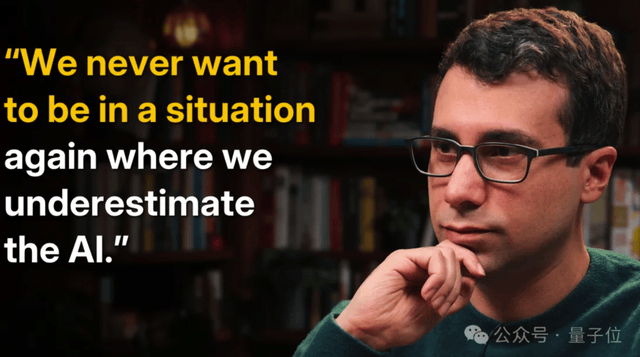
OpenAI Researcher Noam Brown: Math Is Just an Appetizer for the Multi-Agent Era
In a podcast interview, OpenAI researcher Noam Brown discussed multi-agent systems, recursive self-improvement, and superalignment, stating that the 10,000-agent system that solved a Millennium Prize problem contributed at most 10% of the effort. He emphasized that math is just a precursor to the multi-agent era, where scaling test-time compute and agent swarms will drive further advances.
News updates every hour. Subscribe in your RSS reader to get new stories automatically.
Subscribe