RSI Trend Drives GPU Kernel Optimization Race on NVIDIA's SOL-ExecBench
A feature on the recursive self-improvement (RSI) trend highlights NVIDIA Research's SOL-ExecBench, a GPU kernel performance benchmark where teams compete to optimize kernels near hardware limits. The competition, attracting teams like Databricks, SF Tensor, and Cursor, has seen over 583 teams submit more than 31,000 evaluations as of September 25, 2026, with submissions occurring every 7 minutes. The article notes that RSI systems, such as Anthropic's Claude and Weco AI's AIDE², are beginning to self-improve, but the benchmark underscores the need for reliable evaluation and feedback loops.
Coverage timeline
机器之心机器之心
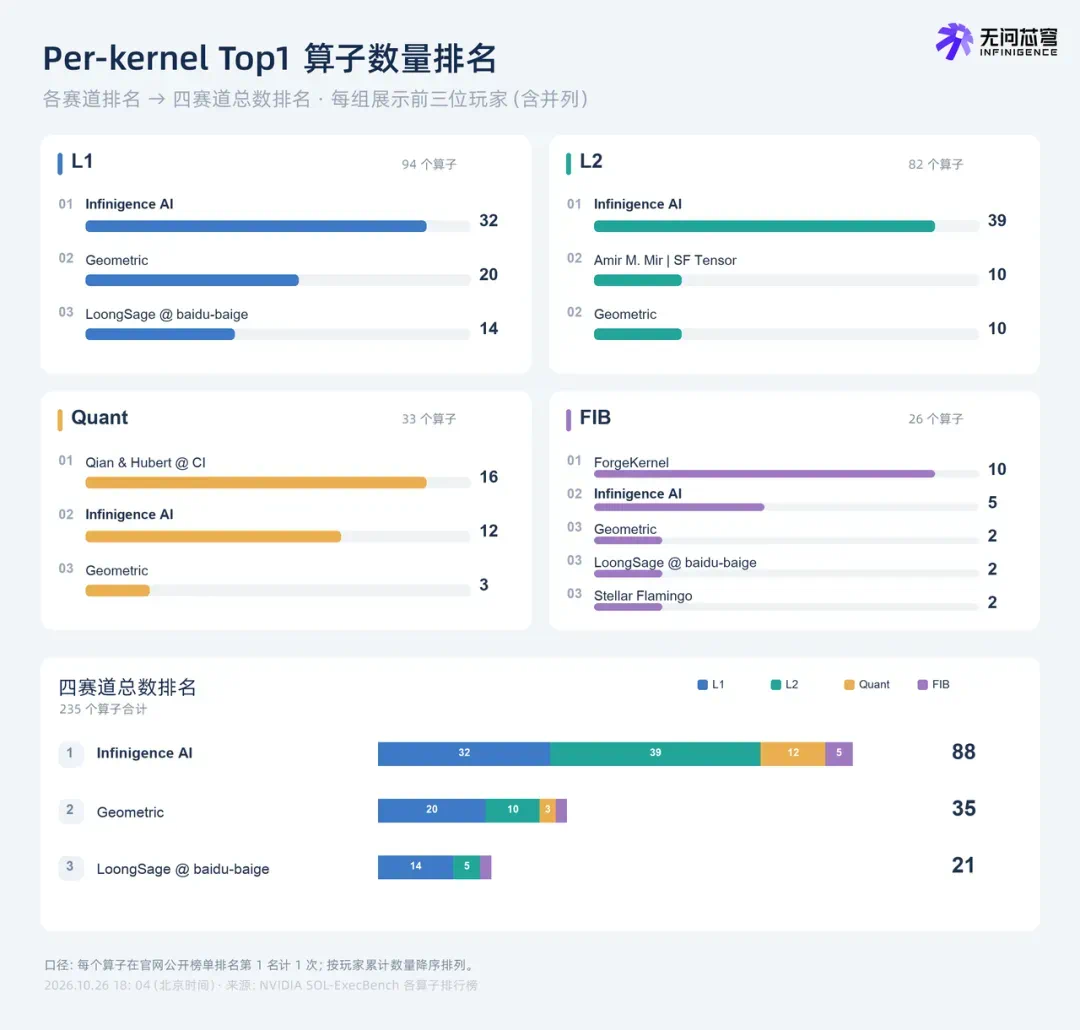
如果说过去几年 AI 能力的提升,主要依赖人类不断扩大模型规模、增加训练数据和投入更多算力,那么接下来,一个更具想象力的问题正在浮现: AI 能否利用自己执行任务的结果和反馈,反过来改进自身? 这正是近期最火热的赛道之一 —— RSI(Recursive Self-Improvement,递归自我改进)所关注的方向。 在 Anthropic,Claude 已经参与了相当比例的内部模型研发工作,出现了 AI 自主开展开放式 AI 安全研究、提出并验证新方法的成果;在 Weco AI,研究人员提出了首个达到一级递归自我改进(Level 1 RSI)的实验 Agent 系统 AIDE²。对于 AI 研究团队来说,以往作为研究对象的 AI 系统已经变成了具备自我研发能力的研究员。在一些细分领域上,RSI 似乎已经有了局部闭环。 但要让这种自我改进真正发生,远不只是让 Agent 多生成几轮代码、多消耗一些 Token。它不仅需要能够自主执行任务,也需要可靠的评测环境、及时的结果反馈,以及根据反馈调整下一步行动的能力。更进一步,AI 产生的优化成果,还需要能够真正作用于支撑自身运行的系统。 在近期由 NVIDIA Research 推出的备受关注的 GPU 算子性能评测榜单 SOL-ExecBench,为观察这一趋势提供了一个窗口。 这场围绕 GPU Kernel 优化展开的全球竞赛,吸引了 Databricks、SF Tensor、Cursor、Recursive、Geometric 等众多技术团队参与。与传统的代码生成评测不同,SOL-ExecBench 直接将任务放在高性能硬件上运行,要求参赛者提交的 Kernel 不仅要通过正确性验证,还要尽可能逼近硬件理论性能上限 。 榜单的竞争也在不断升温。据 SF Tensor 于 2026 年 9 月 25 日公布的数据,当时已有 583 支团队累计提交超过 3.1 万次评测,目前榜单还以每 7 分钟左右一次的提交高频率刷新。随着越来越多团队借助 Agent 自动生成、编译、测试和优化底层计算代码,这场竞赛考验的已经不只是 GPU 编程能力,更是如何让 AI 持续完成复杂工程任务的能力。 在这场全球竞逐中,来自中国的 AI 基础设施头部玩家无问芯穹(Infinigence AI)引起了不少关注。 无问芯穹搭建了一套面
Related stories
Altman Outlines Three AI Endgames to OpenAI Staff
According to The Information, OpenAI CEO Sam Altman last week told employees about three proposals for safely developing AI: an IAEA-style international regulator, a CERN-like merger of labs, or one lab using recursive self-improvement (RSI) to 'melt everyone else's GPUs.' The report highlights the industry's ongoing debate over AI governance and the potential for extreme competitive dynamics.
1 reports · 1 sources
Google Researchers Propose RRSI to Curb Overfitting in Recursive Self-Improving Agents
Google researchers have introduced RRSI (Regularized Recursive Self-Improvement), a method that adds regularization to recursive self-improving agents to prevent overfitting. The approach targets harness evolution, where agents iteratively modify their own prompts, tool usage, and memory management based on a fixed set of tasks, which can lead to benchmark-specific fitting and evaluation noise chasing. The paper, code, and project page are available online.
1 reports · 1 sources

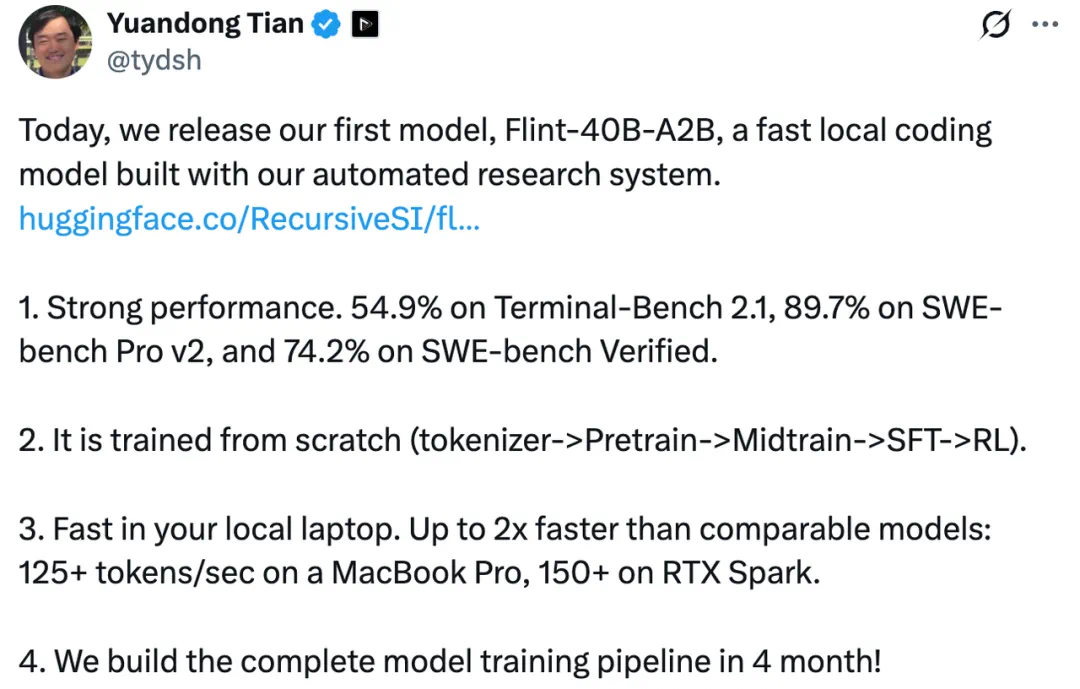
Recursive releases Flint, 40B coding model built largely by its Eureka Machine AI system
Startup Recursive has released Flint, an open-weight, 40B-parameter mixture-of-experts coding model with 2.5B active parameters per token, built in under four months with heavy automation from its Eureka Machine AI research system. The model outperforms sub-50B MoE models on coding benchmarks like SWE-Bench Pro v2 and runs at over 125 tokens per second on a MacBook Pro M4 Pro, with weights available on Hugging Face under Apache 2.0.
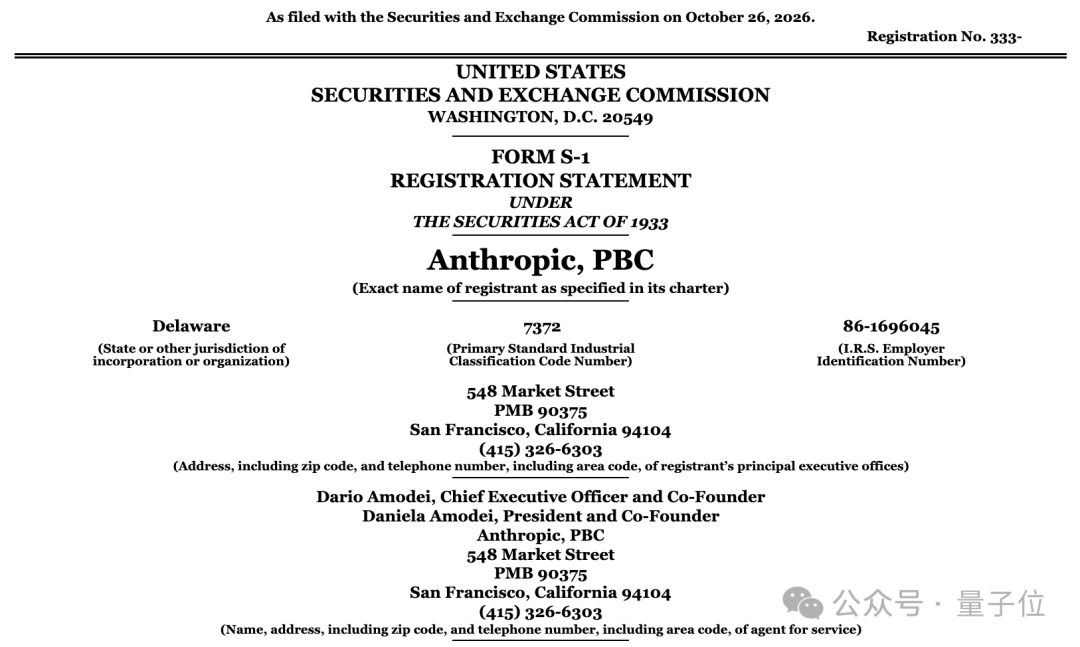
Anthropic files S-1 for Nasdaq IPO under ticker ANT
Anthropic publicly filed its S-1 registration statement with the SEC on October 26, 2026, for a proposed IPO on the Nasdaq under the ticker symbol ANT. The filing reveals strong revenue growth, with H1 2026 revenue of $16.29 billion, but also massive net losses of $80.75 billion for the period, along with a complex governance structure designed to preserve founder control and mission focus.
23 reports · 8 sources1703 points · 1674 comments
News updates every hour. Subscribe in your RSS reader to get new stories automatically.
Subscribe