Google Researchers Propose RRSI to Curb Overfitting in Recursive Self-Improving Agents
Google researchers have introduced RRSI (Regularized Recursive Self-Improvement), a method that adds regularization to recursive self-improving agents to prevent overfitting. The approach targets harness evolution, where agents iteratively modify their own prompts, tool usage, and memory management based on a fixed set of tasks, which can lead to benchmark-specific fitting and evaluation noise chasing. The paper, code, and project page are available online.
Coverage timeline
机器之心机器之心
最近,Recursive Self-Improvement(RSI,递归式自我改进)正在迅速成为 Agent 领域最受关注的方向之一。 过去谈 RSI,我们很容易想到一个颇具未来感的场景:AI 修改自己的模型,再用更强的自己继续改进下一代系统。但真正落到今天的 Agent 上,RSI 已经有了一条更现实的路径 —— 不需要先修改模型权重,Agent 可以先修改 “模型外面的自己”。 Prompt 怎么写、什么时候调用工具、如何管理 Context 和 Memory、失败后怎么恢复、什么时候反思、什么时候停止…… 这些围绕模型构成的 Agent Harness,本身就决定了同一个基础模型最终能做成多少事情。 于是,一个很自然的闭环出现了:Agent 执行任务,观察失败,自动修改 Harness;修改后的 Agent 再执行任务,再根据新的反馈继续修改。这已经是一种真实发生在 Agent system level 的 Recursive Self-Improvement。 但问题也随之而来:如果一个 Agent 一轮又一轮地根据同一批任务修改自己,它到底是在 “进化”,还是只是在越来越会做这套题? 论文链接:https://arxiv.org/abs/2609.24972 GitHub 链接:https://github.com/google-research/rrsi 项目主页:https://regularized-rsi.com/ RSI 最大的隐患:越改越强,还是越刷越熟? 现有 Harness Evolution 通常遵循一个很直观的流程:先让当前 Agent 在一组任务上执行,根据成功和失败轨迹产生 feedback;然后让 LLM 修改 Harness,再把新的 Harness 放回同一批任务上评测。分数更高的版本留下来,进入下一轮。 问题是,这批 evolve tasks 会被一遍又一遍地使用。第 1 轮 Harness 的修改来自这些任务,第 2 轮又根据修改后的表现继续优化,第 10 轮、第 30 轮依然如此。整个过程逐渐变成了一个对有限数据持续进行的 adaptive search。 论文指出,这会带来 三类耦合问题:benchmark-specific fitting、evaluation noise chasing,以及 complexity

Related stories
RSI Trend Drives GPU Kernel Optimization Race on NVIDIA's SOL-ExecBench
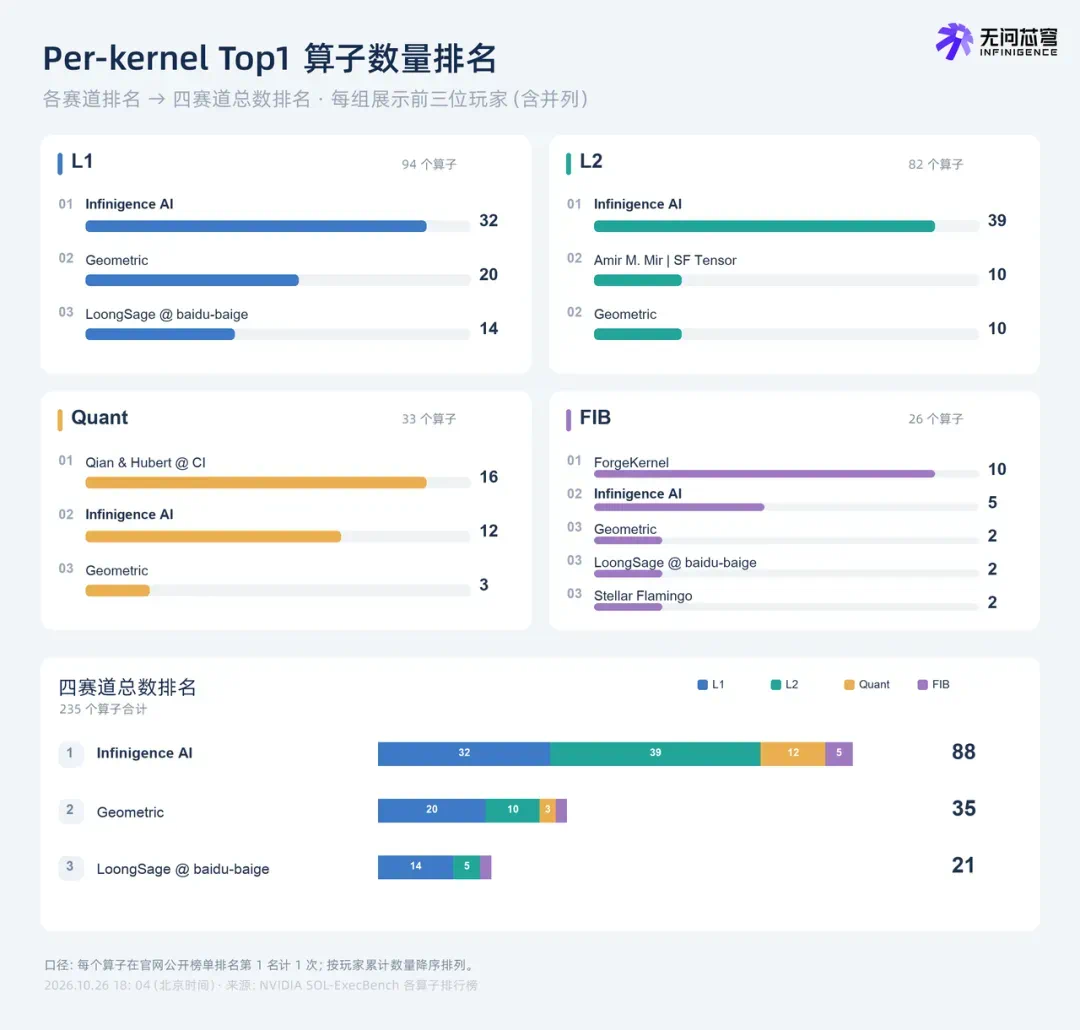
A feature on the recursive self-improvement (RSI) trend highlights NVIDIA Research's SOL-ExecBench, a GPU kernel performance benchmark where teams compete to optimize kernels near hardware limits. The competition, attracting teams like Databricks, SF Tensor, and Cursor, has seen over 583 teams submit more than 31,000 evaluations as of September 25, 2026, with submissions occurring every 7 minutes. The article notes that RSI systems, such as Anthropic's Claude and Weco AI's AIDE², are beginning to self-improve, but the benchmark underscores the need for reliable evaluation and feedback loops.
1 reports · 1 sources
Import AI 478: Alignment math formalization, ProgramBench, RSI demo
Import AI 478 covers AI safety startup Resolution's autoformalization of mathematical statements in statistical learning theory, including the resolution of singularities, aimed at laying groundwork for automated research into loss landscape geometry and generalization. The newsletter also features ProgramBench and a demonstration by Mirendil illustrating recursive self-improvement (RSI).
1 reports · 1 sources

UCSB and Microsoft Propose ScholarEvolve for AI Agents to Read Papers and Self-Modify Code
Researchers from UC Santa Barbara and Microsoft introduced ScholarEvolve, a method that automates the research process of reading literature, implementing algorithms, and evaluating results to enable AI agents to evolve their harness code without modifying underlying model parameters. The approach addresses the limitation of prior coding-agent-based harness optimization, which relied on the agent's existing knowledge and observed failures, by allowing agents to draw on the latest academic findings. The paper and code are publicly available.

RSIGame framework lets AI agents self-improve in game development, beating one-shot GPT-5.5 output
Researchers from UC San Diego, ByteDance, and CMU propose RSIGame, an agentic framework that turns game development into a recursive self-improvement process, where agents playtest, diagnose, fix, and validate games iteratively. Experiments show RSIGame improves game quality scores from 50.26 to 64 starting from GPT-5.5-generated games, and accumulated experience can further train the underlying model.

News updates every hour. Subscribe in your RSS reader to get new stories automatically.
Subscribe