Meta FAIR veteran Yuandong Tian: My research work could be automated within five years
In a podcast interview, Yuandong Tian, a veteran of Meta FAIR and co-founder of Recursive Superintelligence, said he realized his research work could be replaced within five years after completing a project with results from an internal OpenAI model. He co-founded the startup in May with a $6.5 billion valuation and over $650 million in funding, choosing to proactively build a company toward that direction rather than passively lose his job.
Coverage timeline
机器之心机器之心
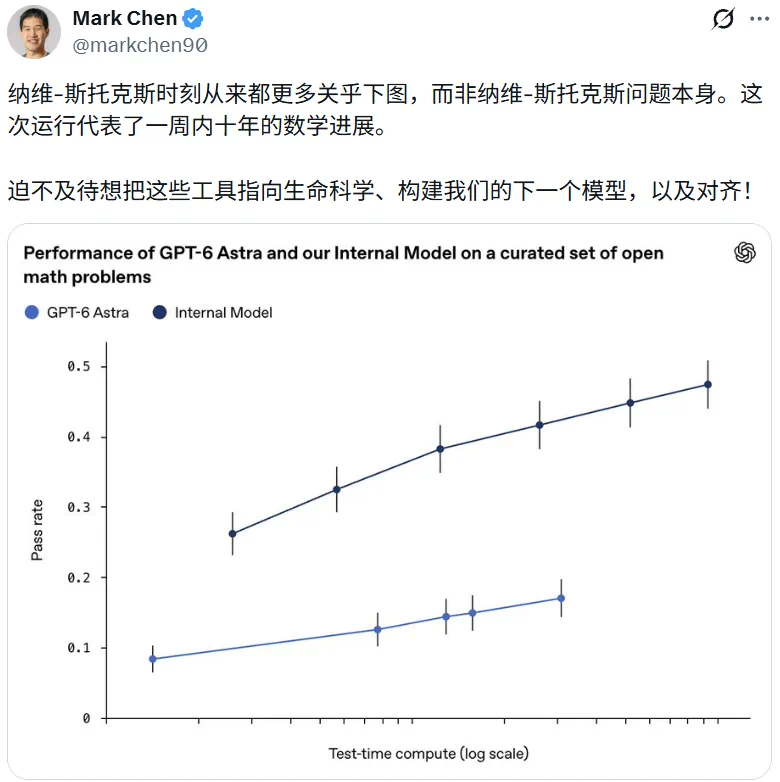
编辑|Panda 前些时日,OpenAI 在 GitHub 上 一口气放出了 722 篇数学论文手稿 。这些手稿被归为 372 个结果「家族」,横跨 17 个数学领域,全部出自一个尚未发布、也没有公开名字的 内部模型 ——其性能远胜 GPT-6 Astra。 OpenAI 首席研究官 Mark Chen 的推文 当然,数学界对这批成果的质量和披露方式仍有不少争议,但有一点已经很难否认: AI 产出研究成果的速度,开始以「百篇」为单位计算了。 几乎在同一时间,最新一期 The Information Bottleneck 播客里,一位深度学习老兵说出了一句让不少研究者心头一紧的话:「做完这个项目,拿到一些挺有意思的结果之后,我突然意识到:哇, 我的工作大概五年内就会被取代 。」 播客地址:https://www.the-information-bottleneck.com/p/yuandong-tian-on-recursive-self-improvement-600 说这话的是 田渊栋 。他在 Meta FAIR 待了近十年,做过围棋 AI、强化学习、神经网络可解释性,也是 Coconut(连续潜空间思维链)论文的作者之一。 如今,他的身份是 Recursive Superintelligence 的联合创始人。 今年 5 月 ,这家公司结束隐身状态,宣布以 46.5 亿美元估值完成超过 6.5 亿美元融资,由 GV 和 Greycroft 领投,英伟达和 AMD 参投。 在 Ravid Shwartz-Ziv 主持这一期播客中,田渊栋解释了自己为什么出来创业:「 与其被动地丢掉工作,不如主动去开一家朝这个方向走的公司。 」不过,他也在节目里给 AI 泼了点冷水。「如果你让模型自己想点子,它会给你一些非常平庸的想法,基本上谁都知道,也不是什么有意思的方向。」 在将近一小时的对话里,田渊栋从 CMU 时代的 AlexNet 争论讲到围棋 AI,从「动作空间」讲到潜空间推理,最后落到递归自我改进、新架构和开源。以下是这场对话的整理。 Smith Hall 里的争吵:AlexNet 到底是不是个意外? 田渊栋 2008 年来到美国,在卡内基梅隆大学机器人研究所读博。那时,机器学习远没有今天的地位。「当时很多人其实不认为机器学习是一条靠谱的路,大家会说它不太行,因为会过拟
Related stories
Shanghai team releases full RSI pretraining report, 801-30B base model and SFT data
Shanghai Innovation Institute and Xinqi Intelligence jointly released the first fully public pretraining-level RSI technical report, the 801-30B base model, and high-quality SFT data. The team claims that only two groups worldwide publicly apply RSI to pretraining from scratch: US startup Recursive and this Shanghai classroom. The model, trained in under three months, reportedly ranks among the top open-source base models of its size.
1 reports · 1 sources

Chinese AI startups HyperVolve and Apexin announce funding and model releases
Chinese AI startup HyperVolve announced tens of millions RMB in angel funding led by Lanchi Ventures, with participation from SenseTime Guoxiang Capital, Lenovo Star, Inno Fund, and Tsinghua alumni seed fund, to build research foundation models using recursive self-improvement. Separately, Apexin, founded by 27-year-old Tsinghua assistant professor Chen Yongchao, released Apex-35B-V1.0, a 35B model claiming SOTA results on 21 benchmarks against comparable models.
Ex-DeepMind Scientist David Silver Discusses RL-Based 'Super Learner' Startup
In a Financial Times interview, former DeepMind scientist David Silver discussed his startup Ineffable, which is developing an AI 'super learner' using reinforcement learning as an alternative path to large language models. Silver, known for architecting AlphaGo, also expressed a moral obligation to advance the technology.
1 reports · 1 sources
NYT: Startups Inherent, Recursive Superintelligence pursue AI recursive self-improvement
The New York Times reports on startups such as Inherent and Recursive Superintelligence that are developing tools to enable AI systems to achieve recursive self-improvement. The article features Jeff Clune, a computer scientist and co-founder of Recursive Superintelligence.
News updates every hour. Subscribe in your RSS reader to get new stories automatically.
Subscribe