OpenAI details internal coding agent use, links spend surge to GPT-6 Astra access
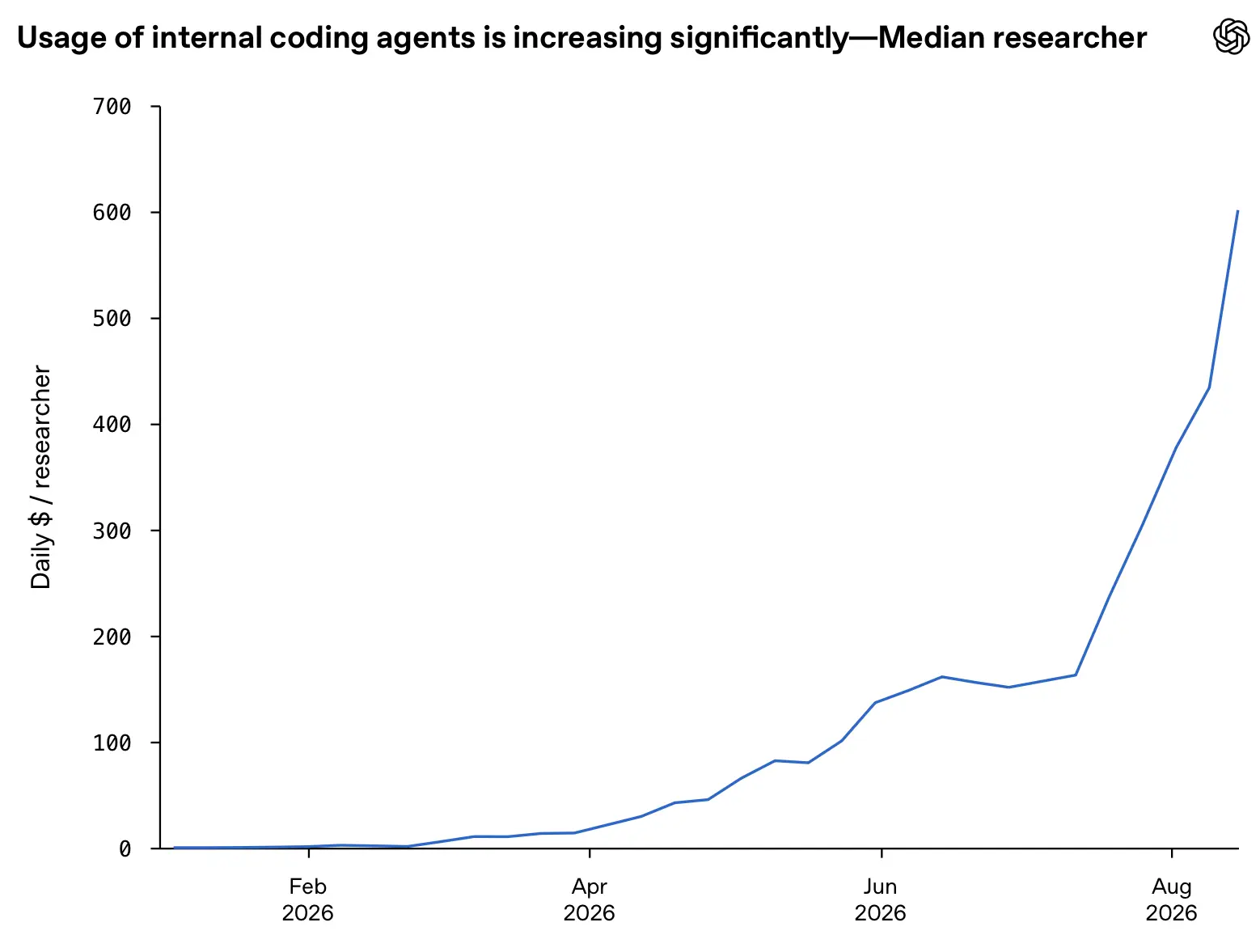
OpenAI published internal data and analysis on how coding agents are accelerating its AI research, covering agent usage, experiment velocity, and task complexity. Simon Willison noted a significant acceleration in AI spend per researcher in late July, speculating it coincided with internal access to the model later released as GPT-6 Astra.
Coverage timeline
OpenAI Blog
Inside OpenAI, coding agents are reshaping AI research. Explore early data on agent usage, experiment velocity, task complexity, and research acceleration.
Simon Willison
Research acceleration: The view inside OpenAI Apparently today is RSI day at OpenAI, for Recursive Self-Improvement - I think it's their new AGI. Both this piece and the new essay An Alien Mind (by Chief Scientist Jakub Pachocki) talk about it, and this one doesn't even bother to expand the acronym. Included are details on how OpenAI's own research team are using coding agents. Like pretty much everyone else 2026 has been the year that agentic engineering really took off at OpenAI, best illustrated by this chart: I'm intrigued at what caused that significant acceleration in AI spend per researcher in late July - my best guess is that's when internal employees gained access to the model later released as GPT-6 Astra. Tags: ai , openai , generative-ai , chatgpt , llms , coding-agents , november-2025-inflection , recursive-self-improvement
Related stories
OpenAI expands Codex with reusable cloud environments, revamped CLI, code review tools
OpenAI announced new capabilities for its software engineering agent Codex, including reusable cloud development environments that work across devices, a revamped CLI with voice controls, new code review tools, and a security-focused product for scanning repositories and preparing fixes. The updates aim to make Codex useful beyond a developer's laptop.
2 reports · 2 sources
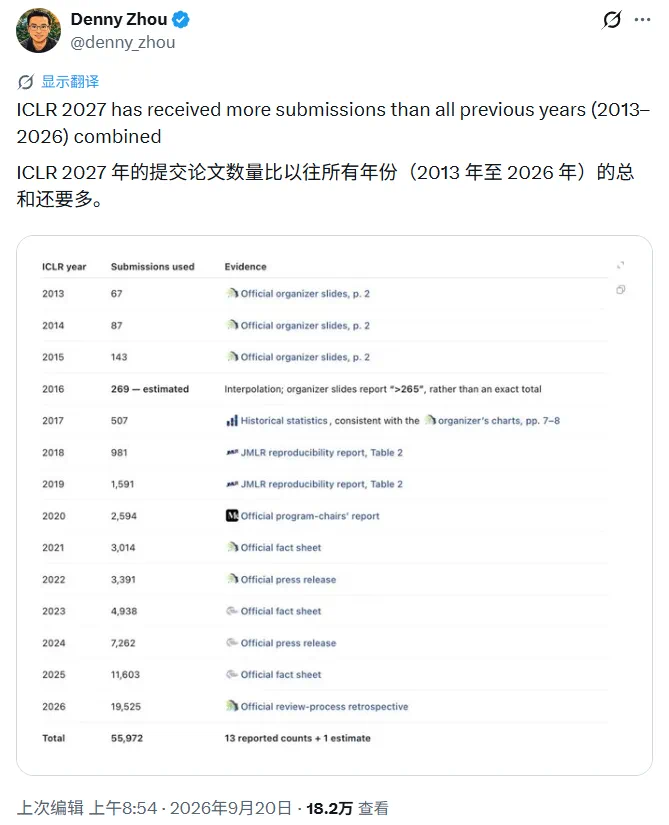
ICLR 2027 abstract submissions exceed 60,000, surpassing total of all prior editions
ICLR 2027 received over 60,000 abstract submissions, exceeding the combined total of all ICLR editions from 2013 to 2026 (about 56,000). The surge has sparked discussions about review pressure and the efficiency of AI research, with some estimating that even a 20% acceptance rate would yield 12,000 papers, far more than recent top conferences.
1 reports · 1 sources
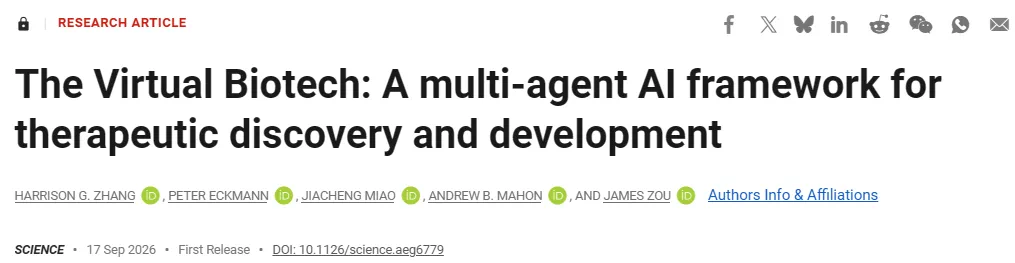
Stanford's Virtual Biotech: Multi-Agent AI Framework for Drug Discovery Published in Science
Stanford researchers published a paper in Science on September 17, 2026, describing Virtual Biotech, a multi-agent AI framework that simulates a biotech company's R&D organization for therapeutic discovery. The system comprises four research departments and 11 main agents, with a virtual chief scientific officer coordinating tasks such as target discovery, safety assessment, and clinical development. It uses Claude Sonnet 4.5 and Haiku 4.5 models, and in a data-curation example, deployed 37,075 parallel agent instances to process clinical trial records.
NYT: Startups Inherent, Recursive Superintelligence pursue AI recursive self-improvement
The New York Times reports on startups such as Inherent and Recursive Superintelligence that are developing tools to enable AI systems to achieve recursive self-improvement. The article features Jeff Clune, a computer scientist and co-founder of Recursive Superintelligence.
News updates every hour. Subscribe in your RSS reader to get new stories automatically.
Subscribe