Google open-sources TorchTPU, making TPU a native PyTorch device
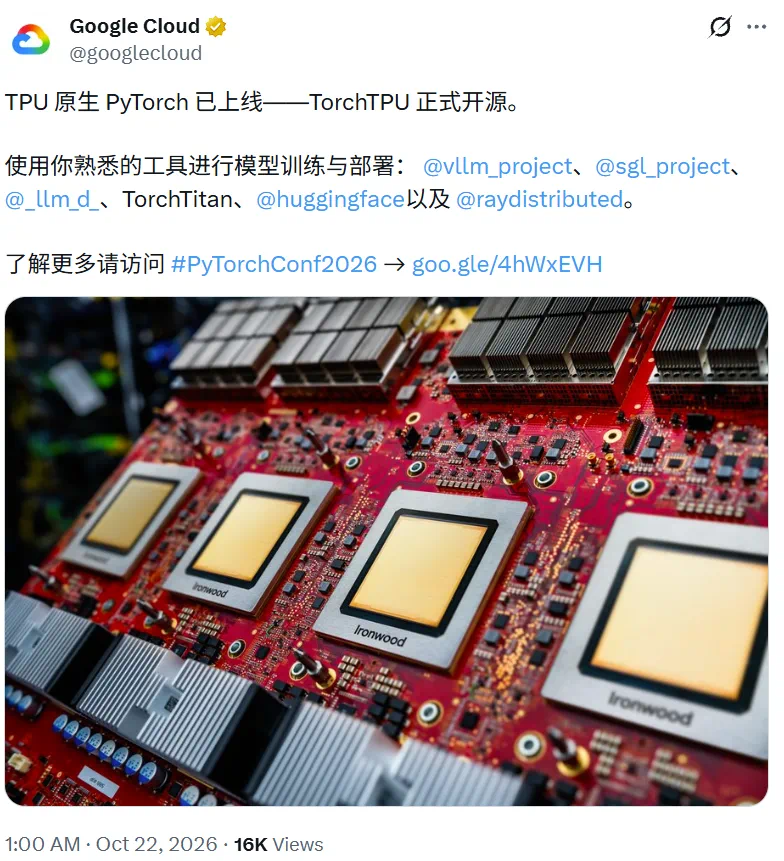
At PyTorch Conference 2026, Google announced the open-sourcing of TorchTPU, a software stack enabling native PyTorch execution on TPUs, developed with Meta and integrated by vLLM, SGLang, Hugging Face, Ray, and TorchTitan. The project, available on GitHub with a 23-page technical report on arXiv, allows deployment to TPU via a single parameter in Hugging Face Transformers v5, positioning TPU alongside GPU and CPU as a native PyTorch option.
Coverage timeline
机器之心机器之心
编辑|Panda 如果只能用一行代码概括这条新闻,那就是 device_map="tpu"。 在圣何塞举行的 PyTorch Conference 2026 上,谷歌宣布开源 TorchTPU ,这是一套让 PyTorch 原生运行在 TPU 上的完整软件栈。从此,在 Hugging Face Transformers v5 里把模型部署到 TPU,只需要传入这一个参数。 一个参数的变化,背后是谷歌在软件路线上的一次转向,也是英伟达 CUDA 生态近十年来遭遇的最正面的一次挑战。 AI 芯片的竞争,从来不只是芯片本身的竞争。PyTorch 是全球使用最广泛的 AI 框架,而它自 2016 年诞生起就与 CUDA 深度绑定:英伟达工程师长期投入,确保 PyTorch 在 N 卡上跑得最好,华尔街甚至有分析师把 CUDA 视为英伟达抵御对手最坚固的盾牌。反观谷歌,TPU 十年来主要服务自家的 TensorFlow 和 JAX。PyTorch 用户想用 TPU,得经过 PyTorch/XLA 这样一层「转接」,付出大量额外的工程成本。 TorchTPU 改变的正是这个前提。用谷歌官方的说法, TPU 从此与 GPU、CPU 并列,成为 PyTorch 的原生选项 。 项目地址:https://github.com/google-pytorch/torch_tpu 项目由谷歌与 PyTorch 的「娘家」Meta 联合开发,vLLM、SGLang、Hugging Face、Ray、TorchTitan 等主流开源项目同步完成接入,一份 23 页的技术报告也同时发布在 arXiv 上。 报告标题:TorchTPU – A Hybrid Eager/Compiled Architecture for Native PyTorch Execution on TPU 报告地址:https://arxiv.org/pdf/2610.24161 时间点也值得关注。过去一年,Anthropic 签下最多 100 万颗 TPU 的使用协议,Meta 也被曝与谷歌达成数十亿美元的 TPU 租用合约。硬件已经卖得出去,软件成了最后一块短板。现在,谷歌要亲手把它补上。 不是又一个「转接头」 PyTorch 跑 TPU 并不新鲜。技术报告回顾,谷歌早在 2020 年就推出了基于惰性张量的 PyTo
Related stories
Google launches TorchTPU, vLLM adds TPU backend
Google announced TorchTPU, an open-source version of PyTorch that lets AI applications run on TPUs and Google Cloud via simple configuration changes without rewriting code. Concurrently, vLLM introduced vllm-torchtpu, a new backend for Google Cloud TPUs built on TorchTPU, featuring Pallas kernels, multi-host parallelism, KV cache offloading, and disaggregated serving. These moves, following Amazon's similar tool, challenge Nvidia's dominance in AI development.
3 reports · 3 sources
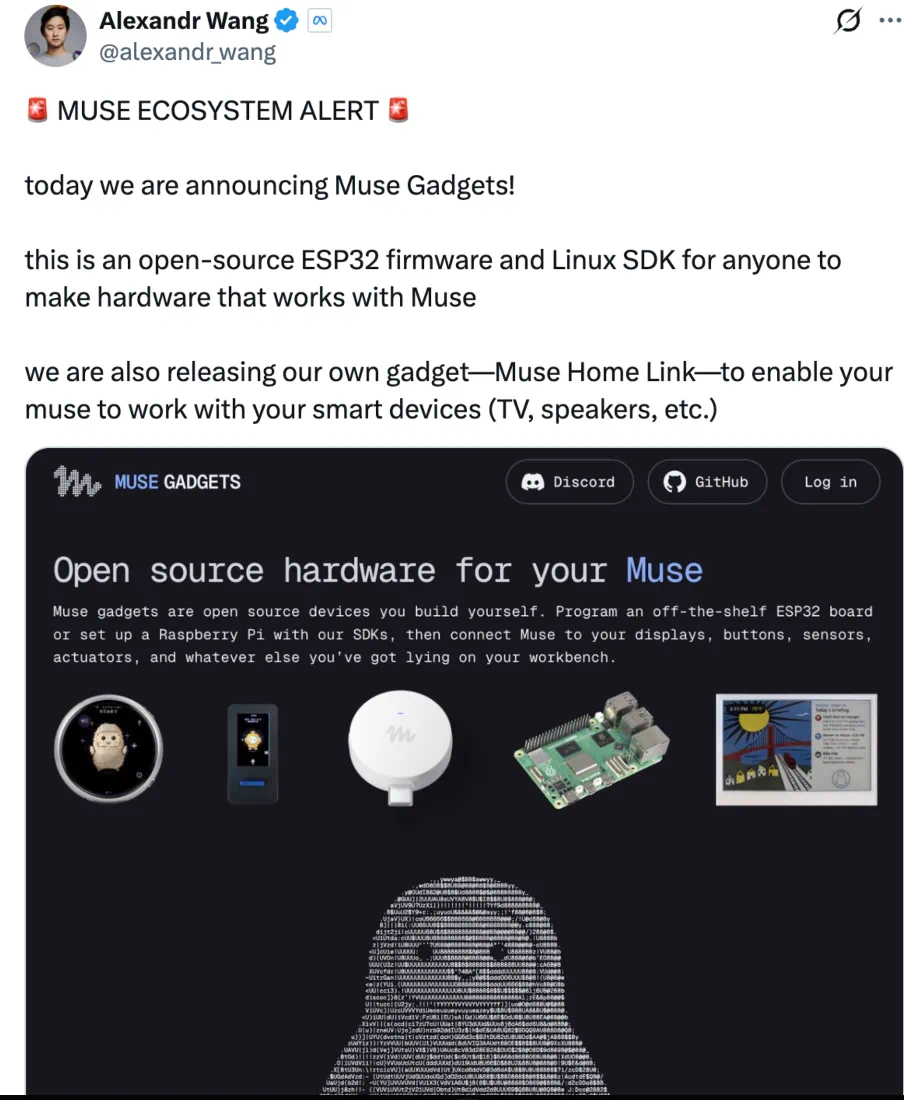
Meta open-sources Muse Gadgets for custom AI peripherals
Meta has open-sourced Muse Gadgets, enabling developers to build custom hardware peripherals for its Muse AI agent using ESP32 boards or a Linux SDK, with support for devices like Raspberry Pi 5. The project includes DIY reference designs such as E Ink displays, HDMI dongles, and touch pendants, alongside a new official device, Muse Home Link, for smart home connectivity.
1 reports · 1 sources
Amazon unveils TorchNeuron, open-source tool to run PyTorch on Trainium chips
Amazon introduced TorchNeuron, an open-source tool that lets developers run PyTorch code on its Trainium chips without rewriting, aiming to ease migration from Nvidia hardware. The move targets Nvidia's dominance in the AI development ecosystem by making alternative chips more accessible.
2 reports · 2 sources
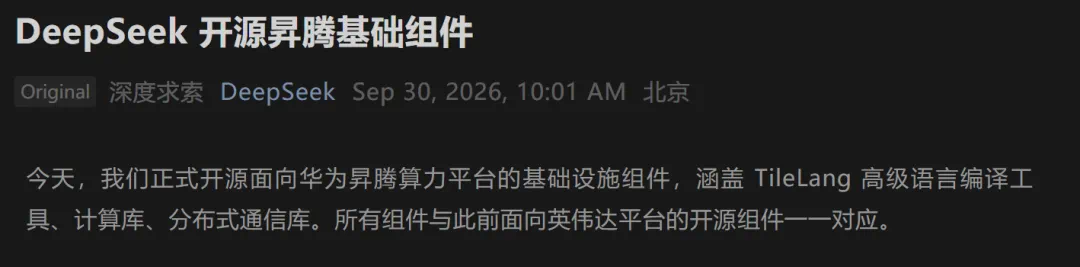
DeepSeek open-sources Ascend infrastructure components, partners with Huawei
DeepSeek announced on September 30 the open-sourcing of infrastructure components for Huawei's Ascend platform, including the TileLang compiler, high-performance computing libraries (DeepGEMM, FlashMLA, TileKernels, DeepSelect), and the DeepEP distributed communication library. Huawei also open-sourced joint innovations around Ascend 950 and supernodes in the CANN community, covering deployment, training, KV cache pooling, and Agentic RL. The move aims to build an efficient AI chip software ecosystem with Huawei, providing developers with tools corresponding to those previously released for GPU platforms.
News updates every hour. Subscribe in your RSS reader to get new stories automatically.
Subscribe