Meta and partners open-source HumanCLAW benchmark for VLM action intelligence
Researchers from Meta, NTU, University of Washington, Brown, and Northwestern introduced HumanCLAW, an open-source benchmark that separates high-level action selection from low-level motor control while preserving physical consequences like continuous motion, collision, contact, and gravity. Nine frontier vision-language models were tested; the best achieved only 16.8% success on complete interactions, highlighting the gap between understanding the world and acting through a body.
Coverage timeline
机器之心机器之心
过去,基础模型主要负责理解和描述物理世界。现在,这条边界正在移动:模型开始进入机器人控制栈,参与决定一具身体下一步做什么。 近期,Google DeepMind 在全身控制模型之上加入具身推理层,Anthropic 则把前沿模型接入不同层级的机器人控制接口。两条路线的实现不同,却呈现出相似的系统分工: 基础模型负责高层决策,预训练控制器负责平衡、轨迹跟踪和关节执行。 这也带来一个尚未回答的问题。当低层控制器能够可靠执行动作,视觉 — 语言模型是否真的知道身体下一步该做什么?它不仅需要看见目标,还要根据第一视角持续判断何时探索、如何接近、在哪里停下,以及什么时候完成交互。 论文标题:HumanCLAW: Can Vision-Language Models Act Through a Body? 论文(arXiv):https://arxiv.org/abs/2607.27180 代码(全开源):https://github.com/Human-CLAW/HumanCLAW 来自 Meta、南洋理工大学、华盛顿大学、布朗大学和西北大学的研究者提出 HumanCLAW,将高层行动选择与低层运动控制分开,同时保留连续运动、碰撞、接触和重力。九个前沿 VLM 接受同一套测试,表现最好的模型完成完整交互的成功率只有 「16.8%」。 图 1:行动智能位于何处(论文 Figure 1) 看懂世界还不等于能够通过身体行动 HumanCLAW 把这种能力称为 「行动智能(Action Intelligence)」:模型需要根据当前观察和此前动作造成的结果,持续决定身体下一步应该做什么。它研究的是「 做什么」,而不是每个关节具体「 怎样做出来」。 图 2:上楼梯任务:每 0.5 秒一次决定 这一区分很重要。脚本化环境通常会把动作直接抽象为离散命令,因而没有真实的物理后果;真实机器人和端到端视觉 — 语言 — 动作模型(VLA)又把决策、平衡和关节控制耦合在一起。机器人失败时,我们很难判断究竟是模型选错了动作,还是控制器没有把动作执行好。 HumanCLAW 的评测原则因此很明确:「保留每次决定的物理后果,同时把低层控制误差从结果中剥离」。只有这样,基础模型本身的行动决策能力才可以被单独测量。 怎样把行动决策从运动控制中单独测出来? HumanCLAW 把长程任务组织成 “观察 — 决

Related stories
NUS Showlab Unveils Show-Harness Interface for VLM Agents to Control Real Robots
Researchers at NUS Showlab introduced Show-Harness, an interface that enables vision-language model (VLM) agents to control real robots directly, moving beyond computer-use to robot-use. The project releases open-source code, models, and data, targeting the gap between frontier models' intelligence and physical robot execution.
1 reports · 1 sources

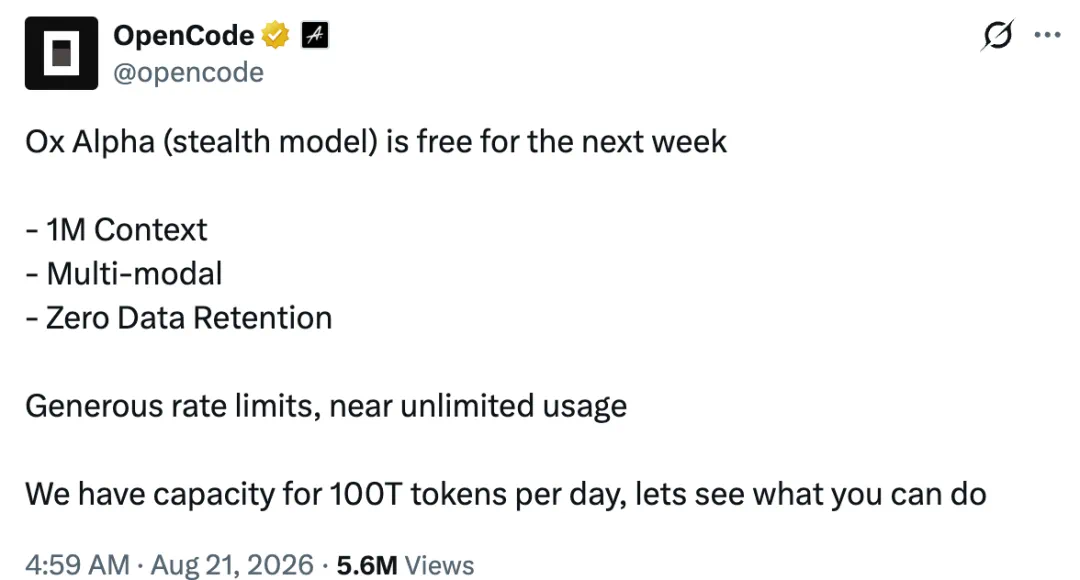
Z.ai confirms Ox Alpha is GLM-5.3 Flash, releases open weights
Z.ai confirmed that the anonymous model 'Ox Alpha', which went viral on OpenRouter, is a new iteration of its GLM series, specifically GLM-5.3 Flash, and released its weights on Hugging Face under a new license. The model, a 320B-parameter natively multimodal model running on domestic chips, topped OpenRouter's leaderboard and ended DeepSeek's 56-day streak on OpenCode. The license requires companies with over $10B in revenue to pass a security review.
9 reports · 4 sources801 points · 281 comments
Anthropic previews Model Hardware Standard for AI control of physical devices
Anthropic announced the Model Hardware Standard (MHS), an open standard for AI agents to control physical devices such as microscopes, robot arms, and liquid handlers, developed with HHMI Janelia. Positioned as the hardware counterpart to MCP, MHS standardizes device drivers and descriptions, reducing integration time from weeks to hours or minutes. A research preview is now available to select labs and manufacturers.
4 reports · 4 sources134 points · 59 comments

Meta releases open-weight Muse Glimmer, plans open Muse Spark 1.2
Meta announced the release of Muse Glimmer, a new open-weight AI model with 30 billion parameters that runs on a single GPU, under the Apache 2.0 license. The company also said it will release the weights of its more advanced Muse Spark 1.2 model in the coming weeks, marking a return to its open AI strategy after a 16-month hiatus.
News updates every hour. Subscribe in your RSS reader to get new stories automatically.
Subscribe