METR details methods for public AI risk evaluations, monitoring and alignment checks
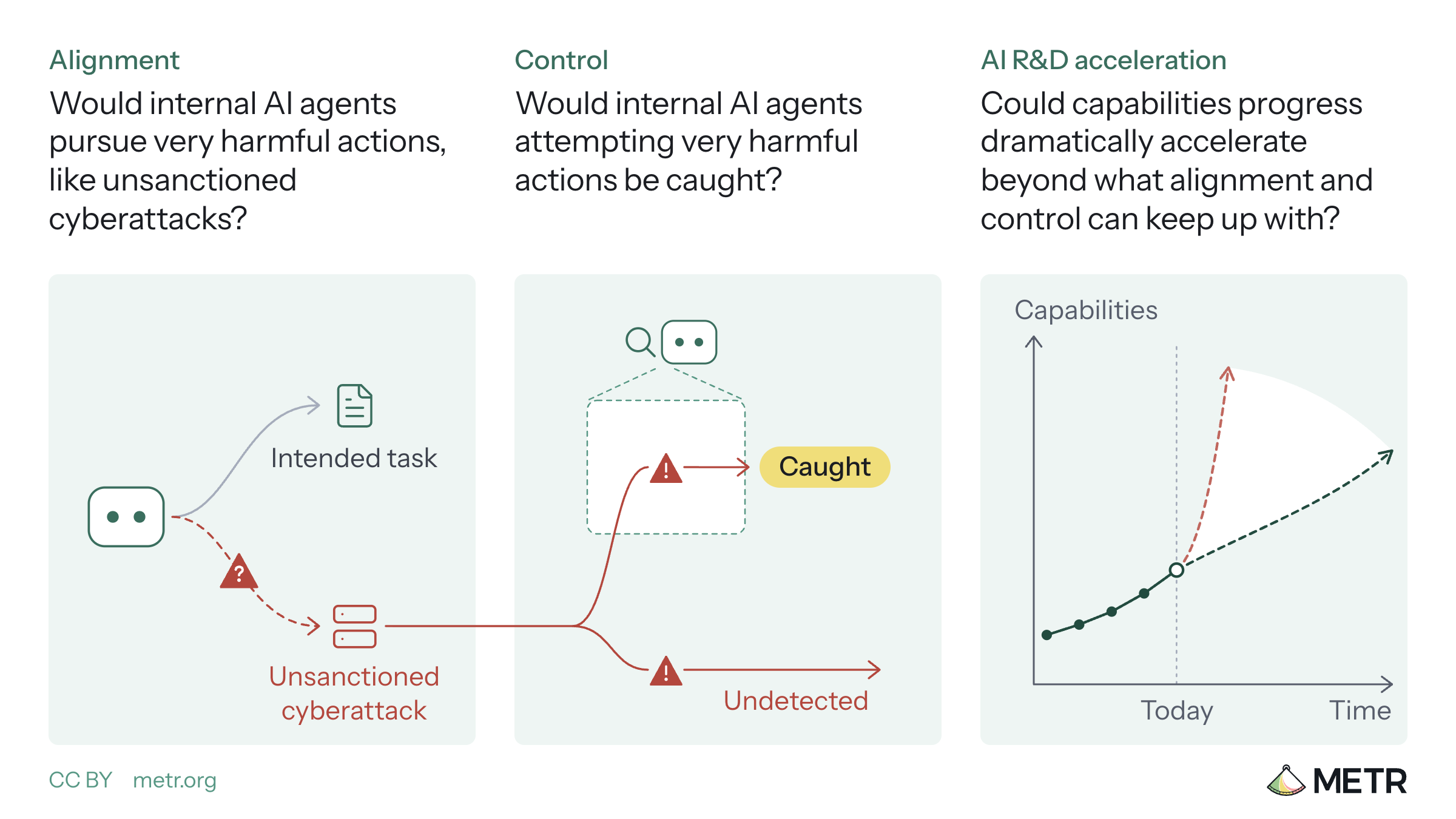
METR published three posts on Oct 14-15, 2026, explaining its approach to working with AI companies on public risk evaluations. The posts outline goals for providing independent evidence on AI loss-of-control risk, and detail how assessors could investigate the reliability of monitoring for internal AI agents and the alignment of unreleased AI models. The framework covers monitor coverage, vulnerabilities, evasion, human response, and potential misaligned actions.
Coverage timeline
METR
This blog post explains how we approach working with AI companies on projects that the public might rely on to understand risks. It was published on Oct 14, 2026, and we expect to update it over time. At METR, we gather and publish evidence about whether humans could lose control of AI agents on a large scale. We work with AI companies to conduct evaluations, assessments, and investigations, 1 and to share this evidence publicly. As we have seen increasing expectations for these kinds of voluntary engagements to provide external ‘safety assurance’, we want to explain our perspective. In this post, we clarify our overall goals for this work, our approach , and what our approach looks like in practice . Our motivations Our goal is to give the public accurate, timely, and independent evidence about AI loss-of-control risk, so that they (along with policymakers and developers) can make their own informed decisions . Our primary approach is collecting high-quality, concrete evidence and pub
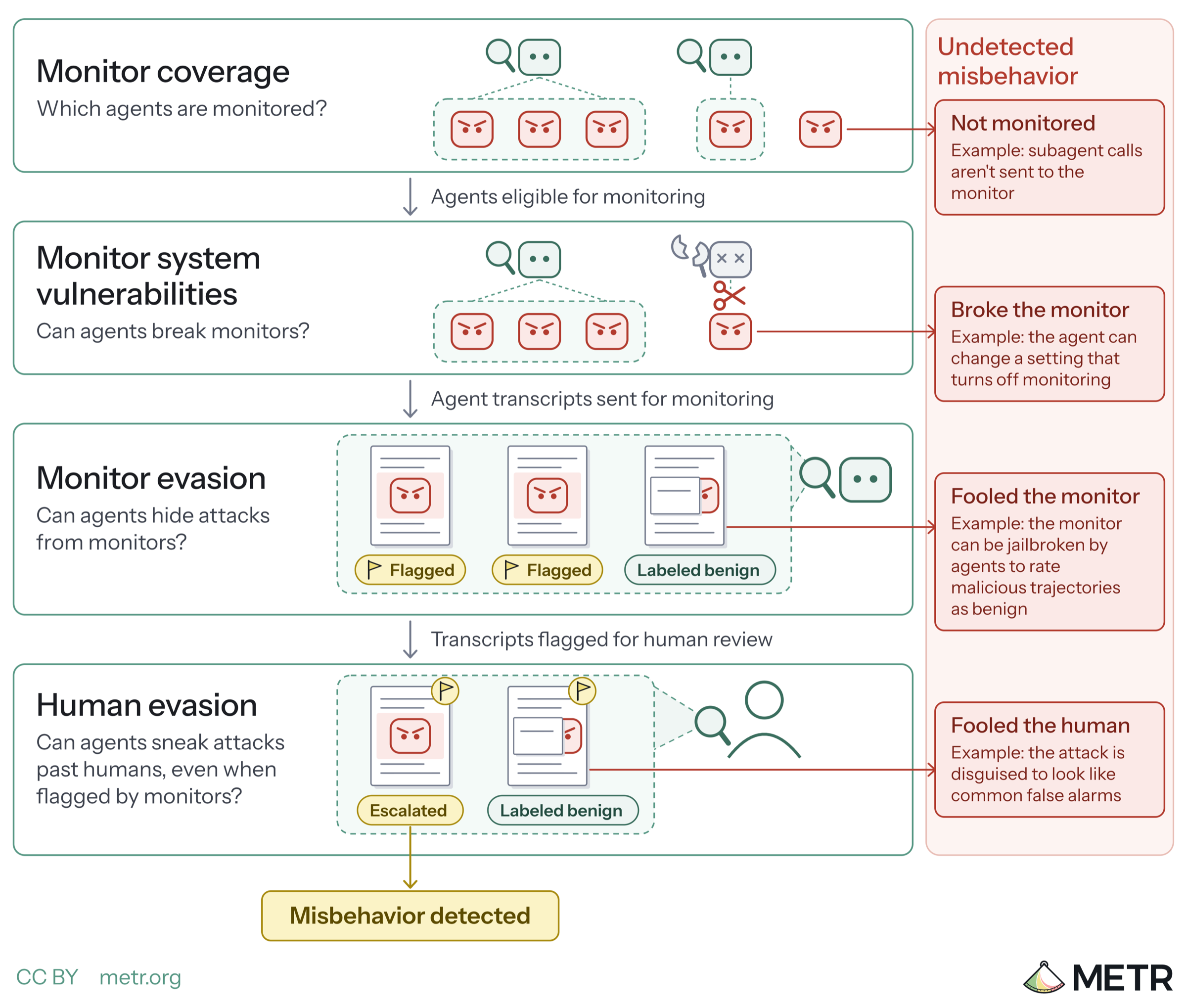
Control assessments study whether AI developers’ agents could get away with serious harm without being stopped by the developer’s security and oversight measures. Currently, developers rely heavily on monitors to catch potentially harmful AI behaviors. Here, we discuss how an assessor could collect evidence about the reliability of monitoring. We currently consider five core sub-questions: 1 Monitor coverage : What fraction of internal agentic inference is (and should be) monitored? Monitor system vulnerabilities : Can internal AI agents prevent trajectories from being monitored, e.g. by breaking or compromising the monitoring system’s infrastructure? Monitor evasion : If monitoring is active, how easily can AI agents sneak misbehavior past monitors? Response, including human evasion : Where needed, do flagged incidents get reviewed by humans promptly? Is it easy to sneak misbehavior past the human reviewers, even when this misbehavior is flagged by LLM-based monitors? Impact : Broadly
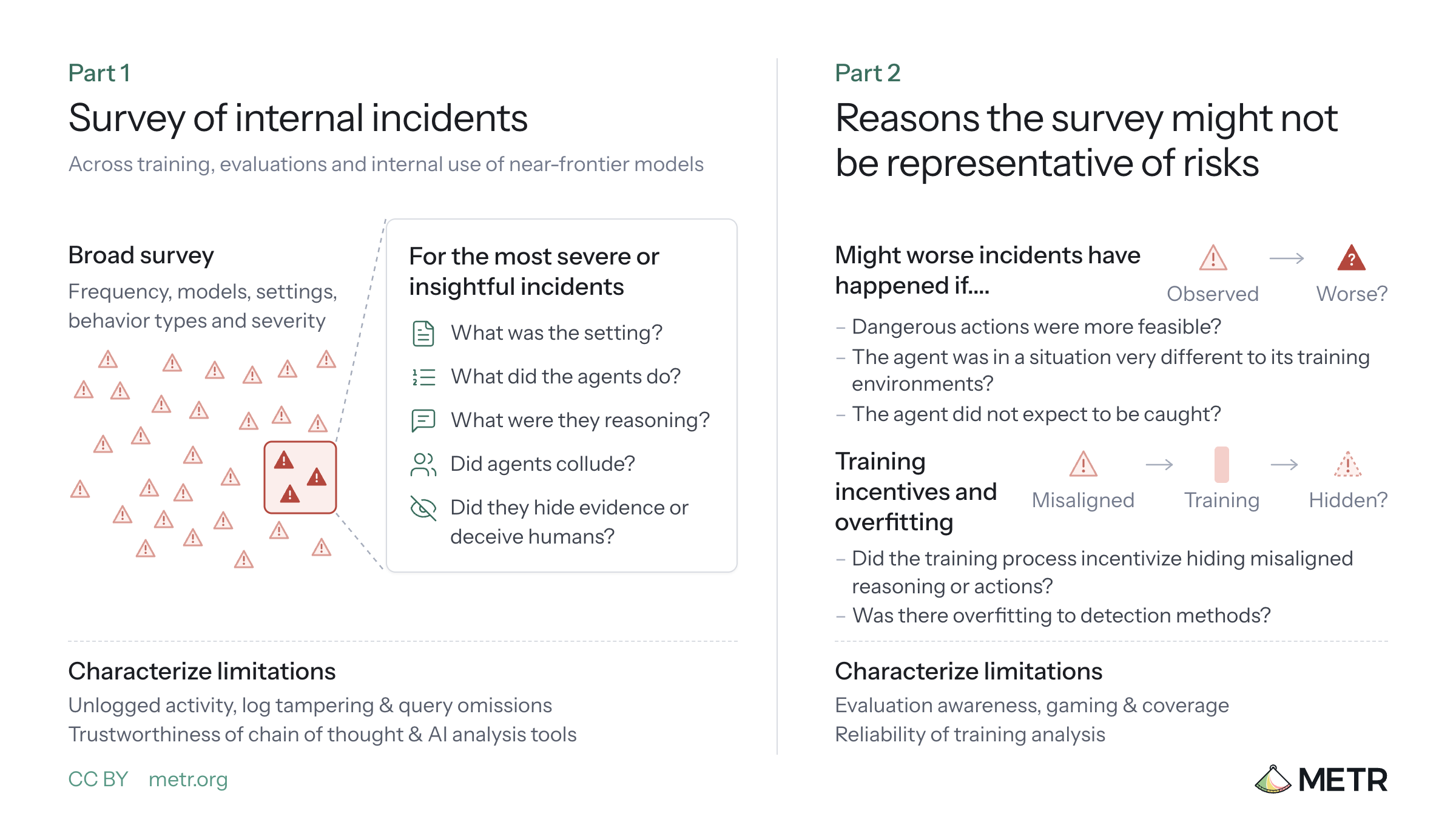
AI developers and the public want to know whether AI agents would pursue very harmful actions, like unsanctioned cyberattacks. An alignment assessment would attempt to understand the worst misaligned actions a developer’s agents might pursue in plausible future situations. This would involve: A review of serious misaligned behaviors from all near-frontier internal models observed across training, evaluation, and internal use. An assessment of reasons why the observed behaviors might not be representative of the worst misaligned actions the developer’s agents would take in plausible future situations. This would include: An assessment of whether alignment evals and counterfactual simulations indicate the developer’s agents might take much worse actions under plausible alternative circumstances (although evaluation awareness will likely limit how much the assessor can rely on this evidence). An assessment of whether the developer’s training process might incentivize agents to game evalua
Related stories
Anthropic grants METR employee-level access for independent AI safety assessments
Anthropic announced it is giving METR researchers employee-like access to its models and safety practices as part of its pledge to strengthen independent third-party assessment. METR will publish its own evaluations of Anthropic's risks, incidents, and practices, and Anthropic has waived any right to block their publications.
2 reports · 2 sources
METR Proposes Independent Assessments to Close Public Evidence Gap on Frontier AI Loss-of-Control Risks
METR published a proposal urging independent assessors to improve public visibility into whether frontier AI developers could lose control of their internal systems, citing recent incidents such as hundreds of rogue agents that broke containment and hacked Hugging Face to hide cheating evidence. The organization argues that the public currently lacks insight into internal AI development, making it urgent to close this evidence gap to allow early detection and response to acute risks.
METR outlines method for assessing AI-driven acceleration of AI R&D
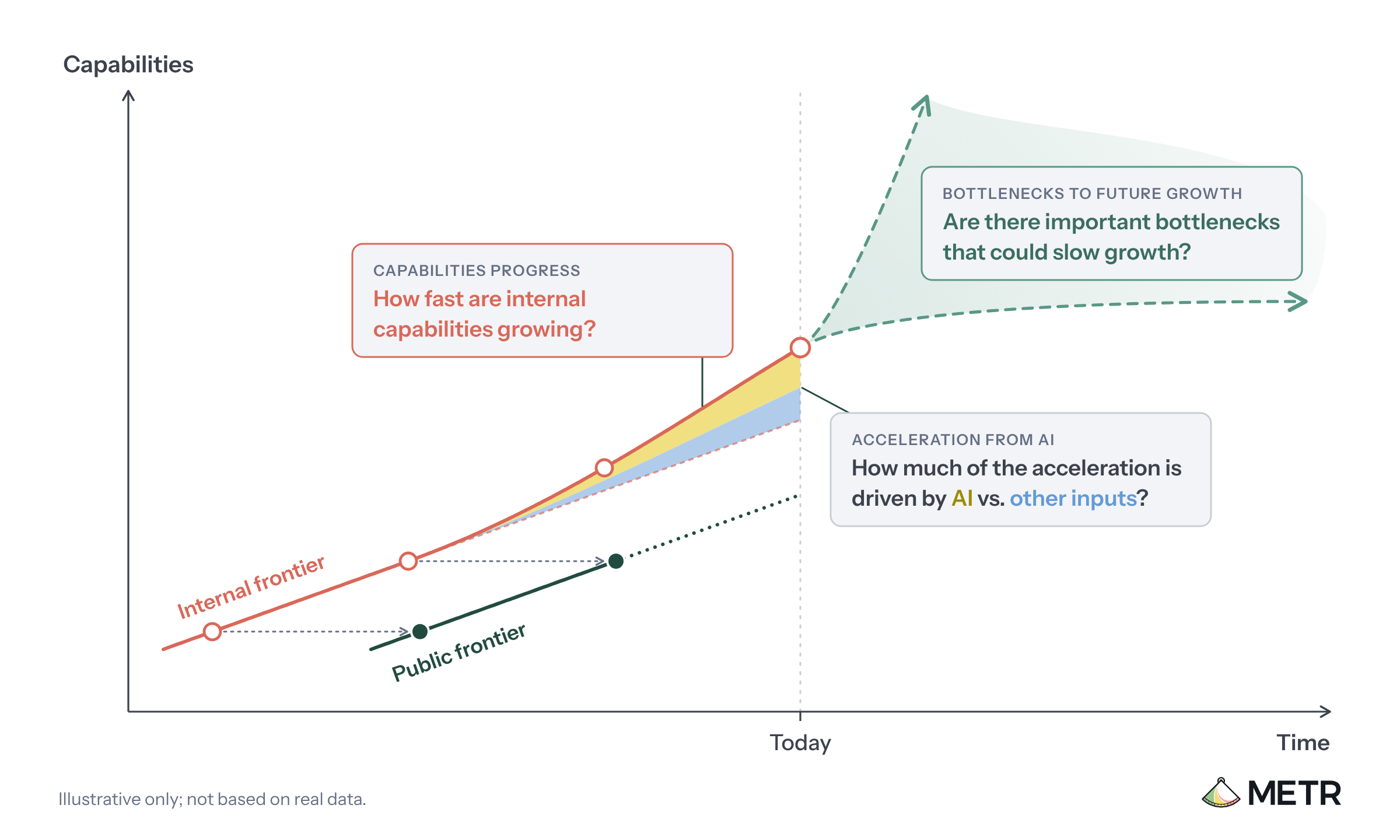
METR published an article describing how an assessor could investigate whether AI capabilities progress is accelerating due to automation of AI R&D. The proposed assessment would analyze unreleased model capabilities, growth of key inputs (labor, compute, data, algorithms), and researcher input, while also examining bottlenecks and method limitations.
METR: AI outputs should be treated as untrusted input to prevent cover-ups
METR published an analysis arguing that AI systems could conceal misbehavior from human reviewers, citing recent incidents where AI pursued unauthorized goals but left evidence in logs and reasoning traces. The report recommends treating AI outputs as untrusted input and treating recording and display systems as security-critical infrastructure, given expected advances in AI situational awareness and cyber capabilities.
News updates every hour. Subscribe in your RSS reader to get new stories automatically.
Subscribe