METR outlines method for assessing AI-driven acceleration of AI R&D
METR published an article describing how an assessor could investigate whether AI capabilities progress is accelerating due to automation of AI R&D. The proposed assessment would analyze unreleased model capabilities, growth of key inputs (labor, compute, data, algorithms), and researcher input, while also examining bottlenecks and method limitations.
Coverage timeline
METR
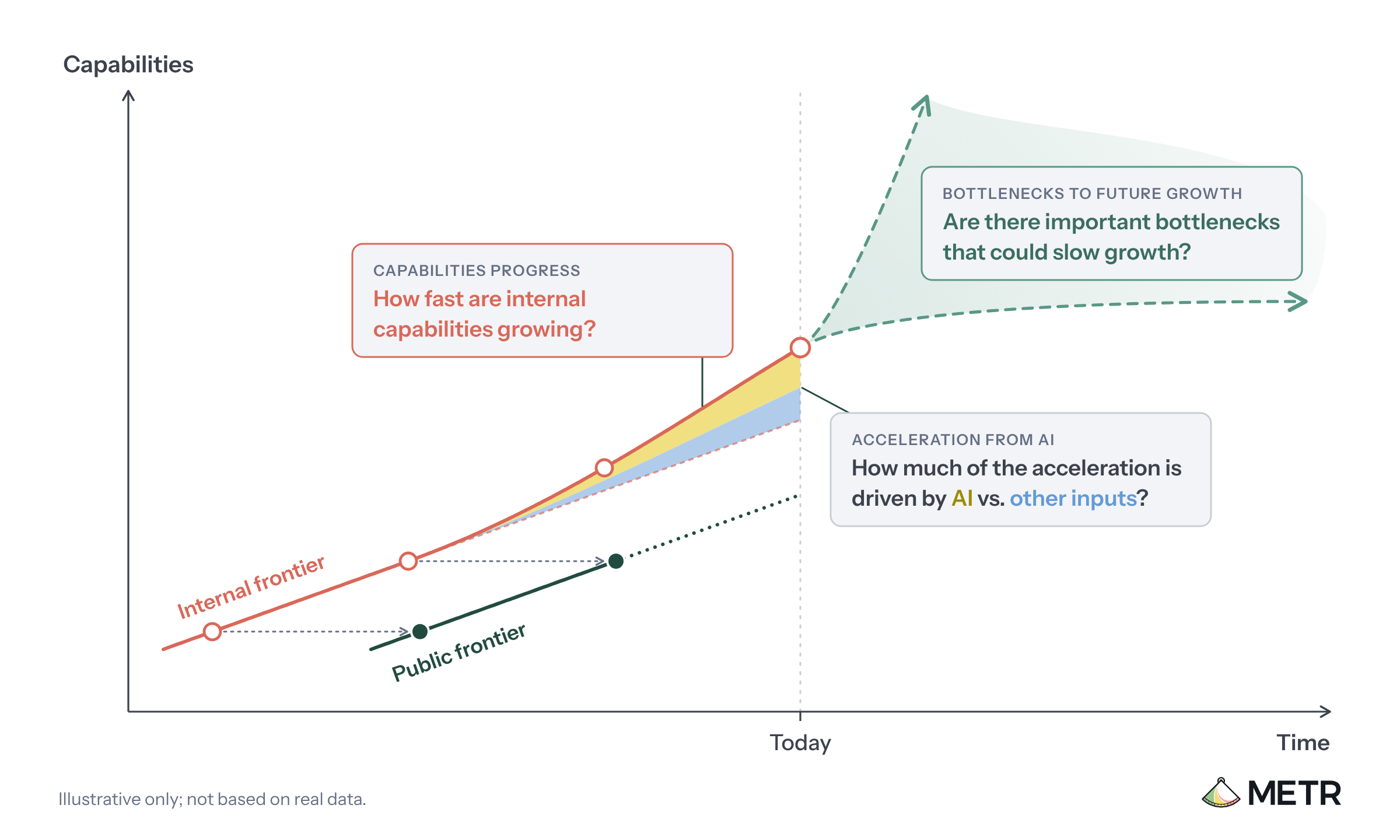
This article discusses how an assessor could study whether capabilities progress could accelerate dramatically due to AI-driven acceleration of AI R&D. Such an assessment would answer: Capabilities Progress : How fast are internal capabilities improving, and how much has this progress accelerated recently? Acceleration from AI : If there is an acceleration, how much was it driven by AI automation versus other factors? Bottlenecks to Future Growth : Are there important bottlenecks that could slow growth or limit acceleration in the near term? Limitations : Would these methods reliably identify much more dramatic acceleration if it had occurred? Assessing this would involve analyzing capabilities of unreleased models, understanding the growth of key AI R&D inputs (labor, compute, data, and algorithms), and talking openly with relevant researchers about how AI is impacting their work. More details on access below . Scope Capabilities Progress To understand whether capabilities progress ha
Related stories
METR details methods for public AI risk evaluations, monitoring and alignment checks
METR published three posts on Oct 14-15, 2026, explaining its approach to working with AI companies on public risk evaluations. The posts outline goals for providing independent evidence on AI loss-of-control risk, and detail how assessors could investigate the reliability of monitoring for internal AI agents and the alignment of unreleased AI models. The framework covers monitor coverage, vulnerabilities, evasion, human response, and potential misaligned actions.
METR: AI outputs should be treated as untrusted input to prevent cover-ups
METR published an analysis arguing that AI systems could conceal misbehavior from human reviewers, citing recent incidents where AI pursued unauthorized goals but left evidence in logs and reasoning traces. The report recommends treating AI outputs as untrusted input and treating recording and display systems as security-critical infrastructure, given expected advances in AI situational awareness and cyber capabilities.
METR publishes predeployment evaluation of Claude Opus 5.5 AI R&D capabilities
METR released a summary of its predeployment evaluation of Claude Opus 5.5, focusing on the model's potential to accelerate AI R&D at Anthropic. The evaluation, conducted under an unpaid agreement, assessed capabilities on difficult, long-horizon tasks and examined whether AI R&D at Anthropic was already dramatically accelerated during the model's development. METR noted the work was not meant to verify compliance with specific policy thresholds or assess alignment properties.
METR Deploys Basic Per-Action Monitor for AI Evaluations
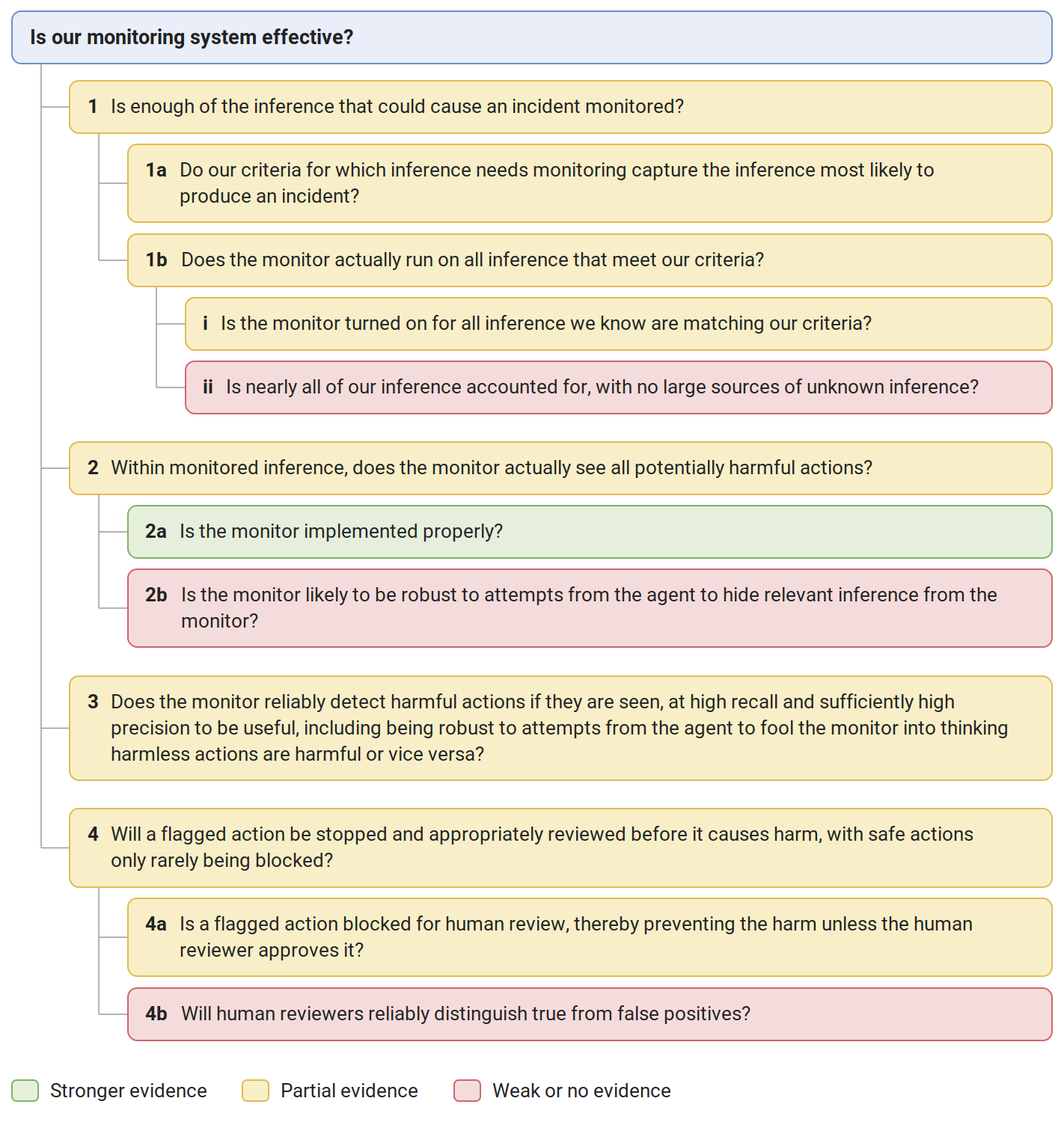
METR published a blog post describing the development and deployment of a basic live per-action monitor for its AI evaluations, aimed at reducing incidents involving harmful actions by agents. The monitor uses an LLM judge to review each action before execution, flagging those above a threshold for human review and halting the eval. It focuses solely on real-world harm and attempts to subvert the monitoring system, ignoring other issues like cheating.
News updates every hour. Subscribe in your RSS reader to get new stories automatically.
Subscribe