StepFun Releases 321B-Parameter Quantized Step-5-Preview-NVFP4 on Hugging Face
StepFun has released Step-5-Preview-NVFP4, a 321B-parameter quantized variant of its Step-5-Preview model, on Hugging Face. The model is available under the stepfun-ai organization and was updated 36 minutes ago.
Coverage timeline
StepFun 模型发布 (HF)
stepfun-ai/Step-5-Preview-NVFP4 321B • Updated 36 minutes ago
Related stories
StepFun Releases Step-5-Preview, a 604B-Parameter Open-Weight LLM
StepFun has released Step-5-Preview, a 604B-parameter open-weight large language model, on Hugging Face. The model is available under the stepfun-ai/Step-5-Preview repository, updated 35 minutes ago.
StepFun Unveils Step 5 Preview: 600B MoE, 27B Active, Open-Source Top 2
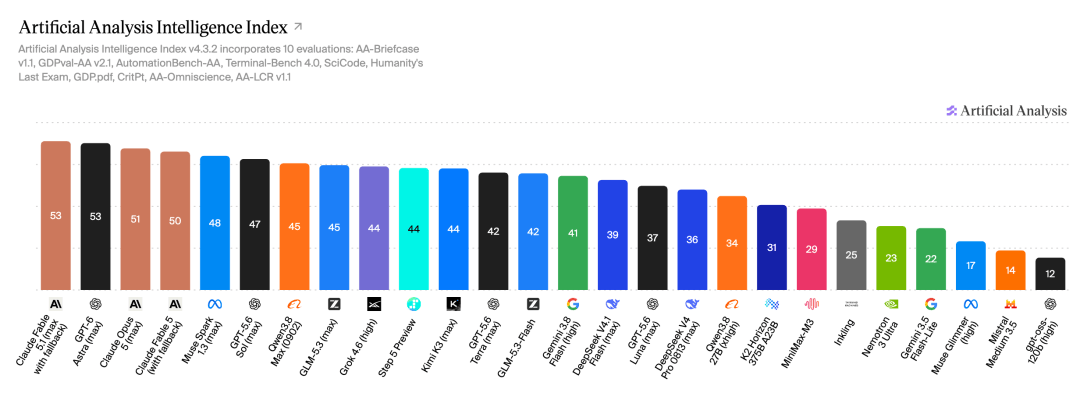
StepFun released Step 5 Preview, a 600B-parameter MoE model with 27B active parameters and 1M context, available as an open-weight checkpoint on Hugging Face. In Artificial Analysis evaluations, it scored 44, ranking as the top open-source model after one other, with pricing at $1 per million input tokens and $2.7 per million output tokens. Hands-on tests showed strong agentic capabilities, including autonomously building 3D assets and a LEGO racing game.
2 reports · 2 sources
Liquid AI releases LFM2.5-24B-A2B, an open-weight 24B reasoning model with 2B active parameters
Liquid AI announced LFM2.5-24B-A2B, an open-weight 24B reasoning model with 2B active parameters, designed for fast, private on-device agents. The company claims it outperforms Qwen3.6-35B-A3B on the LiveClaw benchmark.
2 reports · 2 sources284 points · 78 comments
-oOdUn61bDRSykk4H951SoDOHzqoOe1.png)
Agibot Psi-R2.5 Embodied Foundation Model Uses Paired Human-Robot Data for One-Shot Imitation
Agibot (Lingchu Intelligence) released Psi-R2.5, a new embodied foundation model that introduces a training pipeline based on paired human-robot data (Pair Data) instead of the raw large-scale human videos used previously. After a single human demonstration, the model can reproduce a task through context learning without retraining or fine-tuning. The new approach aims to streamline the conversion of human data into robot-executable trajectories, addressing data scarcity and embodiment gap issues.
1 reports · 1 sources
News updates every hour. Subscribe in your RSS reader to get new stories automatically.
Subscribe