Raschka: Jev AI Text Classifier Impresses Despite Initial Skepticism
In an essay, Sebastian Raschka discusses the recently released Jev AI model, a text classifier that has gained attention in technical communities over the past two weeks. He describes his evolving view from dismissive to impressed, noting Jev's speed and cost advantages over general-purpose LLMs for classification tasks, while acknowledging it may not outperform special-purpose classifiers on narrow problems.
Coverage timeline
Ahead of AI (Raschka)Sebastian Raschka, PhD
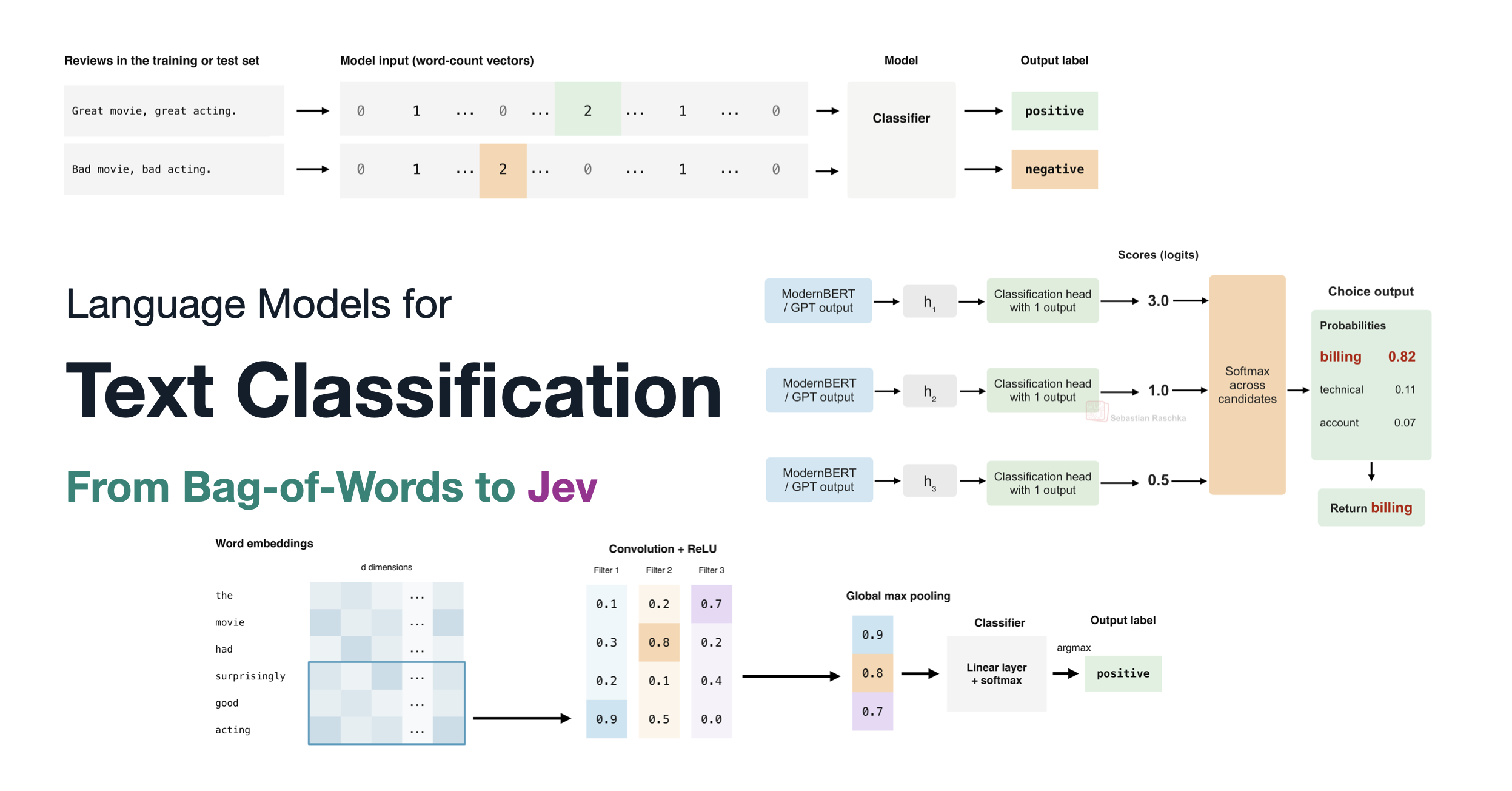
The recently released Jev AI model has been quite a cultural phenomenon in technical communities in the past 2 weeks. While Jev aims to classify things, it’s easy to dismiss Jev as “just a classifier,” and my own view of Jev has evolved quite a bit over the past few days. In particular, my thoughts went from “classifiers used to be my bread & butter; I can easily build this myself” (more on this later) to “wow, this actually works better than I thought.” Figure 1: Quick overview of the Jev API; more details on that later. Sure, the latest state-of-the-art GPT and open-weight LLMs can do the same kinds of classification tasks as Jev, while also being capable of much more general decision-making. But Jev’s advantage is that it can handle those classification tasks much faster and more cheaply. At the other end of the spectrum, for a narrow, well-defined problem, Jev probably won’t classify anything better, faster, or cheaper than a special-purpose classifier. But its selling point is tha
Related stories
TypeSafe AI's Jev model draws attention; NeurIPS 2025 ConfTuner explored similar probability calibration
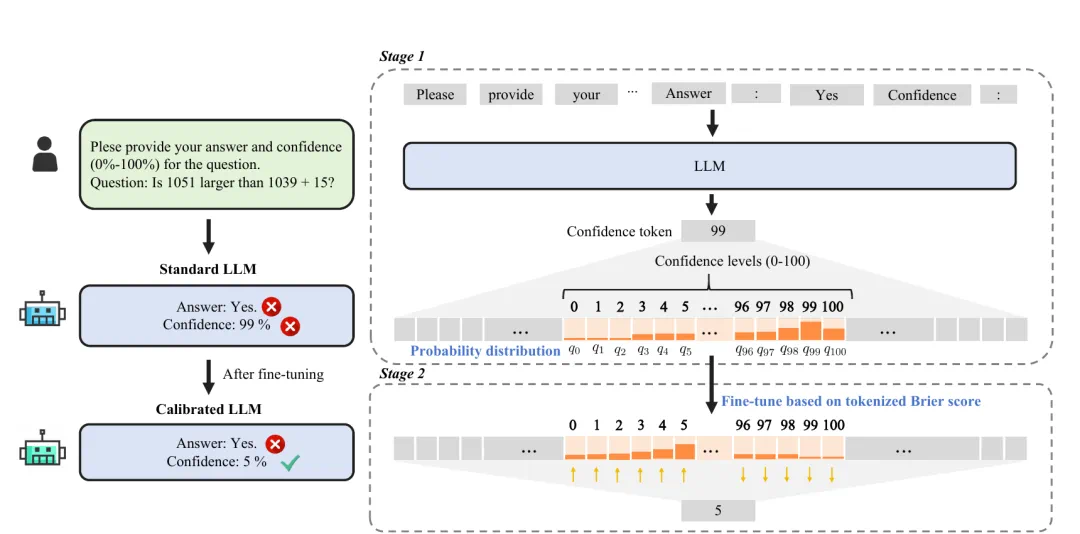
TypeSafe AI's Jev model, which outputs decisions plus probabilities from input states, has gained attention for its focus on probability calibration. Coverage highlights its conceptual alignment with the NeurIPS 2025 paper ConfTuner, whose Tokenized Brier Score method trains the probability distribution over candidate confidence tokens to better reflect true accuracy. Jev is not open-sourced, and its architecture and training details remain undisclosed.
1 reports · 1 sources
TypeSafe AI's Jev 'System One' model gains traction as agent evaluator
TypeSafe AI unveiled Jev, a 'System One' model that outputs typed probabilistic decisions instead of text, and it has quickly gained traction in AI developer communities. LangChain published a Jev-as-a-Judge experiment on September 20 testing it as an agent evaluator, and related posts have drawn 37 million views. Jev supports three judgment types—Noul, Choice, and Score—and is priced at $0.042 per million input tokens with free output.
2 reports · 2 sources52 points · 20 comments
Open-source Laya model tops Hugging Face, beats cloud Jev in local decision speed
The open-source multilingual System 1 decision model Laya, dubbed 'open-source Jev', has topped Hugging Face's trending list. Community benchmarks show Laya outperforms cloud-based Jev in decision speed and latency on local devices, with tests reporting up to 20x faster median latency and 11x faster decision speed in specific scenarios.

BenchShield Framework Detects Reward Hacking in LLM-Agent Evaluations
Researchers from Dartmouth, UC Berkeley, and BenchFlow AI introduced BenchShield, a framework for detecting reward hacking in LLM-agent evaluation infrastructure. It extends checks to the entire scoring process, using static analysis to find exploit paths and runtime evidence to determine if agents attempted or used them. The paper highlights a case where a Lean proof verifier gave full marks to an incorrect proof due to disabled kernel type checking.

News updates every hour. Subscribe in your RSS reader to get new stories automatically.
Subscribe