Mysterious startup PSI claims AI-assisted proofs for 5 open quantum problems
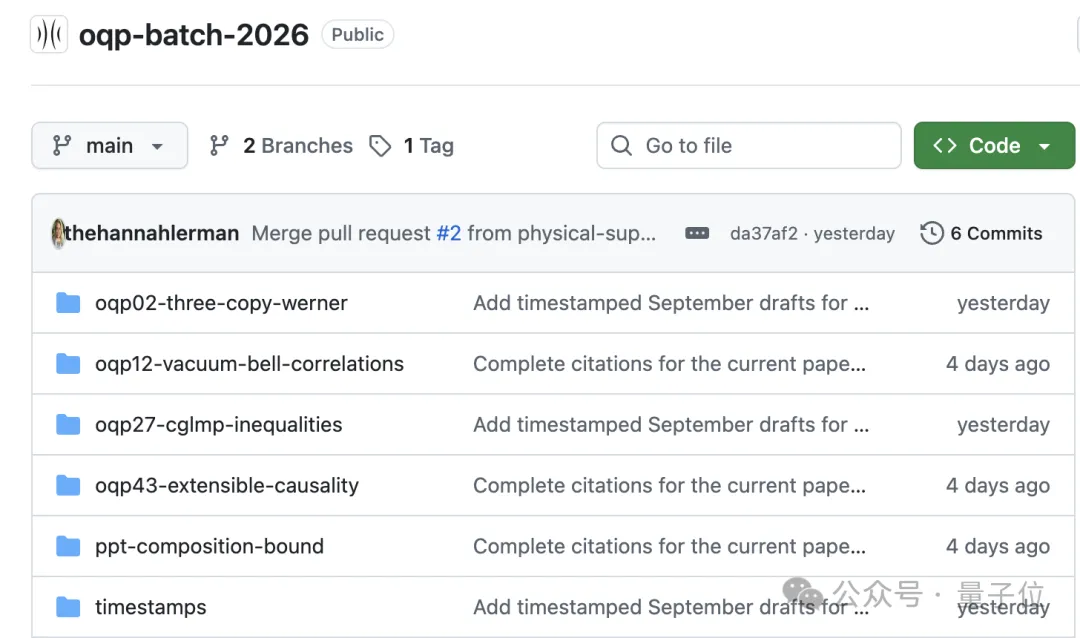
Physical Superintelligence (PSI), a company publicly launched on September 1, 2026, announced AI-assisted solutions to five open problems in quantum information theory, drawn from the Open Quantum Problems (OQP) directory established by Reinhard Werner in 1999. The problems span entanglement distillation, quantum field theory, high-dimensional quantum communication, quantum channel capacity, and quantum causality, with papers, Lean formal proofs, and verification code posted on GitHub for review. Three of the problems (OQP 2, OQP 12, OQP 27) date from the early 2000s, and PSI claims this is its first achievement toward building 'the world's most advanced physics research laboratory'.
Coverage timeline
量子位量子位
物理学也要被AI攻陷了?5道20多年量子公开问题被突破 程浅 2026-10-29 14:51:51 来源: 量子位 MIT最后一位三学位天才出手了。 程浅 发自 凹非寺 量子位 | 公众号QbitAI 可怕,这才过了几天? 怎么AI刚崩完数学,转头就开始崩物理了…… 刚刚,5道量子信息难题被宣布由AI辅助解决。 出手的是一家名叫 Physical Superintelligence(物理超级智能,简称PSI) 的神秘公司。 他们称,自己借助自研AI科研系统,在量子信息理论的 5个开放问题上取得了成果, 论文、Lean形式化证明和验证代码,均在Github上贴出供学人审查。 这个刚成立不到两个月的PSI,到底是何方神圣? PSI解决了个啥? PSI此次聚焦的 量子信息科学 ,主要研究如何利用量子力学的特殊规律存储、处理和传输信息,从而突破传统计算机的计算能力限制,并探索更安全的通信方式。 而他们这次借由AI挑战的五道难题,均来自于具有27年历史的 开放量子问题(OQP,Open Quantum Problems) 目录。 该开放问题目录由德国物理学家Reinhard Werner于1999年建立,专门收集量子信息学界长期卡住的重要研究问题。 这次的5道题,横跨了 纠缠提纯、量子场论、高维量子通信、量子信道容量与量子因果律五个核心方向,包括: OQP 2|负偏转置态的纠缠不可蒸馏性 OQP 12|真空纠缠与贝尔不等式 OQP 27|CGLMP贝尔不等式的最优测量 OQP 38|PPT平方猜想与纠缠破坏 OQP 43|量子因果过程的可纯化性 具体证明过程就不展开了。只需要知道,PSI此次取得进展的5道题中的3题(OQP 2、OQP 12、OQP 27),均在 本世纪初 就被收录。可见一斑。 “世界上最先进的物理研究实验室” 点进这个PSI的网站,简直可以用 空空如也 来形容,本次攻克量子信息难题也是他们的 第一个成果。 毕竟,这家公司,今年9月1日才正式公开亮相。 但不鸣则已,一鸣惊人,他们亮相之初就大发宏愿,宣称自己要建成 “世界上最先进的物理研究实验室” 。 PSI的创始团队有点意思,创始人兼首席科学家的Alex Wissner-Gross 是最有意思的。 这个人曾在MIT同时读完了 物理、电气工程和数学 三个本科专业,同时还以工程学院年级第一名的成绩毕业…… 同时
Related stories
OpenAI claims disproof of Exponential Time Hypothesis, plus math and physics results
OpenAI announced three new discoveries in mathematics, computer science, and physics, including a claimed disproof of the Exponential Time Hypothesis (ETH), a conjecture widely believed for nearly 30 years. The results cover local smoothing for the Euclidean wave equation, the Kakeya conjecture in four dimensions, and a rigorous mathematical existence proof for four-dimensional quantum field theories including quantum chromodynamics. External experts guided the results, and materials were released on GitHub for verification.
5 reports · 5 sources1153 points · 701 comments

OpenAI releases 722 AI-generated math manuscripts, claims on quasi-Riemann and Kakeya
OpenAI published 722 mathematical manuscripts produced by an unreleased internal frontier model, grouped into 372 result families across 17 fields, including claims on the quasi-Riemann hypothesis, BSD conjecture, and four-dimensional Kakeya conjecture. The company said most results came from a single prompt to a single AI agent, with average compute per result roughly equivalent to three hours of ChatGPT Pro thinking. Mathematicians described the release as overwhelming, noting it could take years to fully understand, and OpenAI withdrew three papers two days later.
16 reports · 6 sources1334 points · 1520 comments

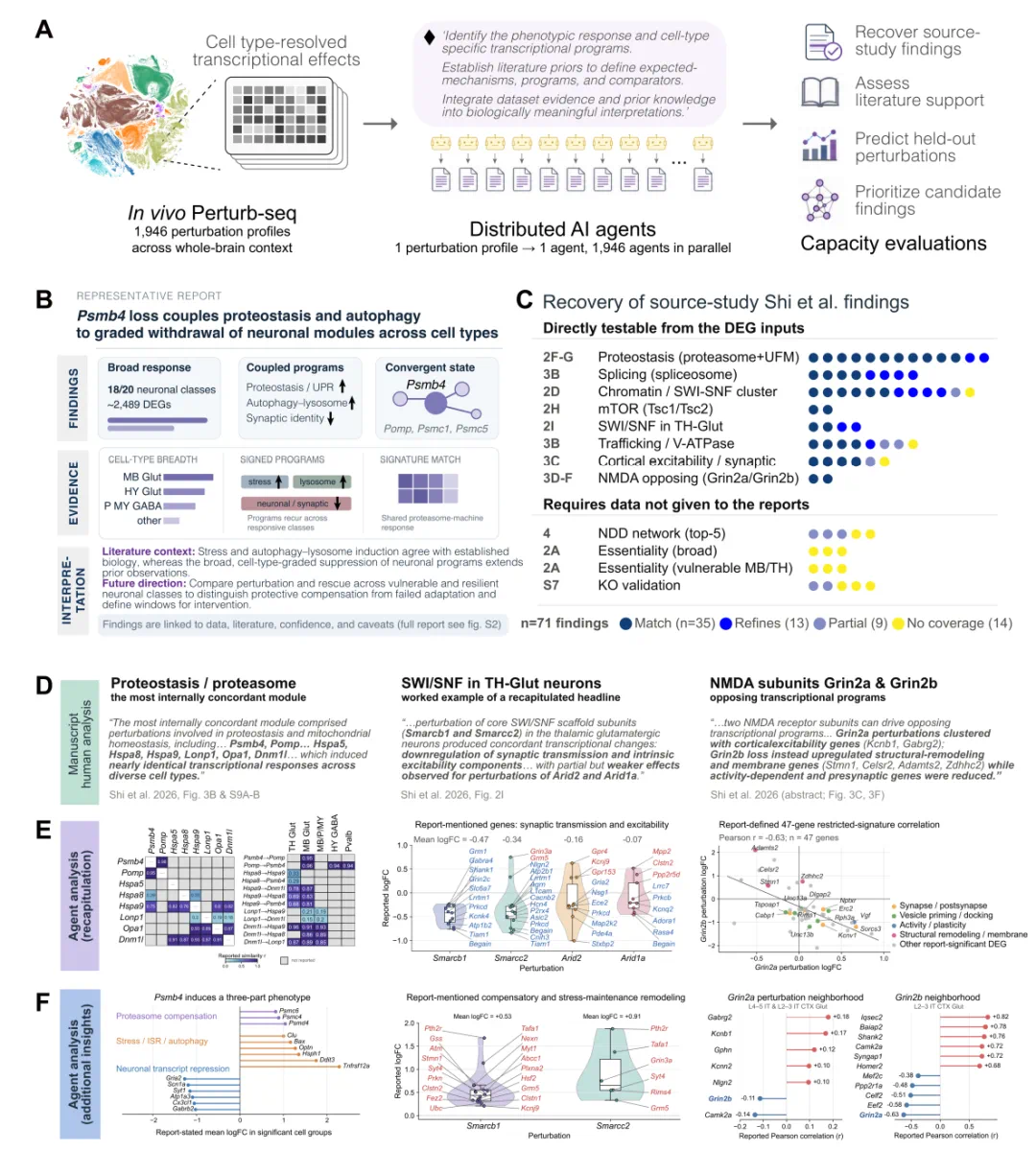
OpenAI, PerturbAI, Scripps deploy thousands of AI agents to analyze brain-cell CRISPR atlas in 32 minutes
On October 21, 2026, OpenAI, PerturbAI, and Scripps Research announced a study using thousands of AI agents powered by the GPT-Rosalind architecture to analyze a whole-mouse-brain CRISPR perturbation atlas. The distributed workflow completed in 32 minutes, a task estimated to take human researchers months to a year, and aggregated results into a structured reasoning atlas linking gene perturbations to cellular responses and literature.
2 reports · 2 sources159 points · 105 comments
AI labs quietly test models' ability to break key cryptographic protocols, researcher says
Theoretical computer scientist Scott Aaronson, citing sources, reports that AI labs have begun quietly testing whether their models can break important cryptographic protocols. The development has sparked discussion about the risk of AI accelerating mathematics, potentially undermining current security systems.
1 reports · 1 sources
News updates every hour. Subscribe in your RSS reader to get new stories automatically.
Subscribe