OpenAI claims disproof of Exponential Time Hypothesis, plus math and physics results
OpenAI announced three new discoveries in mathematics, computer science, and physics, including a claimed disproof of the Exponential Time Hypothesis (ETH), a conjecture widely believed for nearly 30 years. The results cover local smoothing for the Euclidean wave equation, the Kakeya conjecture in four dimensions, and a rigorous mathematical existence proof for four-dimensional quantum field theories including quantum chromodynamics. External experts guided the results, and materials were released on GitHub for verification.
Coverage timeline
Techmeme
OpenAI : OpenAI announces three breakthroughs in computer science, math, and physics, including that the Exponential Time Hypothesis, a longstanding conjecture, is false — We are announcing three new discoveries in mathematics, computer science, and physics about harmonic analysis, complexity theory, and quantum field theory.

OpenAI Blog
OpenAI shares model results on the Kakeya conjecture, Exponential Time Hypothesis, and quantum chromodynamics—and how researchers can verify and build on them.
The Verge AIRichard Lawler
Less than a month after its mass release of hundreds of manuscripts that it said contained solutions to long-standing mathematics questions, OpenAI is back with three more "major" discoveries in math, computer science, and physics . What's different this time is the choice to have external experts that OpenAI describes as "shepherds" guiding the results in computer science and physics, while for the math problem it says that they advised it to release the AI output for researchers to work through their own explanations. OpenAI results added to GitHub today: Local smoothing for the Euclidean wave equation. The proof uses an auxiliary par … Read the full story at The Verge.

机器之心机器之心
编辑|Neo 722 篇数学手稿引发的讨论还没结束,OpenAI 又把一个更让人意外的结果摆到了科学家面前。 这一次,它声称推翻了理论计算机科学中一个被广泛相信近 30 年的假设。而当年提出这一假设的两位研究者,如今正准备组织同行,一起检查 AI 给出的反证。 10 月 26 日,OpenAI 宣布在 数学、计算机科学 和 物理学 三个领域取得新成果:证明所有维度下的局部光滑化猜想、证伪指数时间假设(ETH),以及为包括量子色动力学在内的四维量子场论建立严格的数学存在性证明。OpenAI 总裁 Greg Brockman 在 X 上将其称为 三项重大科学发现 ,并感叹 AI 开始帮助人类增进对宇宙的理解。 不到三周前,OpenAI 刚刚公开了由内部模型生成的 722 篇数学手稿,分属 372 个成果族、17 个研究方向。我们当时翻阅了这份清单,从中挑出了 30 道最受关注的经典难题。四维挂谷猜想就是其中之一。 现在,挂谷问题再次出现,但已经不是这批成果里最出人意料的消息。把整个理论计算机科学界拉进讨论的,是另一个缩写:ETH。 一项存在了近 30 年的假设,遭到了 AI 的挑战 理解 ETH,可以先从下面这个例子说起。 假设有一把密码锁,每一位密码只能是 0 或 1。我们不知道正确密码,但掌握了几条线索:第一位和第二位不能都是 0;第二位是 0,或者第三位是 0;第一位、第三位和第四位不能全部是 1。 问题是,能否找到一组数字,同时满足所有线索?例如,1010 就是一组符合条件的密码。 在计算机科学中,这种只有 0 和 1 两种取值的选择,可以用布尔变量表示,分别对应「假」和「真」。如果将每条线索写成由不超过三个变量或其否定通过「或」连接的逻辑条件,再判断能否找到一组取值让所有条件同时成立,就得到了经典的 3-SAT 问题 。 四位密码很容易解决,最多只需检查 16 种组合。但如果密码有 100 位,可能的组合就会增加到 2^100 种。虽然聪明的算法不必逐一尝试,但面对一般的 3-SAT 问题,计算机究竟能有多快,一直是理论计算机科学的重要问题。 1990 年代末,Russell Impagliazzo、Ramamohan Paturi 和 Francis Zane 提出了 指数时间假设(Exponential Time Hypothesis,ETH) 。 它的核
TechCrunch AITim Fernholz
TechCrunch spoke to the MIT computer scientist charged with explaining OpenAI's latest mind-bending discovery
Related stories
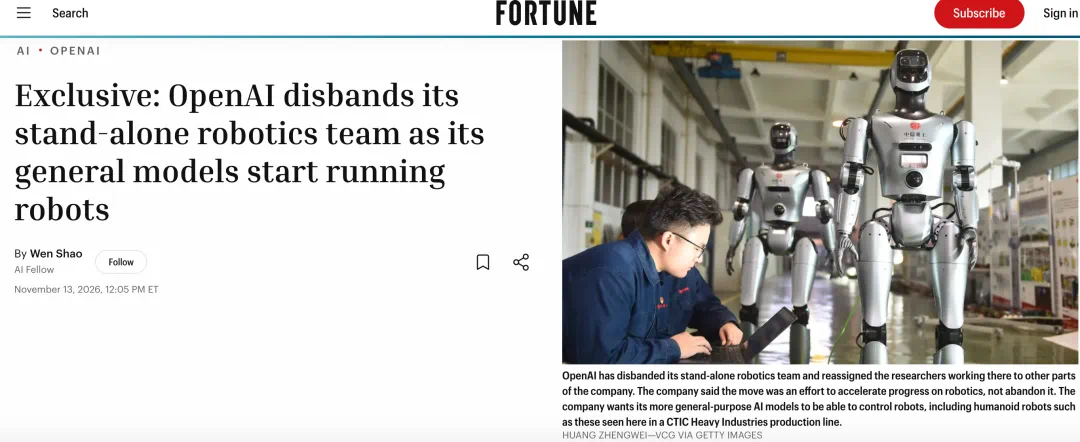
OpenAI disbands standalone robotics team, reassigns staff to research and Applied units
OpenAI has disbanded its standalone robotics team, moving researchers to its core research unit led by Mark Chen and hardware teams to the Applied division under Greg Brockman, as confirmed by the company. The reorganization follows a shift toward using general models like GPT-6 Astra directly for robotics, and OpenAI stresses that robotics remains a long-term vision.
3 reports · 3 sources177 points · 73 comments
Dwarkesh Patel: AI could match top human researchers within a couple of years
On his podcast, Dwarkesh Patel argued that AI's impact on mathematics foreshadows its effect on AI research itself, predicting AI could match top human researchers within a couple of years. He also stated he now expects superintelligence by 2030.
1 reports · 1 sources
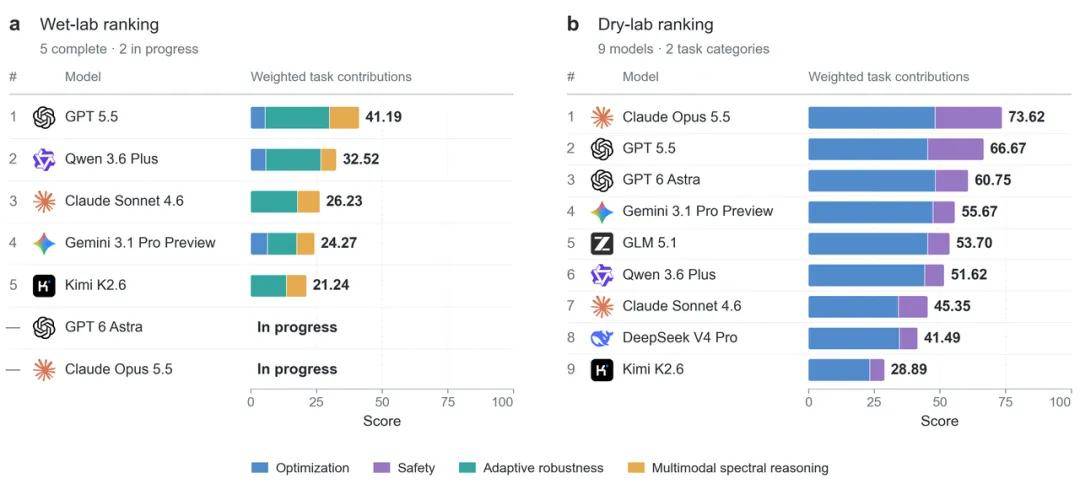
AISLE benchmark: top AI models score 41/100 in real wet-lab tests
AISLE, a benchmark for AI scientists' real-world wet-lab capabilities, released first-round results from 4,079 wet-lab tests across GPT, Claude, and Gemini models. The top model, GPT 5.5, scored 41.19 out of 100, and all models had a 0% pass rate on safety-constrained experiment optimization tasks. OpenAI also introduced BioBasicsBench, a 100-task benchmark for interpreting raw experimental data.
OpenAI Disproves Exponential Time Hypothesis, Impagliazzo Says
Russell Impagliazzo, co-proposer of the Exponential Time Hypothesis, called OpenAI's disproof of the hypothesis 'shocking news'. The result could have implications for speeding up chip design and breaking encryption, according to a New York Times report.
News updates every hour. Subscribe in your RSS reader to get new stories automatically.
Subscribe