Interactive atlas maps thousands of conversations in Qwen3-1.7B's internal state space
A developer built an interactive atlas visualizing thousands of conversations through Qwen3-1.7B's internal representations, using residual stream vectors to explore how similar topics cluster in the model's state space. The project investigates whether conversations about similar things travel through neighboring regions and whether the same idea expressed in different languages arrives at similar locations.
Coverage timeline
Hacker Newsjosip208
Every conversation that could happen with a language model–every question, misunderstanding, explanation, and unfinished argument–produces a sequence of internal states. Could we map that landscape? Would conversations about similar things travel through neighboring regions? Would the same idea, expressed in different languages, arrive somewhere recognizably similar? Those questions led me to build an interactive atlas of _Qwen3-1.7B_’s internal representations. Before looking at the maps, it helps to know what is being mapped. The model breaks text into tokens – words, parts of words, or punctuation. Each token selects a row from an embedding table: a learned list of numbers that supplies its starting representation. I wanted to map thousands of conversations and see how they take shape in vector space. The vectors I’m interested in come from the residual stream, the model’s central shared workspace. The embedding table supplies its starting vectors, with one vector at each token posi
Related stories
Ai2 and Hugging Face release StateBench benchmark for tracking state changes in long documents
Ai2 and Hugging Face released StateBench, a benchmark that tests how language models track changing information across long documents at four difficulty levels. The benchmark reveals where models struggle and how targeted training helps recurrent and hybrid architectures handle longer sequences.
2 reports · 2 sources
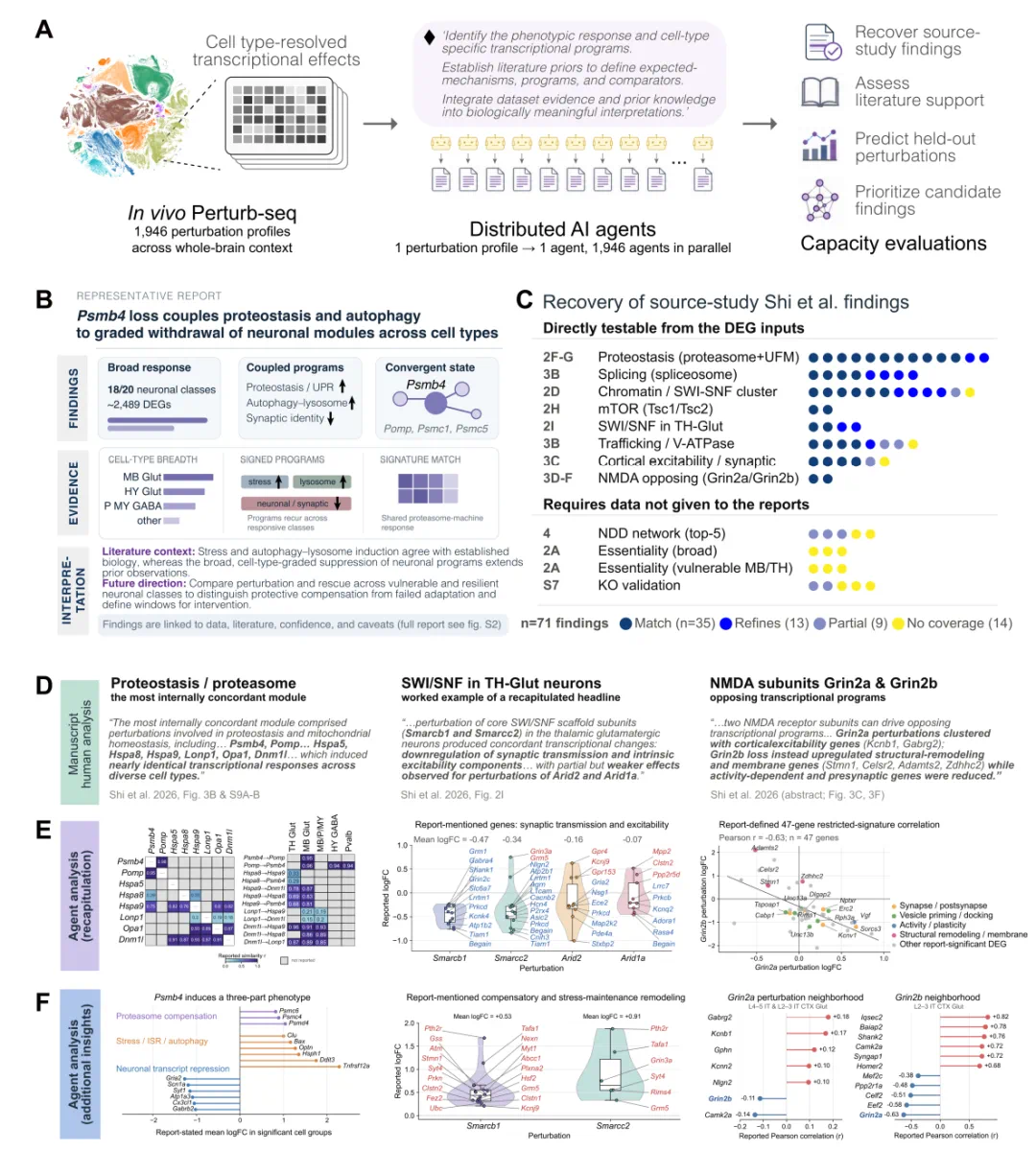
OpenAI, PerturbAI, Scripps deploy thousands of AI agents to analyze brain-cell CRISPR atlas in 32 minutes
On October 21, 2026, OpenAI, PerturbAI, and Scripps Research announced a study using thousands of AI agents powered by the GPT-Rosalind architecture to analyze a whole-mouse-brain CRISPR perturbation atlas. The distributed workflow completed in 32 minutes, a task estimated to take human researchers months to a year, and aggregated results into a structured reasoning atlas linking gene perturbations to cellular responses and literature.
2 reports · 2 sources159 points · 105 comments
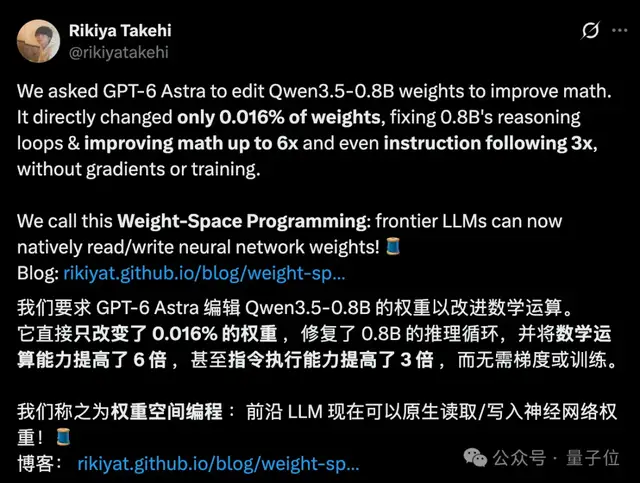
MIT: GPT-6 Astra edits Qwen weights, boosting MATH-500 from 7.9% to 48.1%
MIT CSAIL researchers demonstrated that GPT-6 Astra can directly read and modify the weights of Qwen3.5-0.8B, improving its MATH-500 score from 7.9% to 48.1% by altering only 0.016% of parameters, without training or gradient descent. The team named this capability Weight-Space Programming. However, spaCy author Matthew Honnibal publicly challenged the paper, arguing that the experimental conditions across the three claimed abilities differ significantly and that the presentation is misleading.
6 reports · 5 sources2949 points · 892 comments
News updates every hour. Subscribe in your RSS reader to get new stories automatically.
Subscribe