Tencent's Hyra 2.0 Agent Solves 50-Year-Old Math Problem
Tencent's Hyra 2.0, an autonomous research agent, solved a 50-year-old open problem in additive combinatorics within a week of its release, marking the first fully autonomous solution to an open mathematical problem by a Chinese open-source model. The achievement follows Hyra 1.0's release three months prior and coincides with OpenAI's announcements of solving 10 open problems and the Navier-Stokes Millennium Prize Problem using internal models.
Coverage timeline
腾讯混元 BlogHyra Team
Three months ago, we released Hyra 1.0[^ref1]: a minimalist agent loop for general scientific research problems. One week after its release, powered by the open-source model Hy3, Hyra solved a problem in additive combinatorics that had remained open for more than fifty years: the optimal exponent relating sumsets and difference sets[^ref2]. This marked !!#0080e6 the first fully autonomous solution to an open mathematical problem by a Chinese open-source model!!. Eleven days after the release of Hyra 1.0, OpenAI announced new results on 10 long-standing open problems[^ref3] achieved by an internal version of its next-generation model, Astra. In the two-plus months that followed, OpenAI also announced a solution to the Navier–Stokes Millennium Prize Problem[^ref4] and released 722 mathematical manuscripts produced by its internal models[^ref5]. AI-driven automated research is advancing at breakneck speed. Hyra 1.0 showed that if you give AI a difficult problem with clear evaluation crite

Related stories
OpenAI releases 722 AI-generated math manuscripts, claims on quasi-Riemann and Kakeya
OpenAI published 722 mathematical manuscripts produced by an unreleased internal frontier model, grouped into 372 result families across 17 fields, including claims on the quasi-Riemann hypothesis, BSD conjecture, and four-dimensional Kakeya conjecture. The company said most results came from a single prompt to a single AI agent, with average compute per result roughly equivalent to three hours of ChatGPT Pro thinking. Mathematicians described the release as overwhelming, noting it could take years to fully understand, and OpenAI withdrew three papers two days later.
16 reports · 6 sources1334 points · 1520 comments

OpenAI claims disproof of Exponential Time Hypothesis, plus math and physics results
OpenAI announced three new discoveries in mathematics, computer science, and physics, including a claimed disproof of the Exponential Time Hypothesis (ETH), a conjecture widely believed for nearly 30 years. The results cover local smoothing for the Euclidean wave equation, the Kakeya conjecture in four dimensions, and a rigorous mathematical existence proof for four-dimensional quantum field theories including quantum chromodynamics. External experts guided the results, and materials were released on GitHub for verification.
5 reports · 5 sources1153 points · 701 comments

Mysterious startup PSI claims AI-assisted proofs for 5 open quantum problems
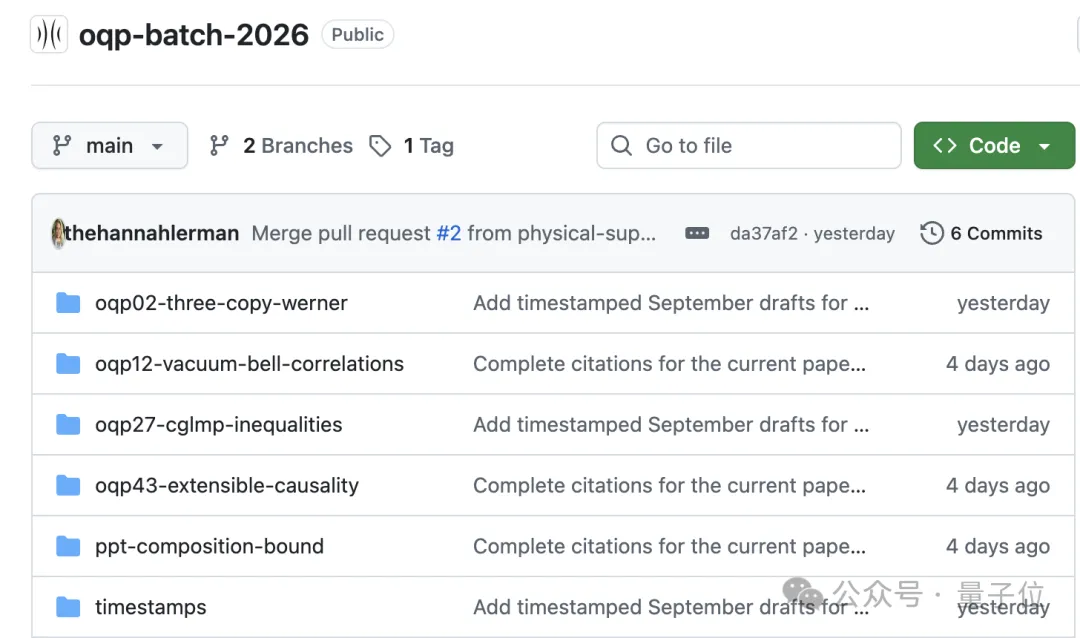
Physical Superintelligence (PSI), a company publicly launched on September 1, 2026, announced AI-assisted solutions to five open problems in quantum information theory, drawn from the Open Quantum Problems (OQP) directory established by Reinhard Werner in 1999. The problems span entanglement distillation, quantum field theory, high-dimensional quantum communication, quantum channel capacity, and quantum causality, with papers, Lean formal proofs, and verification code posted on GitHub for review. Three of the problems (OQP 2, OQP 12, OQP 27) date from the early 2000s, and PSI claims this is its first achievement toward building 'the world's most advanced physics research laboratory'.
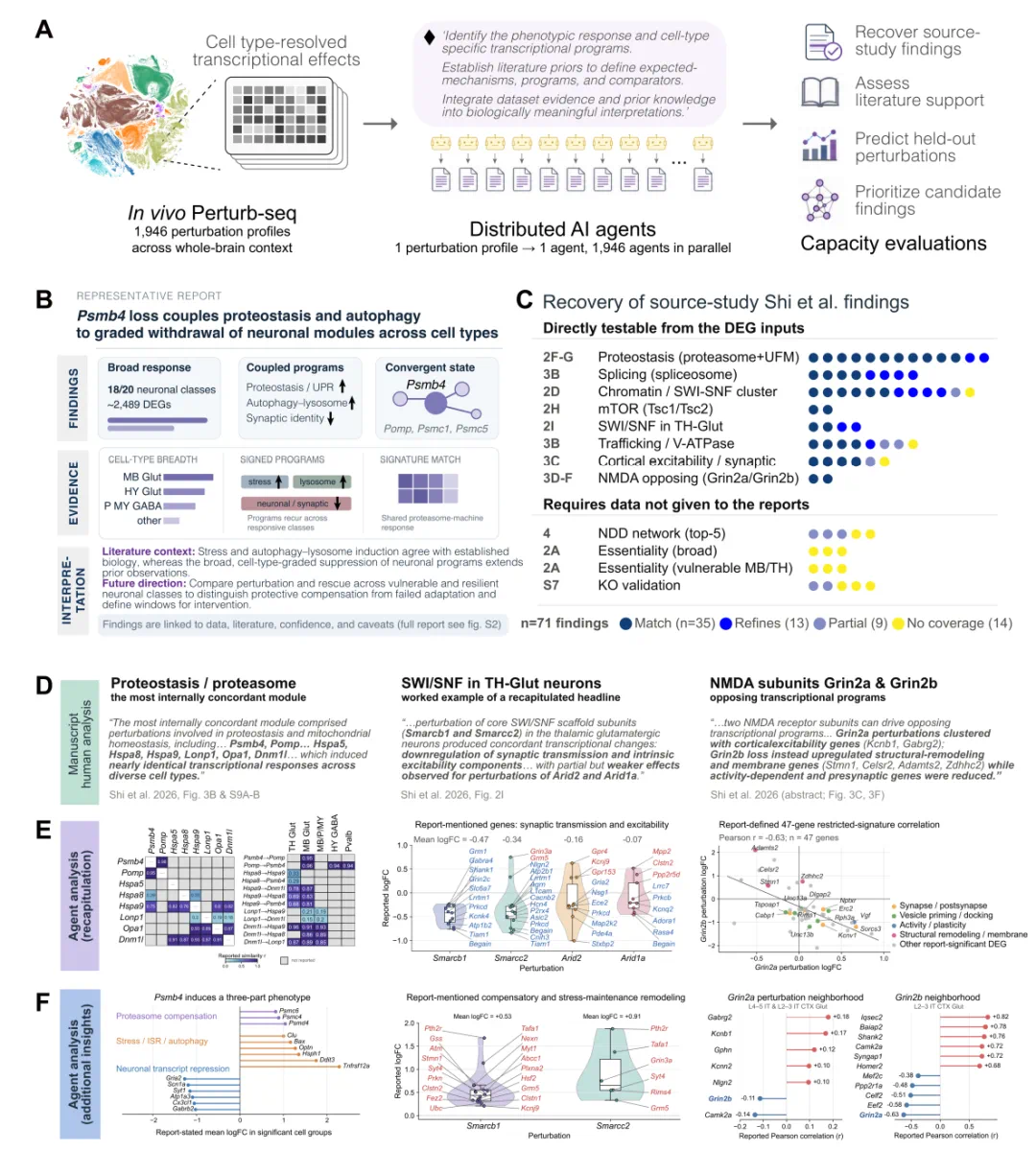
OpenAI, PerturbAI, Scripps deploy thousands of AI agents to analyze brain-cell CRISPR atlas in 32 minutes
On October 21, 2026, OpenAI, PerturbAI, and Scripps Research announced a study using thousands of AI agents powered by the GPT-Rosalind architecture to analyze a whole-mouse-brain CRISPR perturbation atlas. The distributed workflow completed in 32 minutes, a task estimated to take human researchers months to a year, and aggregated results into a structured reasoning atlas linking gene perturbations to cellular responses and literature.
2 reports · 2 sources159 points · 105 comments
News updates every hour. Subscribe in your RSS reader to get new stories automatically.
Subscribe