ByteDance Seed: DeepSeek-V4 accuracy varies every 4 tokens due to chunked KV cache compression
ByteDance Seed researchers found that DeepSeek-V4's retrieval accuracy fluctuates periodically every 4 tokens, with up to 40.2 percentage points difference in 128K long-context tests. They traced the issue to DeepSeek-V4's chunked KV cache compression, a long-context optimization technique. In a code completion experiment, padding length modulo 4 determined whether the model output the correct answer.
Coverage timeline
量子位量子位
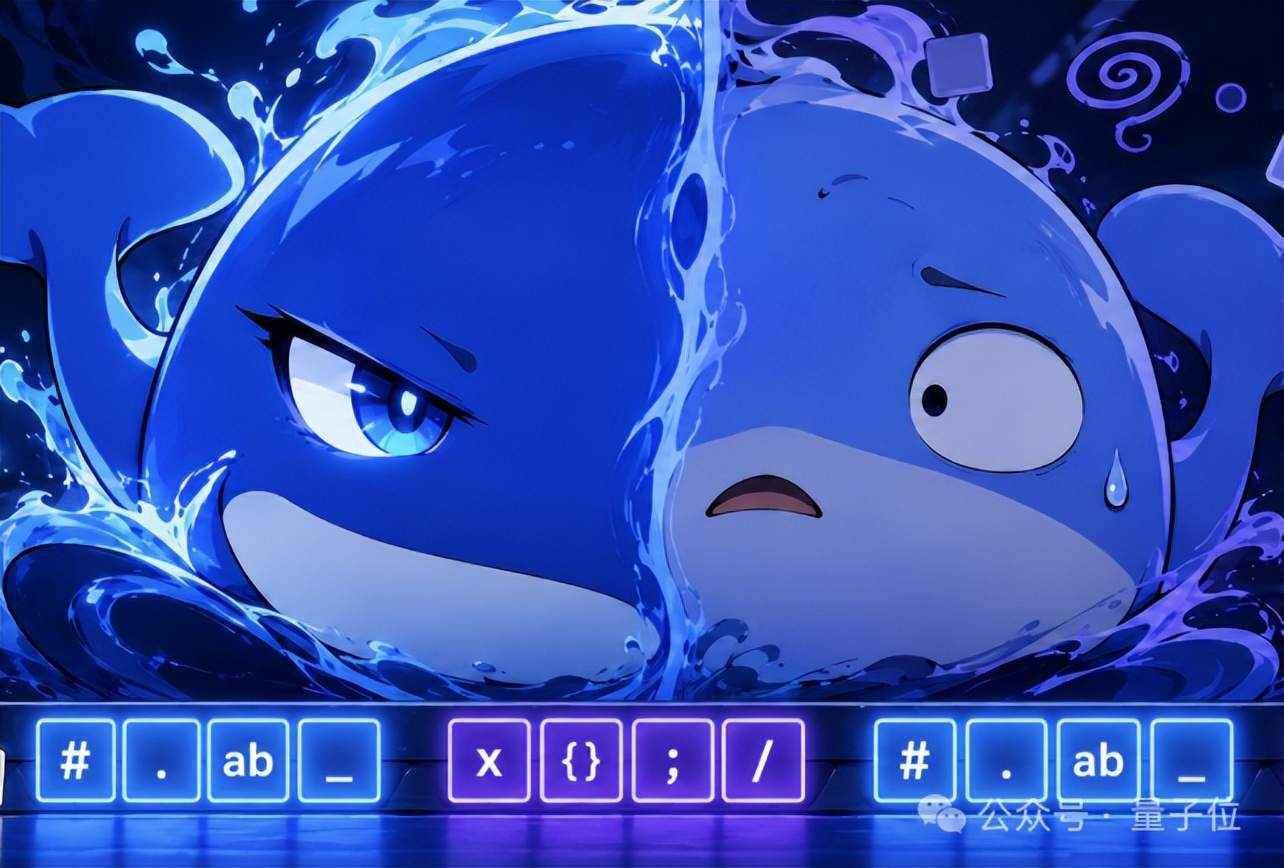
字节找到了DeepSeek时强时弱的原因 闻乐 2026-10-09 15:11:55 来源: 量子位 答不答得对,得看Token站位 闻乐 发自 凹非寺 量子位 | 公众号 QbitAI DeepSeek的神鬼二象性被字节Seed团队逮到了。 同一道题,什么都没改,只在前面多塞几个无关紧要的字符,模型突然就不会了??? 而且还不是偶尔抽风。 Seed研究人员发现,DeepSeek-V4的表现竟然会随着信息的输入位置, 每隔4个Token周期性变化 。 啥意思?模型记不记得住一件事,居然还要看这件事在输入里站哪儿?? 前面多两个Token,答案可能从错变对,再多两个,又给你改回去。 好好好,模型答题也开始讲究站位了。 在128K长上下文检索测试中,研究人员发现,同一条信息只是换了个位置,DeepSeek-V4系列模型的检索准确率 最高就能拉开40.2个百分点 。 团队进一步发现,这个问题与DeepSeek-V4采用的一项长上下文优化技术有关—— 分块KV Cache压缩 。 这项技术本来是为了让模型处理长文本更省内存、更高效。 结果压缩之后,倒让模型时神时鬼了(doge)。 多两个Token,DeepSeek突然就答对了 字节Seed研究人员最开始是拿DeepSeek自己的代码做了个实验。 测试对象是 DeepSeek-V4-Flash-Base 。 他们从DeepSeek-V4的官方推理代码中截取了一段FP8量化函数,让模型补全最后一个Token。 任务的正确答案应该是8,因为这段代码需要完成FP8相关的类型转换。 但模型有时偏偏觉得应该补成32。 为了搞清到底咋回事,研究人员在代码前面加了一段纯装饰性的文档字符串,里面放着一些重复的等号。 然后,他们开始调整等号的数量。 代码本身没改、要补全的位置没改、正确答案当然也没改……唯一的变化,就是前面多了这几个没什么实际意义的Token。 结果,DeepSeek的答案开始反复横跳。 当填充长度落在某些位置时,模型更倾向于回答错误的32。 往前挪一两个Token,又开始倾向于正确的8。 再继续挪,错误答案又回来了—— 整个过程以4个Token为周期重复 。 更具体地说,在论文测试的16种填充长度中,当长度模4的余数为0或1时,模型倾向于错误答案32;余数为2或3时,则倾向于正确答案8。 研究人员还统计了模型给两个候选答案
Related stories
vLLM Boosts DeepSeek-V4.1-Flash: 1.9x Low-Concurrency Speed, 5x Agentic Throughput
According to a vLLM blog post dated October 7, 2026, within three weeks of DeepSeek-V4.1-Flash's release, vLLM optimizations made the model 1.9x faster at low concurrency and increased its throughput 5x on the SemiAnalysis AgentX benchmark. The improvements are attributed to SWA bounded replay, CUDA graphs, DeepSeek's new kernels, and vLLM kernel fusions.
1 reports · 1 sources
Random KV Cache Eviction Matches Strong Baselines, Boosts Throughput by 43%
Salesforce AI Research and UIUC propose Random Attention, which randomly evicts KV cache entries in reasoning traces instead of using content-based importance scores. It matches strong baselines across four models and six reasoning tasks, and improves inference throughput by 32%–43% over the strongest baseline TriAttention in vLLM serving tests.
1 reports · 1 sources
DeepSeek details DSec sandbox system for agent training, 5000+ sandboxes/sec
DeepSeek published a system paper, co-authored by Liang Wenfeng, detailing DSec (DeepSeek Elastic Compute), a production sandbox infrastructure for large-scale agentic RL training and evaluation. A single production unit comprises about 160 CPU nodes, 30,000 cores, and 250 TB DRAM, generating over 5,000 sandboxes per second, up to 3 million daily, with over 380,000 concurrent at peak. The paper covers four backend types (FnCall, Container, MicroVM, Full) and states that sandbox workloads from DeepSeek V3.2 to V4.1 run on DSec.
DeepSeek V4.1 Flash Scores Perfect on AI Hacking Benchmark for $4.65
Security firm reports that DeepSeek V4.1 Flash achieved code execution on all 11 vulnerable targets in its AI hacking benchmark, with all four fixed targets remaining secure, at a total cost of $4.65. A detailed review confirmed the results, finding six solutions followed the planned attack path and five successful routes not distinguished by the original scoring system. The review highlighted the model's strong hacking ability and identified areas where the benchmark needed stricter checks.
1 reports · 1 sources173 points · 67 comments
News updates every hour. Subscribe in your RSS reader to get new stories automatically.
Subscribe