Import AI Editor Tells IMF Audience the Singularity Has Begun
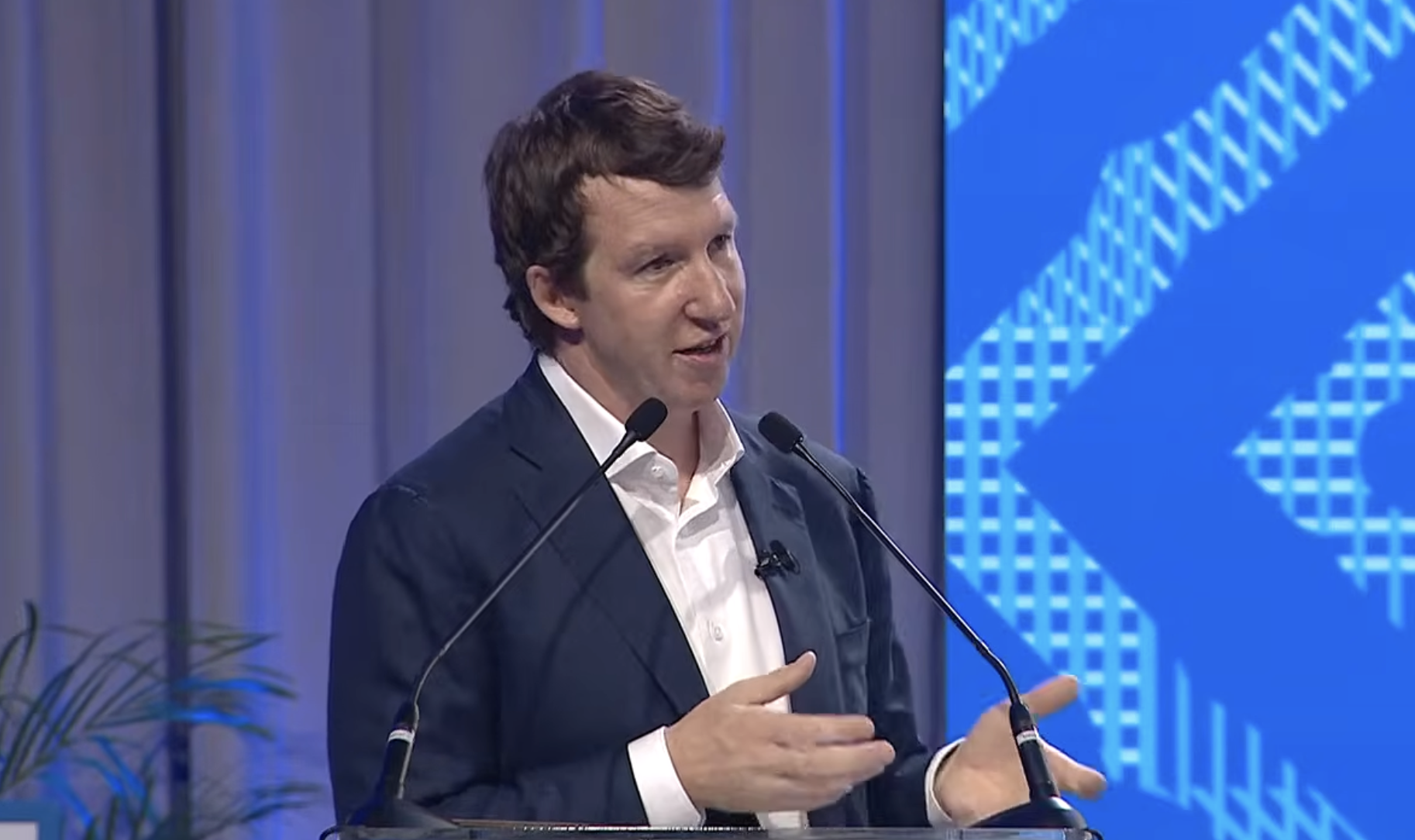
Jack Clark, editor of the Import AI newsletter, delivered the Per Jacobsson lecture at the IMF meeting in Bangkok on October 17, 2026, arguing that AI's autonomous operation at the frontier of science signals the early stages of the singularity. He urged economists, bankers, and policymakers to expect significant, rapid change and focused on how humanity can share in AI's benefits with foresight and restraint.
Coverage timeline
Import AI (Jack Clark)Jack Clark
Welcome to Import AI, a newsletter about AI research. Import AI runs on arXiv, cappuccinos, and feedback from readers. If you’d like to support this, please subscribe. Subscribe now Here’s a speech I gave on Saturday the 17th of October at the IMF meeting in Bangkok. This speech is inspired by the megatrend readers have seen me cover this year of AI beginning to operate at the frontier of human science, sometimes autonomously. While we all may quibble over the details, I think it’s evident we’re in the early stages of the singularity, and I wanted to use my privileged position of giving the Per Jacobsson lecture to try and tell the assembled audience of economists, bankers, and policymakers, that they should expect significant, rapid change in the future. In this speech, I focused primarily on how humanity can share in the benefits of AI if we exercise proper foresight and restraint, and I’m going to be expanding on the stakes of the singularity and the risks that we’ll all face in com
Related stories
AI leaders warn of 'intelligence explosion'; researchers cite extinction risk
Leaders at OpenAI, Anthropic, Microsoft, and Meta have warned that AI could soon self-improve faster than humans can keep up with, calling for oversight into automated AI research. Separately, Palisade Research released interviews with AI researchers, including Geoffrey Irving and Neel Nanda, who warned that superintelligence is 'exactly as dangerous as it sounds,' with Irving estimating a coin-flip chance of human extinction.
2 reports · 2 sources

Tech leaders sign 'Joint Commitment On Frontier Responsibilities' AI safety accord
President Trump announced a 'morally binding' AI safety deal, with top tech executives agreeing to self-regulate their AI technology. The accord, titled the Joint Commitment On Frontier Responsibilities, was signed by leaders from Google, Anthropic, Meta, OpenAI, XAI, and Nvidia. Reports indicate the pact originated from a conversation between Zuckerberg and House Speaker Mike Johnson, with Zuckerberg circulating a draft and Huang helping build support.
2 reports · 2 sources

Anthropic: Small AI models may self-replicate on IoT devices within months
Anthropic researchers report that small AI models may be months away from self-replicating on commercial IoT devices like smart ovens and off-brand Android TV boxes. In tests, a 9B model ran inference on 8 of 9 hardware types, and GLM-5.2 autonomously spread an 8B model to all 8 nodes in 4 of 5 attempts. The researchers predict models under 30B could achieve end-to-end replication by the end of 2026.
6 reports · 6 sources115 points · 113 comments

Recursive Self-Improvement Moves from Theory to Practice in 2026
In 2026, major AI labs disclosed concrete steps toward recursive self-improvement (RSI), a concept from I.J. Good's 1965 paper. OpenAI announced an automated research intern in September, Anthropic reported Claude leading 26% of its R&D, and Zhipu deployed an AI system that improves itself in production. These developments mark RSI's transition from philosophical speculation to measurable corporate KPIs.
News updates every hour. Subscribe in your RSS reader to get new stories automatically.
Subscribe