RSIGame framework lets AI agents self-improve in game development, beating one-shot GPT-5.5 output
Researchers from UC San Diego, ByteDance, and CMU propose RSIGame, an agentic framework that turns game development into a recursive self-improvement process, where agents playtest, diagnose, fix, and validate games iteratively. Experiments show RSIGame improves game quality scores from 50.26 to 64 starting from GPT-5.5-generated games, and accumulated experience can further train the underlying model.
Coverage timeline
机器之心机器之心
现在的大模型,已经越来越擅长从自然语言直接生成一个可以运行的游戏。 但是,“生成出来” 并不等于 “开发完成”。 一个能够运行的游戏,也可能存在大量问题:角色攻击没有反馈、敌人行为单一、关卡缺乏变化,甚至某些核心玩法根本无法完成。 而真正的游戏开发是一个长期过程:开发者需要不断试玩当前版本,发现 bug、缺失机制和体验问题,判断下一步最值得优化什么,再修改、验证,并继续扩展新的玩法和内容。 对于 AI Agent 来说,长程开发迭代比一次性生成难得多。 传统 coding benchmark 通常有比较明确的 pass/fail signal:代码能否通过测试、任务是否完成。但游戏质量并没有这样简单的判断标准。一个游戏可能没有明显 bug,却依然缺少玩法深度、视觉表现和内容完整性。 更重要的是,Agent 不仅需要知道怎么修改游戏,还需要自主判断下一步最值得改什么,以及什么时候不应该继续修改。 例如,一个游戏当前已经可以正常通关,那么下一步应该修复潜在 bug、改善战斗反馈,还是增加新的游戏机制?如果连续多轮修改都没有明显提升,是否应该停止当前方向,转而探索新的玩法?这些问题无法简单依靠预先编写的单元测试来解决。 为了解决这个问题,来自 UC San Diego、ByteDance 和 Carnegie Mellon University 的研究团队提出了 RSIGame : Autonomous Agentic Game Development with Recursive Self-Improvement,尝试把游戏开发从 “一次生成” 推进为一个真正的 Recursive Self-Improvement(RSI) 过程:让 Agent 不只是生成游戏,而是能够围绕自己创造出来的游戏持续探索、诊断、改进、验证,并决定后续的开发方向。 而且,这种自我改进不只发生在游戏本身。研究团队进一步发现, Agent 在开发过程中积累的经验,还可以反过来训练底层模型,让模型下一次生成游戏时就做得更好。 这意味着,游戏开发不仅可以成为一个持续改进作品的过程,也可以成为 AI 积累经验、提升自身开发能力的过程。 实验结果显示,RSIGame 能够显著提升不同模型生成的游戏质量 。以 GPT-5.5 生成的游戏为起点,经过多轮自主开发后,游戏质量评分从 50.26 提升至 64.

Related stories
Google Researchers Propose RRSI to Curb Overfitting in Recursive Self-Improving Agents
Google researchers have introduced RRSI (Regularized Recursive Self-Improvement), a method that adds regularization to recursive self-improving agents to prevent overfitting. The approach targets harness evolution, where agents iteratively modify their own prompts, tool usage, and memory management based on a fixed set of tasks, which can lead to benchmark-specific fitting and evaluation noise chasing. The paper, code, and project page are available online.
1 reports · 1 sources

Anthropic: Small AI models may self-replicate on IoT devices within months
Anthropic researchers report that small AI models may be months away from self-replicating on commercial IoT devices like smart ovens and off-brand Android TV boxes. In tests, a 9B model ran inference on 8 of 9 hardware types, and GLM-5.2 autonomously spread an 8B model to all 8 nodes in 4 of 5 attempts. The researchers predict models under 30B could achieve end-to-end replication by the end of 2026.

AIBuildAI open-sources PostTrain Agent, tops PostTrainBench with 46.6 points
AIBuildAI released PostTrain Agent, an open-source recursive self-improving agent that autonomously performs LLM post-training, including algorithm design, data collection, coding, and experiments, without human intervention. On the PostTrainBench benchmark, it scored 46.6, ranking first among frontier models and agent systems, close to human expert performance (51.1). The team also open-sourced the code, knowledge base, and technical report.
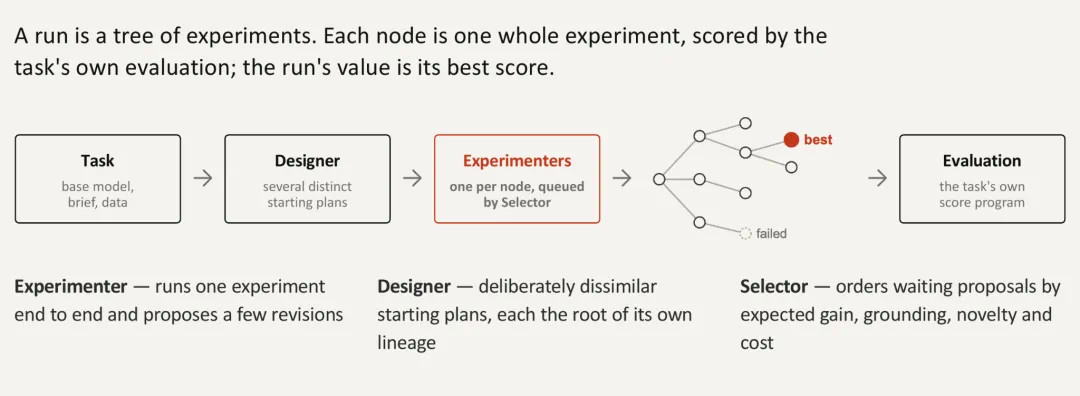
Recursive Self-Improvement Moves from Theory to Practice in 2026
In 2026, major AI labs disclosed concrete steps toward recursive self-improvement (RSI), a concept from I.J. Good's 1965 paper. OpenAI announced an automated research intern in September, Anthropic reported Claude leading 26% of its R&D, and Zhipu deployed an AI system that improves itself in production. These developments mark RSI's transition from philosophical speculation to measurable corporate KPIs.
News updates every hour. Subscribe in your RSS reader to get new stories automatically.
Subscribe