HydroGym: UW-led team unveils RL platform with 60+ fluid dynamics environments in Nature
Researchers from the University of Washington and collaborators introduced HydroGym, a solver-agnostic reinforcement learning platform for fluid dynamics, published as a Nature cover paper. The platform provides 61 validated flow-control environments spanning laminar to turbulent regimes, and demonstrates zero-shot transfer with a 38% drag reduction on a 3D airfoil while cutting exploration cost by four orders of magnitude.
Coverage timeline
机器之心ScienceAI
编辑丨coisini 对流体的有效控制对于交通运输、能源和医学领域至关重要,因为它可以增加升力、减少阻力、增强混合并衰减噪声。先进的流体控制系统能够在全球范围内显著提升能源效率,例如通过主动减阻使航空业的燃料消耗降低多达 15%,通过协同控制使风电场输出提高 4–5%。 然而,流体以难以控制而著称,因其涉及高维、非线性和多尺度的动力学,难以用传统方法应对。 强化学习(RL)近期的突破已在日益复杂的科学应用中展现出变革性能力,但流体动力学缺乏共享基准和标准化环境,因此每个控制器通常只针对单一几何形状和运行条件进行调优,使得进展难以积累、迁移和比较。 为此,来自华盛顿大学、密西根大学等的研究团队提出 HydroGym,一个与求解器无关的强化学习平台,提供 60 多个经过验证、公开可用的流动控制环境,涵盖从经典层流到复杂湍流。研究论文以《The HydroGym reinforcement learning platform for fluid dynamics》为题登上了最新一期《Nature》封面。 论文地址:https://www.nature.com/articles/s41586-026-10917-6 HydroGym 作为一个面向流体控制研究的强化学习平台,HydroGym 建立了领域亟需的基础设施,用于通用环境、接口和算法评估。 具体来说,HydroGym 提供 61 个经过验证的流动控制环境,涵盖从经典层流到先进三维湍流场景,以及跨流态的雷诺数(Reynolds number)递进。 在这些环境中,智能体反复发现稳健的控制原理,包括边界层操控、声学反馈的破坏以及湍流尾迹的重组。 该研究展示了零样本迁移的概念验证,其中完全在廉价替代环境(surrogate environment)中训练的智能体被部署到具有挑战性的现实场景中,如三维翼型段。该研究实现了局部表面摩擦阻力降低 38%,同时与直接在翼型上优化相比,探索成本降低了四个数量级。 值得注意的是,HydroGym 的求解器多样性有助于弥合流体研究中彼此迥异的尺度:集成了基于 Python 的有限元求解器,以便于原型开发;用于大规模流动的,高度并行 GPU 加速的格子玻尔兹曼与有限体积求解器;完全可微求解器,以促进梯度感知学习。 HydroGym 解决了阻碍强化学习变革流体动力学控制的根本瓶颈:在昂贵的

Related stories
Google adds student hub, study tools, Deep Research to Gemini
Google is rolling out a dedicated student hub in Gemini, offering a study notebook, flashcards, practice quizzes, and support for graphs and images in notebooks. The update also adds Deep Research to Gemini Live, allowing users to generate research reports and discuss results, with the ability to close the chat and lock the screen while processing. Eligible college students receive offers for Google AI plans.
2 reports · 2 sources

Current Robotics Unveils CurrentWorld-0, an Interactive World Simulator
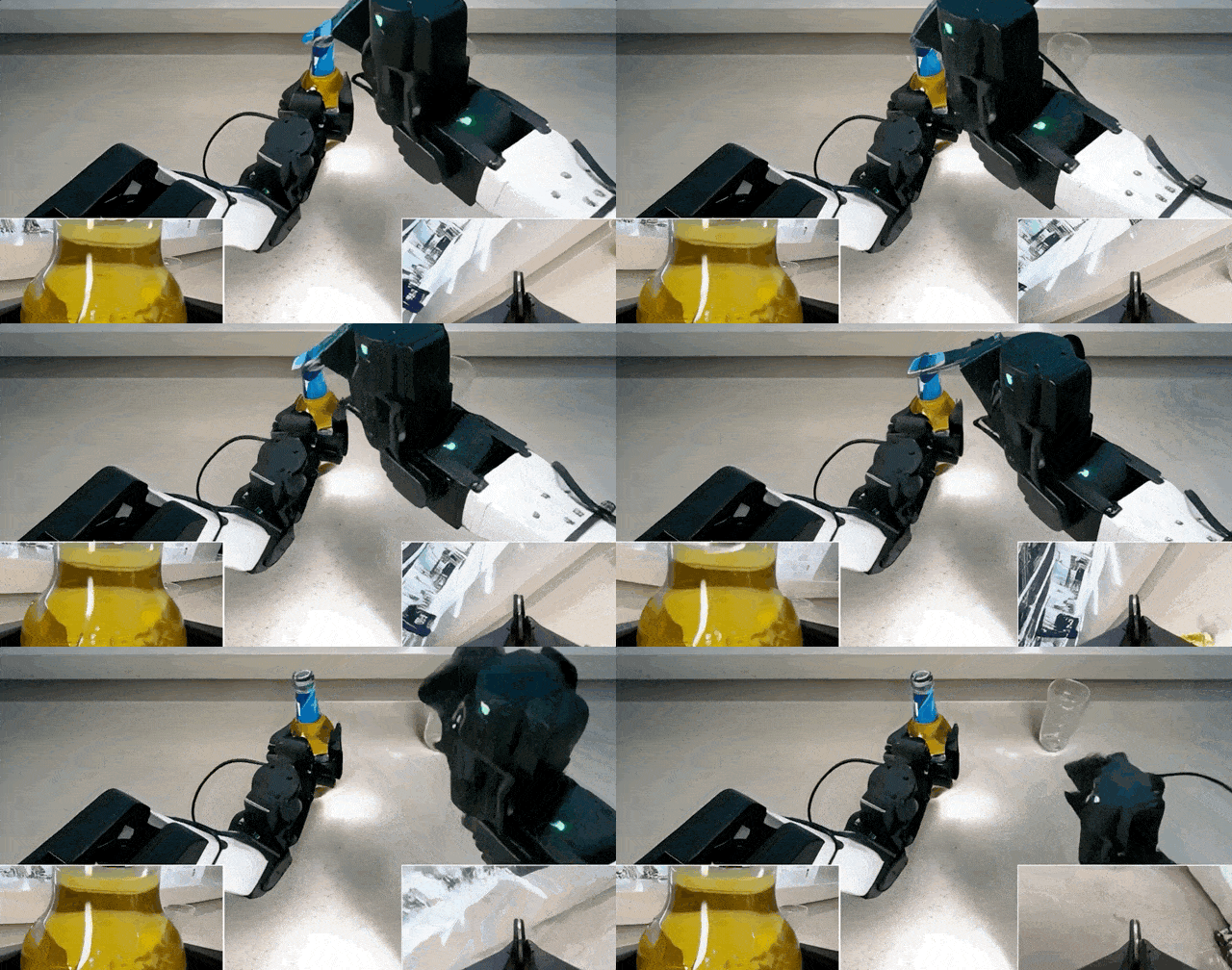
Current Robotics released CurrentWorld-0, an interactive world simulator that models cross-embodiment, multi-view, and multimodal physical interactions for robot learning and evaluation. It is the team's second work after the humanoid whole-body manipulation model Curr-0, and is described as a data-driven alternative to traditional physics engines, capable of simulating flexible objects and fluids.
2 reports · 2 sources
UCL team unveils Large Discovery Models for experiment design
Researchers at University College London led by Wang Jun released Large Discovery Models (LDMs), a recursive foundation-model architecture that combines generative foundation models with Gaussian process reward models to design next experiments in scientific discovery. Validated on neural-network training, antibody design, and molecular optimization, LDM v0.1 reportedly outperforms pure LLM reflection baselines, with antibody binding energy reduced by 18.2% on average and molecular multi-objective hypervolume improved by over 60%.
1 reports · 1 sources

Tsinghua TianMou team publishes Nature Sensors cover study on visual-primitive complementary vision, open-sources TianMouCV
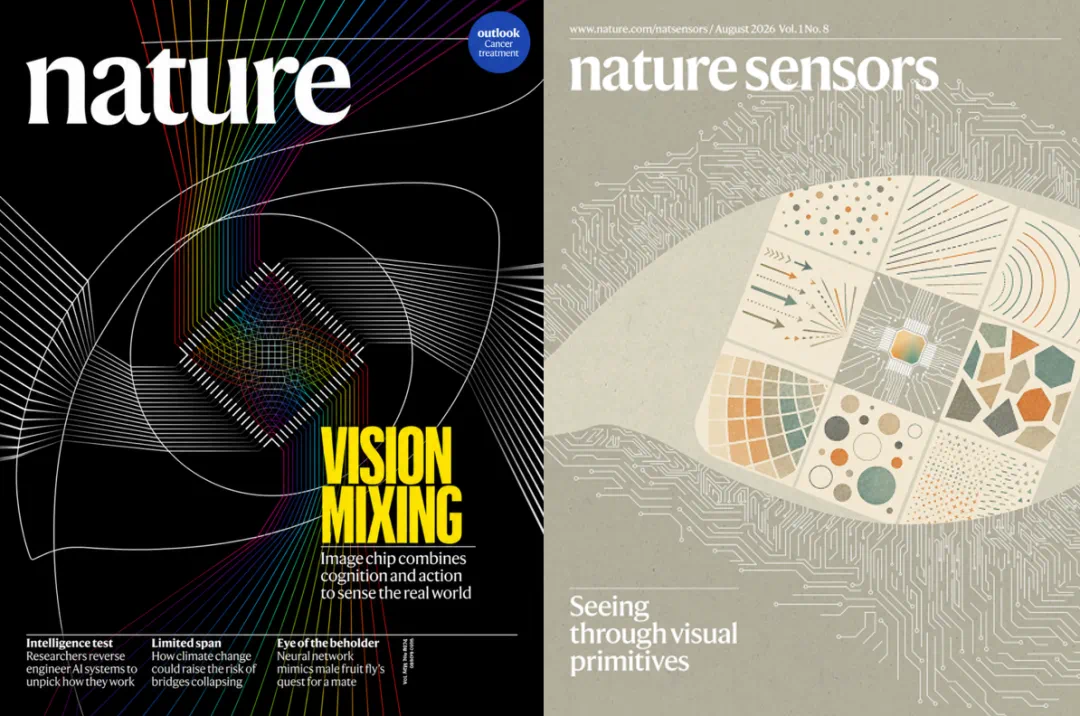
Tsinghua University's Tianmou core team published a new study on the cover of Nature Sensors, extending their visual-primitive-based complementary vision paradigm to a learnable, transferable, and scalable system. The work introduces a self-supervised representation learning framework for degraded visual data without ground-truth labels and open-sources the TianMouCV toolchain for algorithm research and application development.
News updates every hour. Subscribe in your RSS reader to get new stories automatically.
Subscribe