MiHoYo's Gamer VLA model plays Honkai: Star Rail for 50 hours autonomously
MiHoYo's research team released a paper on Gamer, an 8B-parameter vision-language-action (VLA) foundation model that autonomously plays Honkai: Star Rail for up to 50 hours. The model, fine-tuned from Qwen3-VL-8B, uses only screen visuals, task instructions, and memory to control keyboard and mouse, without accessing game internals. In evaluations covering five main story chapters, Gamer achieved over 95% autonomous operation time, using a three-stage training pipeline.
Coverage timeline
量子位量子位
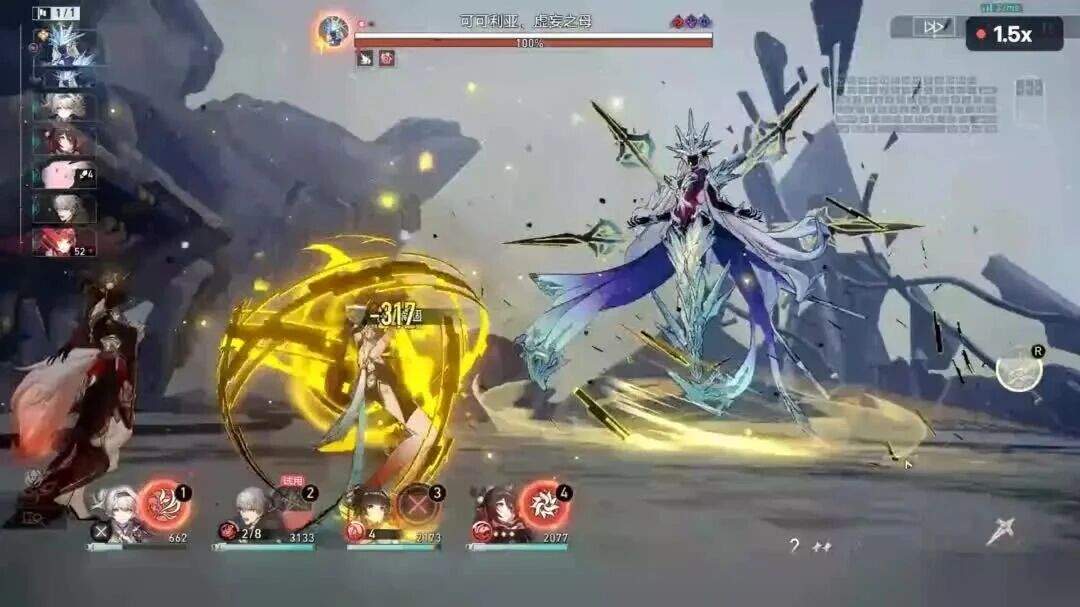
米哈游发了个VLA论文 衡宇 2026-11-21 00:25:26 来源: 量子位 8B参数,50小时自主运行 henry 发自 凹非寺 量子位 | 公众号 QbitAI 米哈游,您是准备亲自下场研究“官方脚本”了? (doge) 就在米哈游崩坏AI研发团队最新发布的研究 Gamer 中—— 你敢信,AI竟然自己玩起了《崩坏:星穹铁道》。 键盘鼠标交给AI,上来就能和可可利亚打上一架。 碰上场景机关,也能自己上手。走到“气泡弹珠”前启动装置,把自己弹到另一片区域,落地接着跑。 跟着NPC跑图同样可以,流萤在前面带路,AI就在后面跟着,上楼梯、拐弯,一路跑到广场。 我勒个乖乖,这打Boss、开机关、跟人跑图,都让AI学会了。 这以后充值页面里,会不会有个“AI代肝”选项? (注:《崩坏:星穹铁道》是米哈游开发的一款银河冒险题材的回合制角色扮演游戏。玩家乘坐星穹列车探索不同世界,通过跑图、对话和解谜推进剧情,并组建角色队伍进行回合制战斗。) VLA代肝,不烧心 咱言归正传,米哈游给Gamer的定位,是面向长流程、实时交互的 通用视觉—语言—动作 (VLA) 基础模型。 上面演示玩《崩铁》的主力版本,由团队基于参数量80亿的 Qwen3-VL-8B 进一步训练而来。 它能根据游戏画面和任务,决定按哪些键、鼠标往哪里移动、什么时候点击,再把这些操作真正执行出来。 换句话说,屏幕画面是它接收的视觉信号,任务指令告诉它要做什么,键鼠操作则是它输出的动作。 相较于以往的AI玩游戏,Gamer这次最大的亮点是 把跨游戏的实时操作与长流程的记忆、规划,接进同一套VLA框架。 实战时,模型完全依靠屏幕画面、任务指令和已有记忆做判断, 无需读取游戏内部接口或底层状态。 随着任务推进,它还会动态记录“刚才完成了什么”、“下一步准备干什么”。 在论文中,研究还给出了一组硬核的实测数据:在覆盖五个主线篇章、总计约50小时的《崩铁》长流程评估中,Gamer的自主运行时间占比超过了95%。 而为了实现这一效果,研究设计了一套三阶段训练流程: 先用跨游戏数据练操作,再用任务示范补上思考和记忆,最后让模型进入游戏,通过试错和反馈继续提升。 首先,是持续预训练 (Continued Pre-Training,CPT) ,让已经具备图文理解能力的基座模型,进一步学会操作游戏。 具体来说,团队把不同游戏的
Related stories
NVIDIA and collaborators unveil TacitVLA, cutting VLA reasoning latency by up to 3.4x
Researchers from NVIDIA, NYU, UC Berkeley, Johns Hopkins, and Stanford introduced TacitVLA, a vision-language-action model trained to generate reasoning text but whose actions do not wait for it. On four robot manipulation and autonomous driving benchmarks, TacitVLA matched the success rate of explicit-reasoning models while cutting latency by up to 3.4x, and outperformed the same model without reasoning training by up to 17 percentage points at equal speed.
1 reports · 1 sources
Tsinghua and miHoYo open-source GameScaling, eight general game-playing models
Tsinghua University, miHoYo, and other academic institutions have open-sourced the GameScaling series, comprising eight general game-playing models ranging from 0.8B to 27B parameters, under the Apache 2.0 license. The models achieve a 63.3% average success rate on the MCU benchmark in Minecraft, and smaller variants (0.8B-9B) can run in real time on a single H200 or RTX 5090 GPU.
News updates every hour. Subscribe in your RSS reader to get new stories automatically.
Subscribe