Ant Group open-sources Ling-3.1-flash, a 560B-parameter MoE model with 1M context
Ant Group's Ling-3.1-flash, a 560B-parameter mixture-of-experts model with 25B active parameters and a 1M-token context window, was released open-source on October 15. The model targets long-horizon complex task execution, using a hybrid linear attention design with KDA layers and Gated MLA to manage computational costs on long sequences.
Coverage timeline
机器之心机器之心
编辑|山辉、冷猫 上个月,Jev 火遍了 AI 社区。 一个完全不会输出长文本的智能体,主要工作是做判断。它朴实无华,但足够快,足够实用,被不少开发者接进了 Agent 工作流。 能力离谱到能够实现在 MC 里全自主从零开始击败末影龙。 Jev 的走红,多少反映出今年 AI 正在发生的一种变化: 大家关心的能力越来越务实 。毕竟,真正让 AI 干活,远比解题刷分刷榜更复杂。 工作中的任务往往是复杂的,长程的。让 AI 独立完成,它得自己找资料、分析信息、发现问题,再决定要不要回头修改补充。一旦中途走错方向,还得及时纠正。任务持续的时间越长,出错和跑偏的可能性就越大。 但真正能啃下这块硬骨头的大模型,目前还屈指可数。如今,开源大模型领域的重要玩家蚂蚁百灵,也开始在这一方向上发力。 9 月 30 日, 蚂蚁百灵发布 Ling-3.1-flash,并于 10 月 15 日正式开源。 这次升级,重点瞄准的就是 复杂任务和长程执行 。 拿到模型后,我们也想试试它的成色:如果不再把任务拆成一步步的提示词,直接把整项工作交给 AI,它到底能干到什么程度? 于是,我们准备了几项不同类型的任务,让 Ling-3.1-flash 自己上手。 架构、性能、成本,Ling-3.1-flash 的三张牌 先简单看看 Ling-3.1-flash 的基本面。 模型总参数约 560B,但每处理一个 Token,只需激活约 25B 参数,上下文窗口最高支持 1M Token。 架构上,Ling-3.1-flash 延续了百灵此前的混合线性注意力设计:每 7 层 KDA 搭配 1 层 Gated MLA,512 个路由专家中,每个 Token 激活 8 个路由专家和 1 个共享专家。 简单来说, 既要让模型装得下足够多的信息,又要控制处理长上下文的计算成本。 其中,KDA 采用线性复杂度设计,随着上下文变长,计算开销不会像传统全注意力那样快速膨胀。而每 8 层保留的 Gated MLA,则为模型提供了全局信息交互的通道,帮助它在处理长序列时捕捉关键关联。 这样的组合,尤其适合需要反复读取资料、维护大型代码库,以及连续调用工具的复杂任务。 从公开评测来看,Ling-3.1-flash 已经在多个涉及真实任务的基准测试中展现出竞争力。 比如,GDPVal-AA V2.1 考察的是日常办公场景下的综合任务

Related stories
MiniMax M3.1-Flash-Preview matches Claude Opus 5.5 front-end feats
On September 28, MiniMax released M3.1-Flash-Preview, the latest M-series model with million-token context and native multimodality, available in MiniMax Code and via API subscription. Users found it can replicate front-end generation feats of Claude Opus 5.5, such as a gacha game page with full character panels, without multiple attempts.
1 reports · 1 sources
Zhizhi Innovation open-sources IQuest-Q1, 320B-param sparse MoE coding model
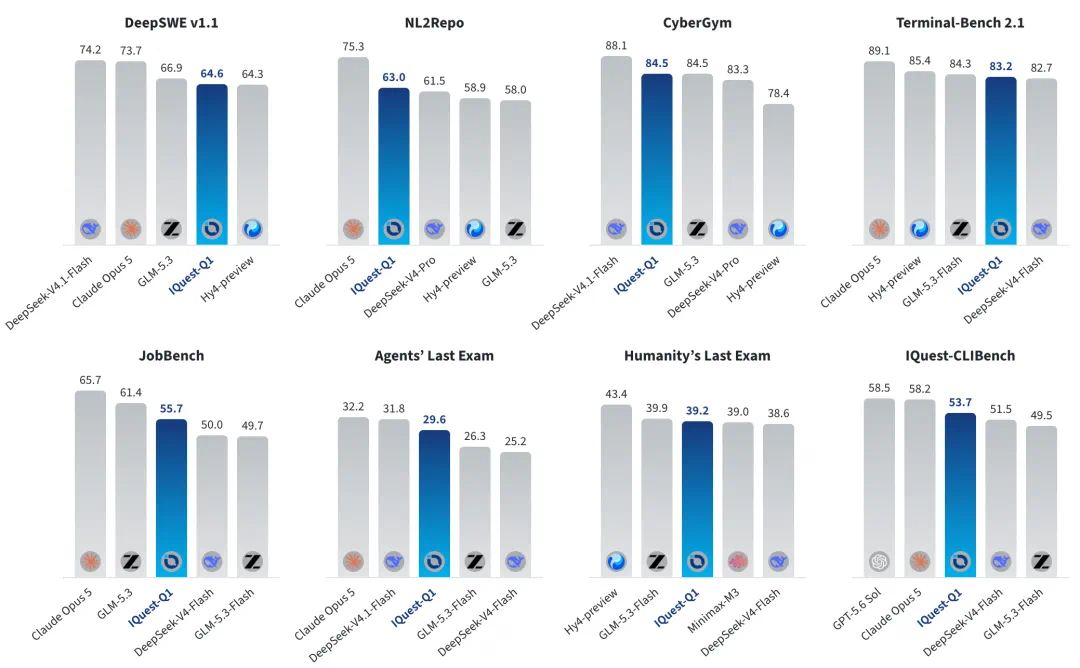
Chinese research institute Zhizhi Innovation released IQuest-Q1, a sparse MoE model with ~320B total parameters and ~15B active parameters, focused on coding, software engineering, and complex agentic tasks. The model shows balanced performance across benchmarks including NL2Repo, CyberGym, Terminal-Bench 2.1, DeepSWE v1.1, and JobBench, with weights and blog published on GitHub and Hugging Face.
OpenAI releases 722 AI-generated math manuscripts, claims on quasi-Riemann and Kakeya
OpenAI published 722 mathematical manuscripts produced by an unreleased internal frontier model, grouped into 372 result families across 17 fields, including claims on the quasi-Riemann hypothesis, BSD conjecture, and four-dimensional Kakeya conjecture. The company said most results came from a single prompt to a single AI agent, with average compute per result roughly equivalent to three hours of ChatGPT Pro thinking. Mathematicians described the release as overwhelming, noting it could take years to fully understand, and OpenAI withdrew three papers two days later.
16 reports · 6 sources1334 points · 1520 comments

OpenAI Codex lead Tibo pledges 28-day daily improvement or quota reset; first day boosts GPT-6 inference speed ~50%
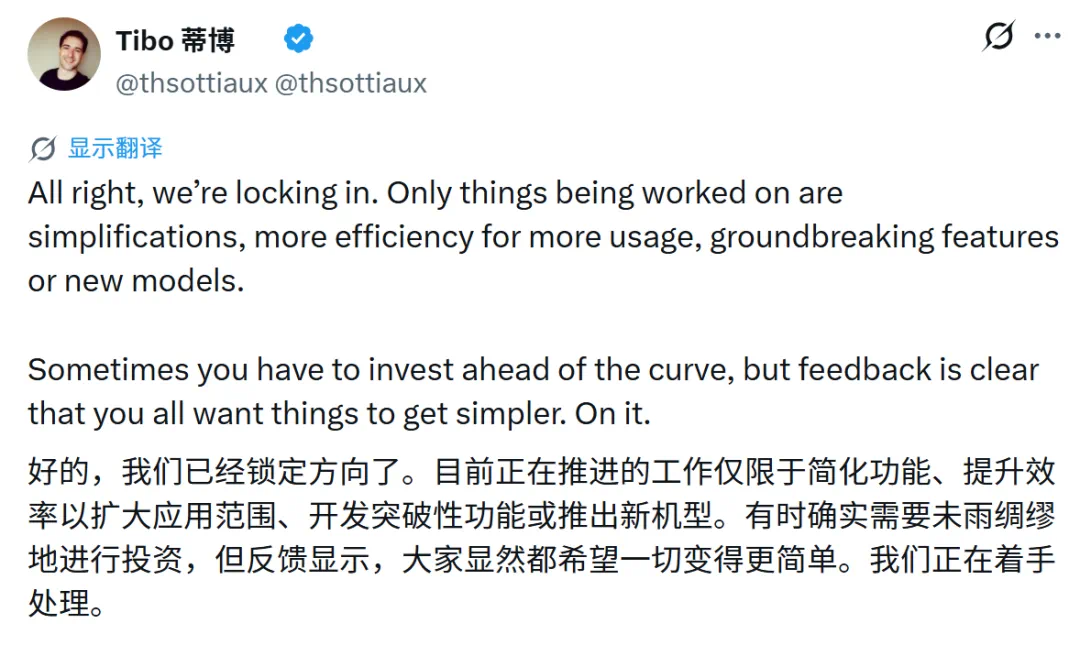
OpenAI Codex lead Tibo announced a 28-day commitment to deliver either a meaningful improvement for Codex/Work users or a full quota reset each day, following user complaints about slow models and reduced quotas after DevDay. On the first day, OpenAI boosted default inference speed for GPT-6 Astra and GPT-6.1 Sol by ~50% to 50 TPS across subscriptions and partner products, while also introducing text watermarking. The move comes amid a user trust crisis and a SemiAnalysis report claiming Anthropic subscriptions offer 5x more value than OpenAI's.
News updates every hour. Subscribe in your RSS reader to get new stories automatically.
Subscribe