EinsiaAI's Quant Arena benchmark: most LLMs lose money on A-share trading
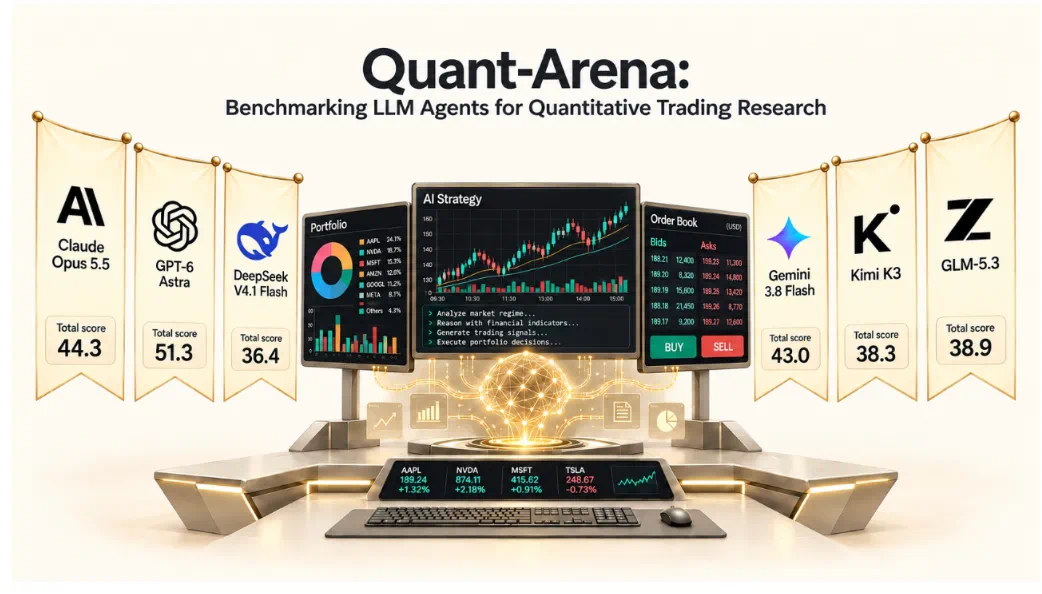
EinsiaAI's Navers Lab released Quant Arena, a benchmark testing nine models from six frontier model providers on A-share quantitative trading using real historical data from 2022-2023 and sealed 2024 market data. Only GPT series and Claude Opus 5.5 achieved profitability; the top scorer GPT-6 Astra posted 10.7% annualized return, below the 17.1% market benchmark. The study highlights that better market prediction does not necessarily translate into higher returns.
Coverage timeline
机器之心机器之心
6 家前沿模型厂商的 9 个模型,被放进了同一场 A 股量化研究测试。 写策略,跑回测,再改代码。最后提交一个版本,交给预先封存的行情检验。 9 个模型中,只有 GPT 系列和 Opus 5.5 最后能够实现盈利,其他一半模型全部亏本。其中,得分最高的 GPT-6 Astra,虽然年化收益为 10.7%,但仍低于 17.1% 的市场基准(券池等权收益)。 更扎心的是:即使模型尽力研究市场,能把行情预测得更准,却不一定能把这份准转成收益。 近期,EinsiaAI 旗下 Navers Lab 团队发布 Quant Arena。它把顶尖大模型放到 A 股的真实历史数据中,检验从策略生成到反馈迭代的整轮研究。 论文题目:Quant-Arena: Benchmarking LLM Agents for Quantitative Trading Research 项目主页:https://lab.einsia.ai/quant-arena arXiv:https://arxiv.org/abs/2610.30113 3042 只股票,一轮完整研究 数据覆盖 3042 只 A 股 ,包括日频行情,以及原始 Level-2 报价、委托和成交。模型自己写 Python,构造特征,给股票打分。 研究期为 2022—2023 年 ,预算是 至多 5 次候选评估 。研究结束后,冻结一个策略,交给 2024 年的封存行情,只评一次 。 策略程序按授权读取数据,模型只拿到研究期允许的反馈。2024 年的数据和评估反馈,不回流给模型。 研究期内,模型可以看收益、信号和执行反馈,再改策略。 评估器按评分,构建目标为 75 只股票的等权多头组合,按整手成交。 交易成本和市场冲击,也算进现金账户。买不进的部分,留在现金里。榜单同时看收益、风险、信号、换手和特征多样性。 6 家厂商、9 个模型,谁能真正盈利? 参测模型来自 6 家前沿模型厂商(Claude、GPT、Gemini、DeepSeek、Kimi 和 GLM),共 9 个模型。收益、Sharpe 和最大回撤,均对应 2024 年。策略收益已计入交易成本,超额收益以百分点计。 GPT-6 Astra 年化收益 10.7% ,GPT-6 Sol 为 8.6% ,GPT-5.6 Terra 为 8.4% ,Claude Opus 5.5 为 4.4%
Related stories
OpenAI releases 722 AI-generated math manuscripts, claims on quasi-Riemann and Kakeya
OpenAI published 722 mathematical manuscripts produced by an unreleased internal frontier model, grouped into 372 result families across 17 fields, including claims on the quasi-Riemann hypothesis, BSD conjecture, and four-dimensional Kakeya conjecture. The company said most results came from a single prompt to a single AI agent, with average compute per result roughly equivalent to three hours of ChatGPT Pro thinking. Mathematicians described the release as overwhelming, noting it could take years to fully understand, and OpenAI withdrew three papers two days later.
16 reports · 6 sources1334 points · 1520 comments

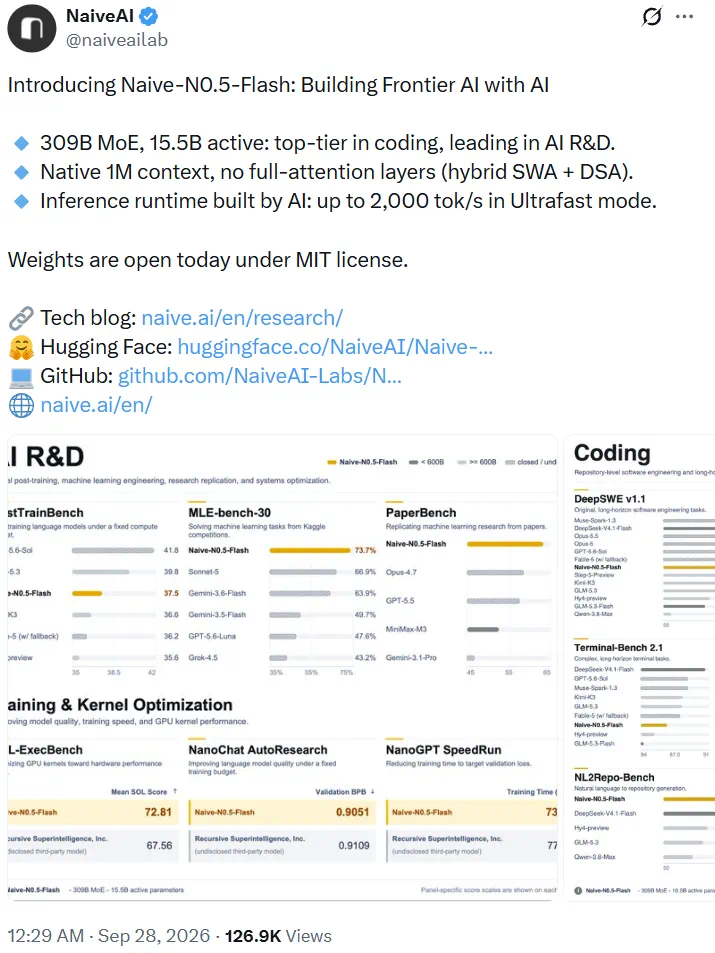
Naive AI open-sources first model built with AI-led R&D
Naive AI, founded by Dai Jifeng, has open-sourced its first model, developed from day one with AI models handling coding, experiments, and analysis while humans set goals and constraints. The company focuses on post-training and agent development based on open-source models, echoing recent disclosures from Anthropic and OpenAI about AI-led research proportions.
1 reports · 1 sources
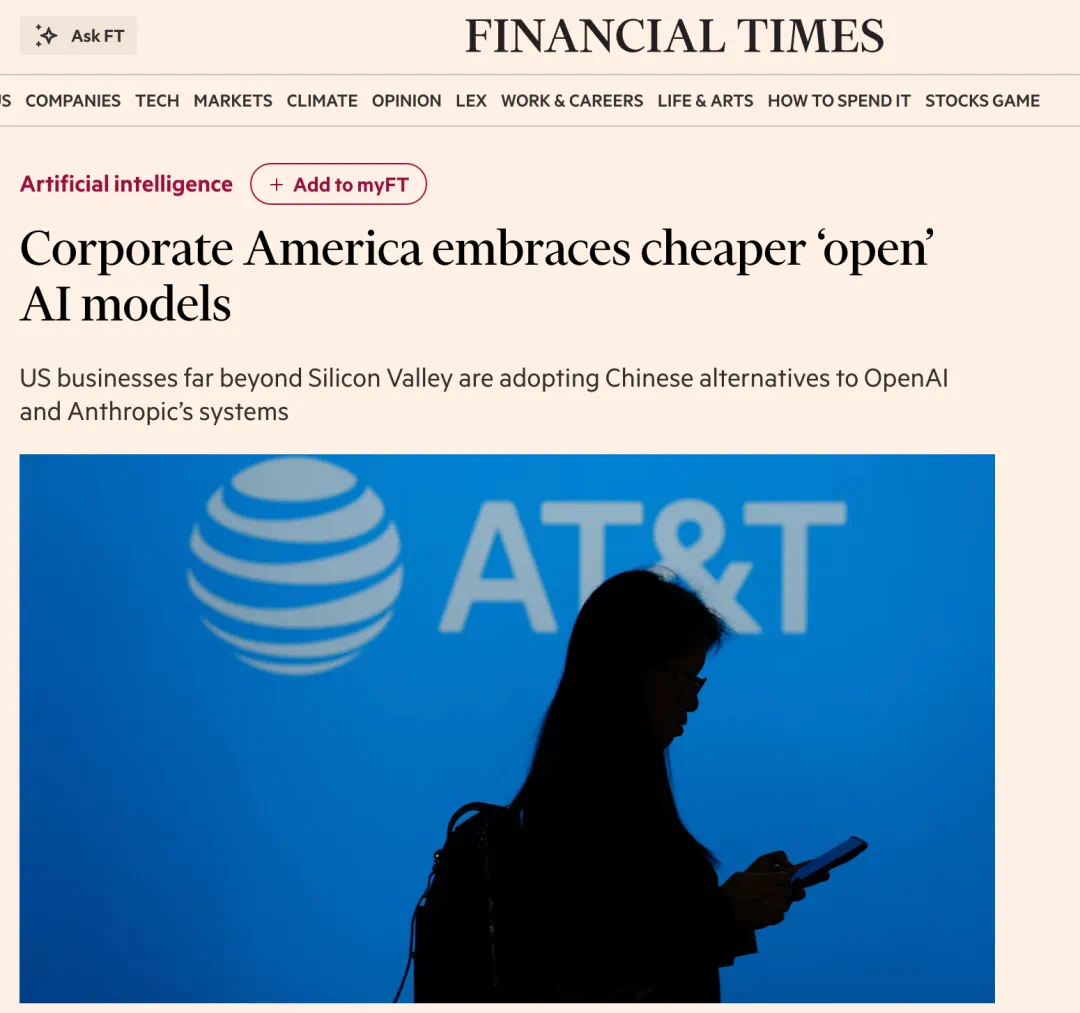
US firms shift AI workloads to open-weight models, Chinese providers gain
According to a Financial Times report, US enterprises including AT&T and Tinder are moving AI workloads to open-weight models to cut costs, with Chinese providers like DeepSeek and Zhipu gaining traction. AT&T has shifted about 40% of its AI workloads to open models and plans to increase that to 70% within a year, processing 45 billion tokens daily. Tinder's CTO cited a tenfold cost increase from $1 million to $10 million annually between January and July, prompting the company to route some user requests to open-weight models.
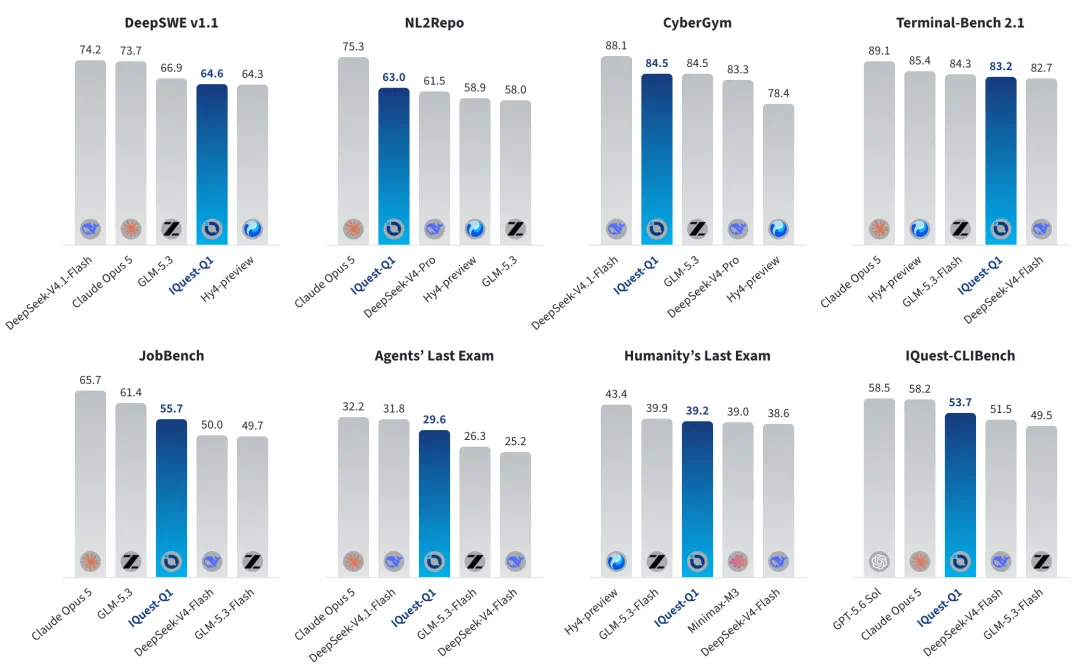
Zhizhi Innovation open-sources IQuest-Q1, 320B-param sparse MoE coding model
Chinese research institute Zhizhi Innovation released IQuest-Q1, a sparse MoE model with ~320B total parameters and ~15B active parameters, focused on coding, software engineering, and complex agentic tasks. The model shows balanced performance across benchmarks including NL2Repo, CyberGym, Terminal-Bench 2.1, DeepSWE v1.1, and JobBench, with weights and blog published on GitHub and Hugging Face.
News updates every hour. Subscribe in your RSS reader to get new stories automatically.
Subscribe